Summary Report of the 25th IAHR-APD Congress in Incheon, Korea
Read Full Congress Report in PDF Asia and Pacific Division Website Meet the Leaders: YP-Senior Dialogue
1. About IAHR-APD
The International Association for Hydro-Environment Engineering and Research (IAHR) is a community of scholars and practitioners founded in 1935 as a global non-profit organisation responsible for promoting basic and applied research in hydraulics. It brings together more than 5,300 members across some 200 countries, together with its member organisations, and its fields of activity span water resources, rivers, the water environment and aquatic ecology. The Asia and Pacific Division of IAHR (IAHR-APD) was formed in 1973 to advance knowledge of hydraulics and the proficiency of hydraulic professionals in addressing water problems in the region, and has been instrumental in the development of water engineering and in protecting the environment. It is one of six IAHR divisions, alongside the Africa, Europe, Latin America, Middle East and North Africa, and North America Divisions.
As a principal activity of the Division, the biennial Congress has been convened since the first meeting in Bangkok in 1977 and continues to provide a medium for discussion among researchers on current questions in hydraulic research and engineering. Host cities have included Bangkok, Taipei, Bandung, Chiang Mai, Seoul, Kyoto, Beijing, and, more recently, Yogyakarta (2018), Sapporo (2020), Chennai (2022), and Wuhan (2024). IAHR-APD 2026 was the third Congress to be held in the Republic of Korea, following the 5th Congress in Seoul and the 18th Congress in Jeju in 2012, and marked a return to Korea after 14 years.
The objective of the 25th Congress was to bring together scientists, engineers and researchers to share their experience in hydro-environmental engineering at a time when the discipline is being reshaped by two forces at once: a changing climate and the rapid entry of artificial intelligence into hydrological and hydraulic practice.
2. Congress Host, Organizer and Supporting Bodies
2.1 Host
International Association for Hydro-Environment Engineering and Research — Asia and Pacific Division
Korea Water Resources Association (KWRA)
2.2 Organizer
IAHR-APD 2026 Local Organizing Committee
2.3 Patron
International Association for Hydro-Environment Engineering and Research
Ministry of Climate, Energy and Environment, Republic of Korea
National Institute of Environmental Research, Republic of Korea
Korea Institute of Civil Engineering and Building Technology
Korea Research Institute for Human Settlements
Korea Environment Institute
Korean Society of Civil Engineers
Korean Society of Ecology and Infrastructure Engineering
2.4 Sponsors
Twenty-eight organisations provided sponsorship for the Congress. Broad participation from the domestic construction and engineering sector allowed the Congress to be delivered on a stable footing. Support was further received from the Korea Tourism Organization, the Incheon Metropolitan City and the Incheon Tourism Organization.
3. About KWRA
The Korea Water Resources Association (KWRA) exists to advance scholarship concerning the waters of the earth and thereby to serve the public interest. It is an established learned society in the fields of water resources and disaster prevention, and works to meet the demands placed on those fields in the present century. The principal undertakings of the Association are as follows:
Research, education and guidance across all academic disciplines relating to water
Publication of the Association journal, transactions and related technical works
Convening of research meetings, lectures and colloquia, and the conduct of study visits at home and abroad
Academic exchange with related societies in the Republic of Korea and overseas, and attendance at their meetings
Technical research and analysis concerning water commissioned by government, public bodies and other institutions
Awards and scholarship programs
The regular activities of the Association comprise conferences, lectures, seminars and symposia; an annual Hydraulic Engineering Workshop; field investigations of flood damage; the publication of the journal, transactions, reports and technical works; exchanges with related societies at home and abroad; site visits and inspections; and commissioned academic studies.
4. Venue
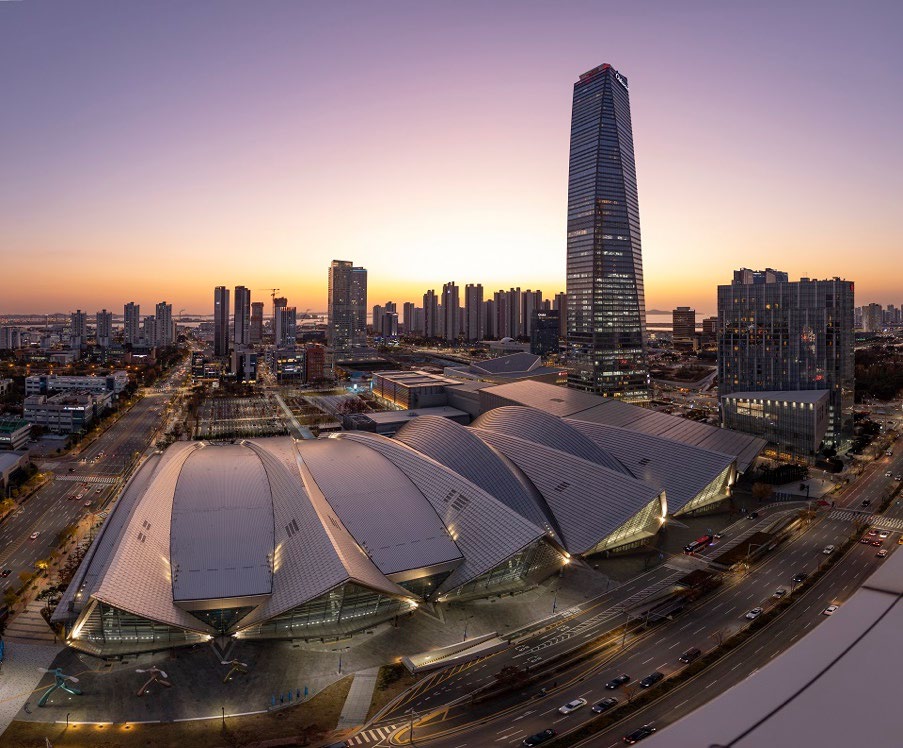
Songdo ConvensiA, 123 Central-ro, Yeonsu-gu, Incheon, Republic of Korea. The Congress occupied the Grand Ballroom A/B and six meeting rooms on the second floor of the new building, as well as Hall 1 on the first floor for the exhibition.
5. Number of Attendees
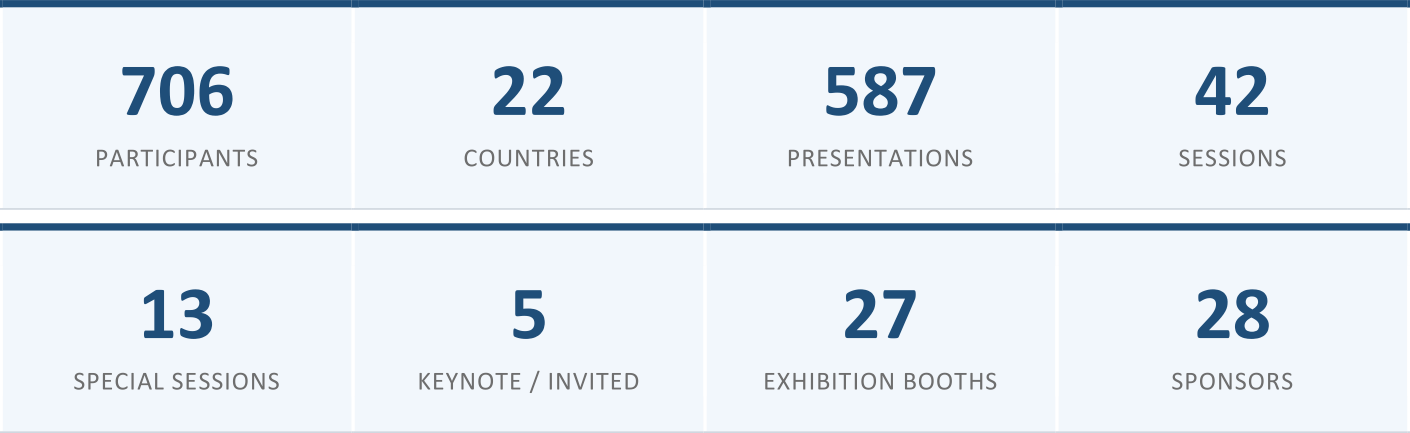
A total of 706 experts, scholars, and guests from 22 countries gathered in Incheon to examine water management under a changing climate and the role of artificial intelligence in the discipline.
5.1 Participating Countries
Australia, Canada, China (incl. Hong Kong and Macao), Denmark, France, India, Indonesia, Japan, Malaysia, Mongolia, Nepal, Netherlands, New Zealand, Oman, Philippines, Poland, Portugal, Singapore, South Korea, Spain, United Kingdom, United States.
6. Theme
Hydro-Environments in the Era of Climate Change and AI
The 25th IAHR-APD Congress addressed the questions that a changing climate poses for the hydro-environment, and asked what the water research community of the Asia-Pacific region can accomplish with artificial intelligence as a new instrument. The Congress sought to place the two subjects in the same room rather than in adjacent ones: climate adaptation supplies the problem, and data-driven modelling supplies a set of tools whose reliability the discipline is still establishing.
6.1 Topics
Submissions were invited under eight topic groups comprising twenty topics.
A. Climate Change and Water Resources
A1. Climate Change Impact
A2. Climate Change Adaptation and Mitigation
B. Water for the Energy Transition, Food Security and Nature
B1. Water-Energy-Food Nexus
B2. Integrated Water Management and Governance
B3. Water-Ecosystems Nexus
C. Improving Resilience against Water Hazards and Disasters
C1. Urban Runoff & Flood Management
C2. Urban Water Cycle and Sustainable Management
C3. Hydro-Hazard Mitigation and Management
D. AI-driven Modeling of Hydrologic and Hydraulic Systems
D1. AI-Driven Modeling of Hydraulic Systems
D2. AI-Driven Modeling of Hydrologic Systems
D3. AI-Powered Hydroinformatics
E. Fluvial Processes and River Engineering
E1. Sediment and River Engineering
E2. Hydraulic Structures
E3. Experimental and Numerical Modeling
F. Environmental Hydraulics and Ecohydraulics
F1. Eco and Environmental Hydraulics
F2. NbS for Flood Mitigation and Pollution Mitigation in River Catchments
G. Estuarine and Coastal Hydraulics
G1. Coastal, Estuarine and Harbor Science and Engineering
G2. Hydro-Kinetic Energy
H. Multi-scale Data Acquisition and Analysis Methods
H1. Remote sensing, Field Monitoring and Laboratory Measurement
H2. Combined Observational and Analytical Methodologies
7. Committees
7.1 Advisory Boards
Two advisory boards were constituted for the Congress: an International Advisory Board of thirteen members, comprising IAHR office-holders and senior figures from across the Division and beyond, and a Local Advisory Board of seven senior members of the Korean water resources community.
7.2 International Scientific Committee
The International Scientific Committee comprised thirty-four members drawn from fourteen countries and regions, and was responsible for the review of submitted abstracts and for advising on the composition of the scientific programme.
7.3 Local Organizing Committee
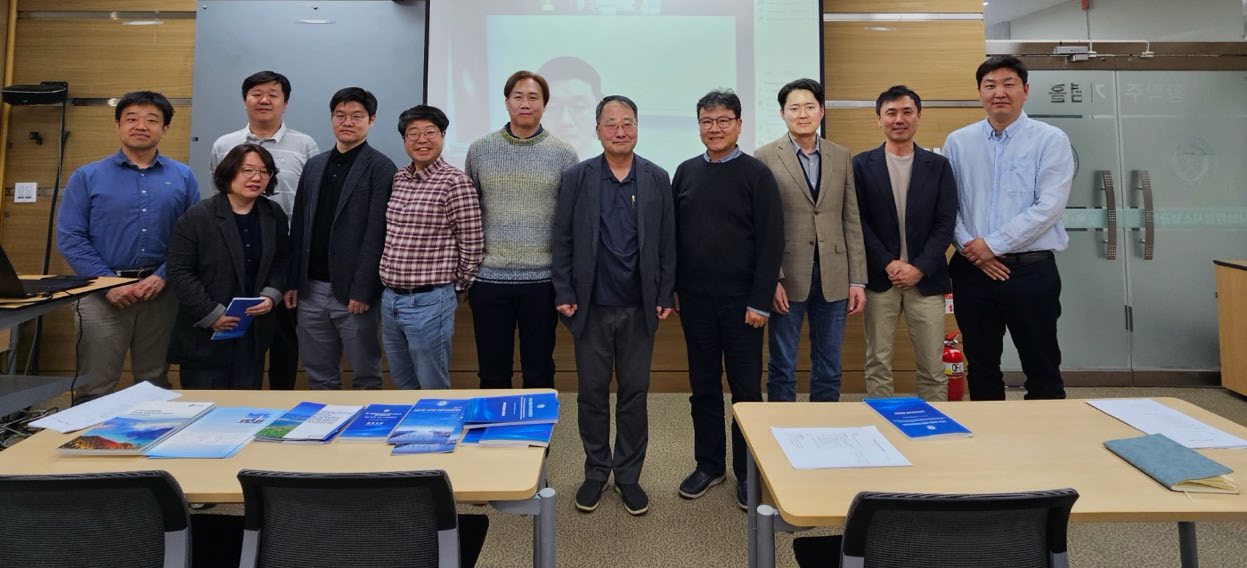
The Local Organizing Committee was chaired by Prof. Sung-Uk Choi (Yonsei University), supported by five Vice-Chairs. The Committee comprised 73 appointments in total (approximately 66 individuals excluding concurrent appointments), drawn from academia, public research institutes and the engineering industry. Secretariat functions were shared with the professional congress organiser, The Plan Co. In the rosters below, KICT denotes the Korea Institute of Civil Engineering and Building Technology.
8. Mission
The mission of the 25th IAHR-APD Congress was to serve the hydro-environment of the Asia-Pacific region at a moment when two developments are reshaping the discipline at once: a climate that no longer holds to the record on which practice was built, and a set of data-driven methods whose reach the field is still establishing. The Congress sought to bring the water research and engineering community of the region into one place; to set the experience of individual countries alongside one another rather than leaving it to circulate separately; and to create an occasion at which research findings, engineering practice and emerging methods could be examined in the same conversation.
9. Objectives
To provide a platform for exchange and cooperation in water science and technology across the Asia-Pacific region — to share water management policy and practical experience between countries, to make research findings available beyond the institutions that produced them, and to establish working relationships that outlast the Congress week.
To examine what a changing climate asks of the hydro-environment, and to set the adaptation and mitigation measures adopted in different countries of the region against one another so that their conditions of success can be understood.
To establish where artificial intelligence now stands as an instrument of hydrological and hydraulic practice — what it can be relied upon to do, where it supplements rather than replaces physical understanding, and which questions about its use remain open.
To support the next generation of researchers in the region through the Young Professionals Network programme, the Master Classes and the recognition of outstanding work, and so to sustain the community from which the Division draws.
10. Congress Format
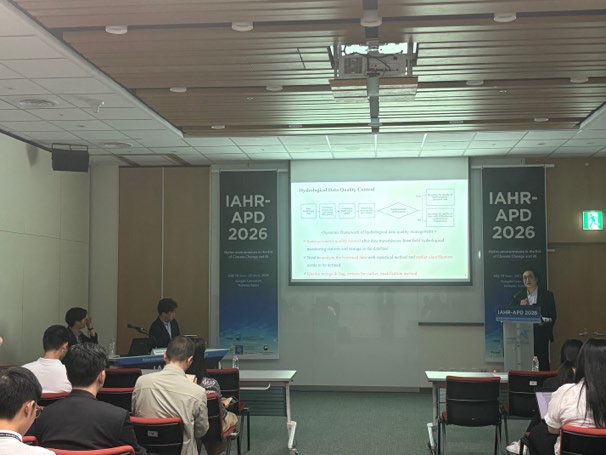
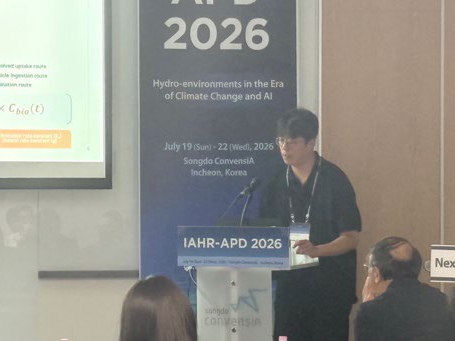
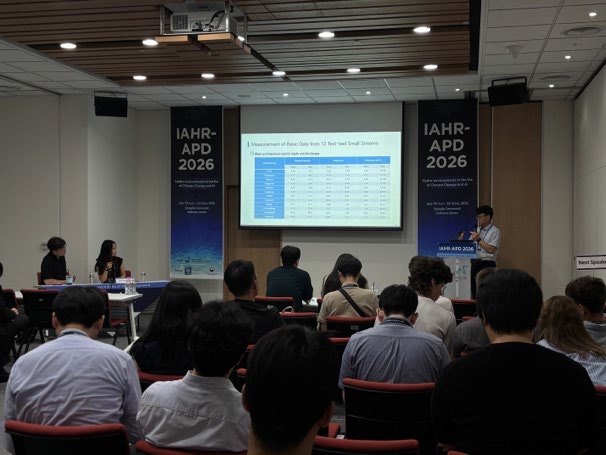
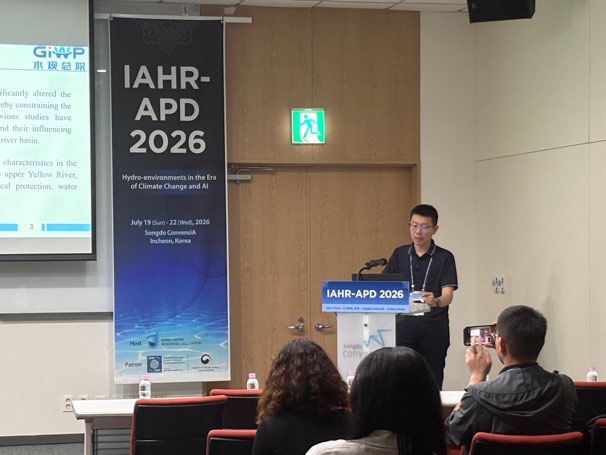
Spanning four days, the Congress comprised three keynote sessions delivering five lectures, twenty-one oral sessions, fifteen special session slots covering thirteen Special Session topics, one High-Level Panel, three poster sessions, two Master Classes and two Young Professionals Network events. A total of 587 presentations were delivered, of which 242 were given orally and 345 by poster.
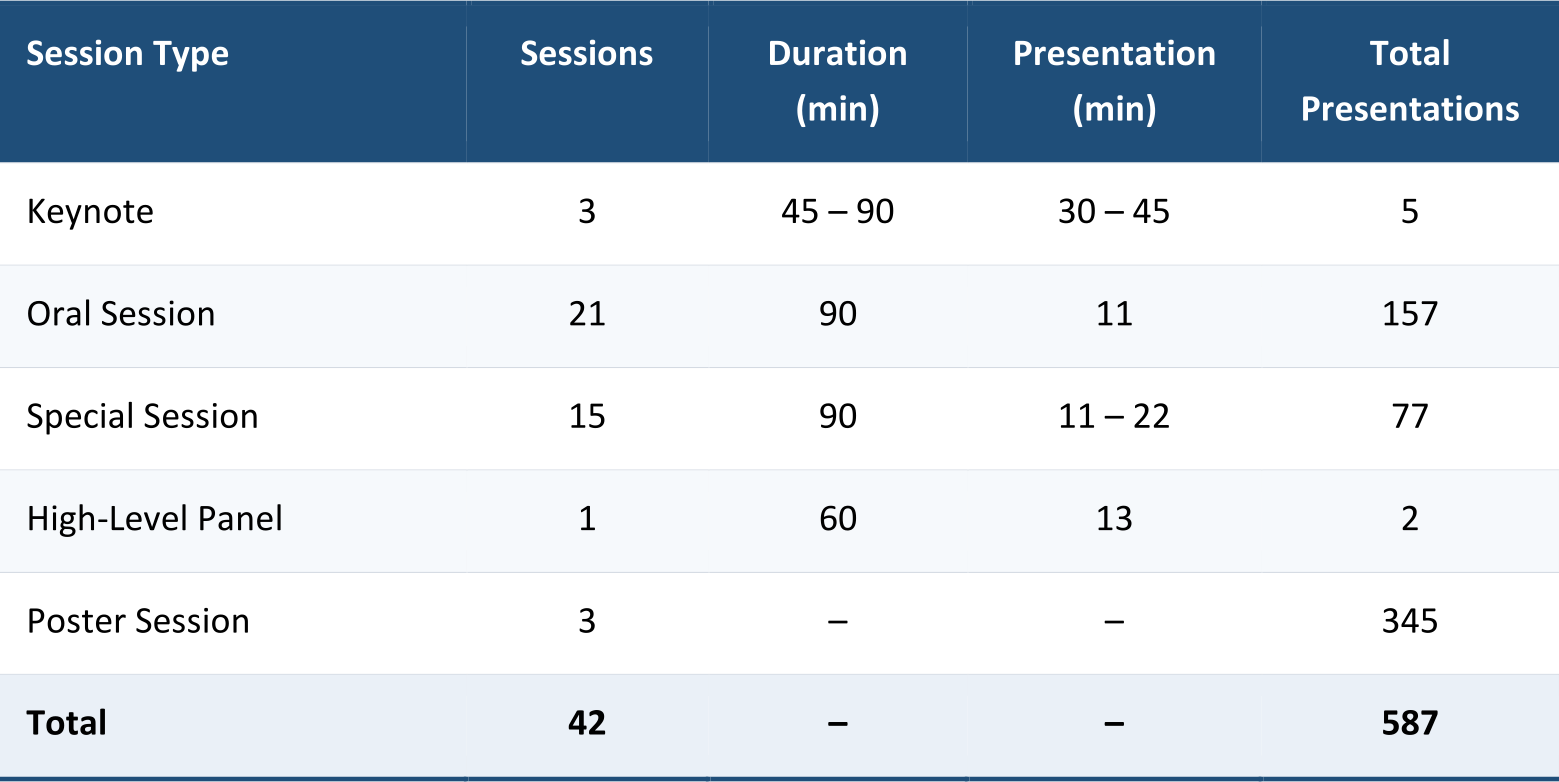
Oral sessions ran in six parallel streams across six time slots. Poster sessions were scheduled during the morning and afternoon refreshment breaks on each day so that presenters and delegates would meet without a competing session running. Balancing subject matter across the parallel streams received particular attention: where similar topics are scheduled concurrently, delegates are obliged to forgo presentations they wish to attend, and accepted papers were therefore classified by subject and redistributed across time slots through several rounds of revision.
A full audit of non-attendance was conducted during the Congress. The no-show rate remained below 10 percent. Four no-shows were recorded in the oral and special sessions, and one substitute presenter was accepted; thirty-one posters were not mounted. The predominant cause was the inability of overseas presenters to enter the country following visa refusal. The Secretariat and the Korea Water Resources Association assisted with visa procedures wherever possible; the cases concerned were attributable to incomplete documentation submitted by the presenters themselves. No instances of non-attendance were attributable to programme administration or participant communication.
11. Registration and Participation
11.1 Participation
A total of 706 participants from 22 countries registered for the Congress across the three registration periods. Registration was administered online through the Congress website until 30 June 2026, and on-site at Songdo ConvensiA during the Congress itself.
11.2 Registration Fees
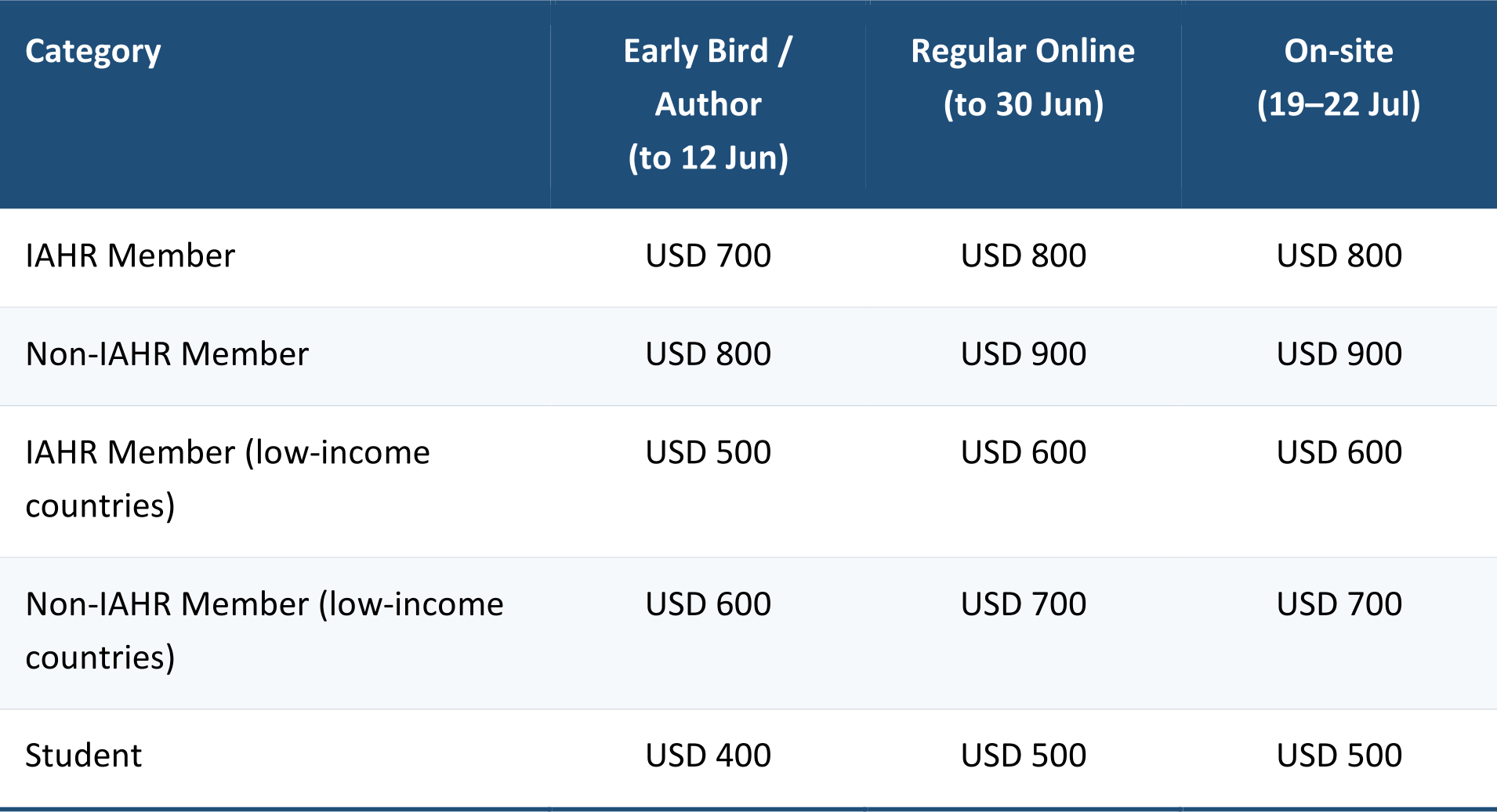
Member status was verified with IAHR headquarters; the low-income country rate applied to a designated country list; the student rate applied up to doctoral level subject to proof of enrolment.
Reduced registration was granted to the two lead speakers of the High-Level Panel, to fourteen members of the IAHR-APD Executive Committee and to a French student group of fourteen. Complimentary registration was extended to the five keynote and invited speakers, five representatives of IAHR headquarters, the IAHR-APD President, eight delegates of the Asian River Restoration Network and eleven domestic senior scholars.
11.3 Preparatory Milestones
Abstract submission deadline: 31 December 2025
Extended abstract submission deadline: 31 January 2026 (final call: 13 February 2026)
Abstract acceptance notification: 31 January 2026
Extended abstract acceptance notification: 21 March 2026
Full paper submission deadline: 20 May 2026 (extended)
Full paper acceptance notification: 5 June 2026
Early-bird and author registration: 1 February – 12 June 2026 (extended)
Regular online registration: 13 – 30 June 2026
On-site registration: 19 – 22 July 2026
12. Technical Tour
The technical tour was conducted on the third day of the Congress, 21 July 2026, at the Sihwa Lake Tidal Power Station. A single group was operated in accordance with final attendance, comprising 65 participants — 5 domestic and 60 international — including two escorts from the Local Organizing Committee. Attendance was restricted to those who had purchased tickets in advance.
The route combined the education hall of the power station, the Tidal Power Culture Pavilion opened in 2025, the Moon Observation Tower and Naerae Tidal Park over approximately 140 minutes. Unexpected rainfall on the day gave rise to some concern, but the programme proceeded without disruption owing to thorough advance preparation. The opportunity to visit the world's largest tidal power facility, which generates 25,400 kW at flood tide, was particularly well received by international participants.
13. Exhibition
An exhibition of scientific and technological achievements in water-related fields was held on 20 and 21 July in Hall 1 on the first floor of Songdo ConvensiA, jointly with the Korea Smart Water Grid Association under a memorandum of understanding governing the division of responsibilities and costs between the two associations. Twenty-seven booths of 9 m² each were operated, with four exhibitor badges provided per booth. Learned societies, public institutions, industry and universities were all represented, and the exhibition became a place where research, practice and industry met in one room.
Associations and international bodies: IAHR; Korean Society of Civil Engineers; Korean National Committee on Large Dams (KNCOLD); Korea River Association
Public institutions: KICT (two booths, including a dedicated IWRM-K platform booth); K-water; Korea Authority of Land and Infrastructure Safety (two booths)
Universities and research institutes: Graduate School Specialized in Climate Change, Kookmin University; Chungnam National University Industry-Academic Collaboration Foundation; Pukyong National University; Myongji University Industry and Academia Cooperation Foundation; Integrated Watershed Management Institute; Sangju Carbon Neutrality Center
Industry: Xylem Inc.; Dongbu Engineering; DONGMOON ENT; GEOSTORY; PS Global; JYSYSTEM; E Solutions; Infrastructure Disaster Navigation Agency; Shandong Oubiao Information Technology (China)
Platforms and publications: iRIC Software; River (journal); KWRAgent
KNCOLD operated a promotional booth ahead of the 95th ICOLD Annual Meeting to be held in 2027. KWRAgent, an AI agent project under development by the Korea Water Resources Association together with Korea University and Chungnam National University, attracted considerable interest among delegates.
14. Opening Ceremony
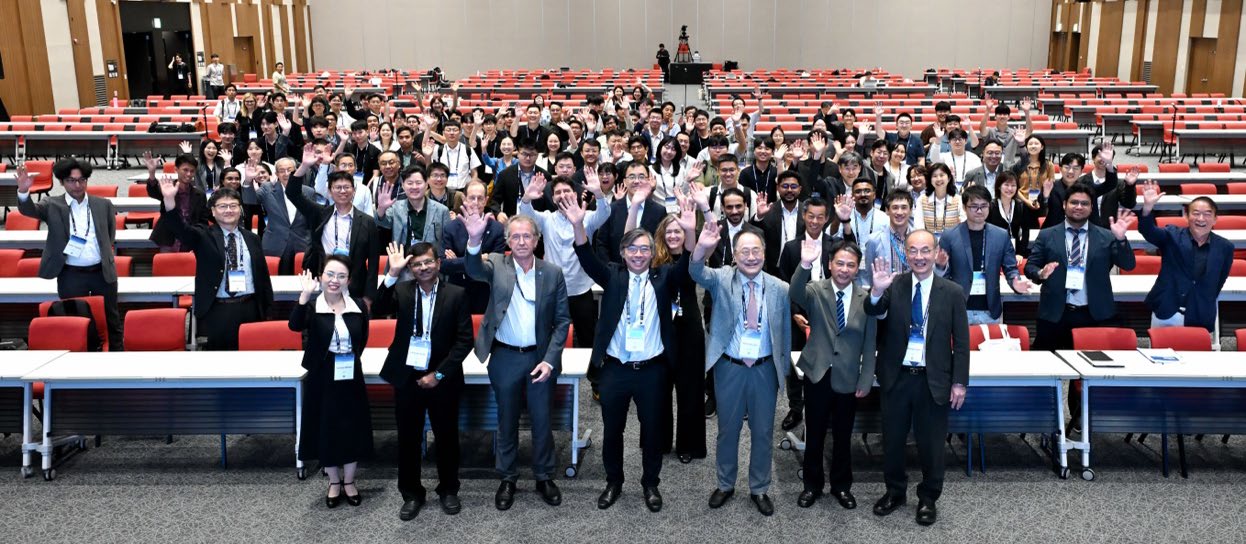
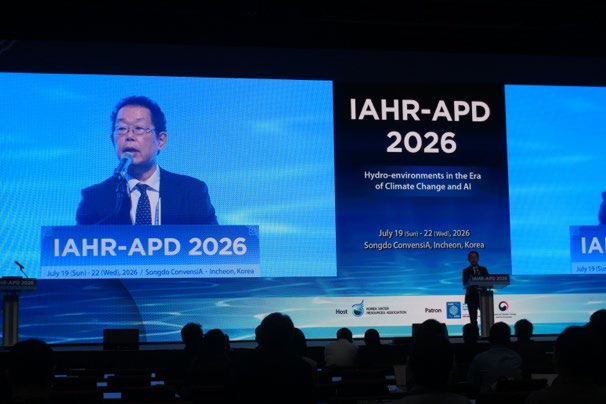
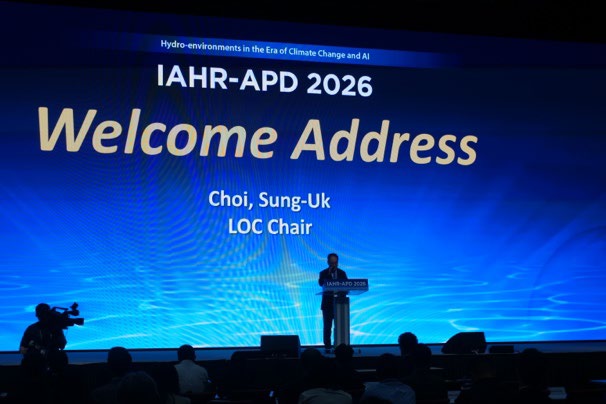
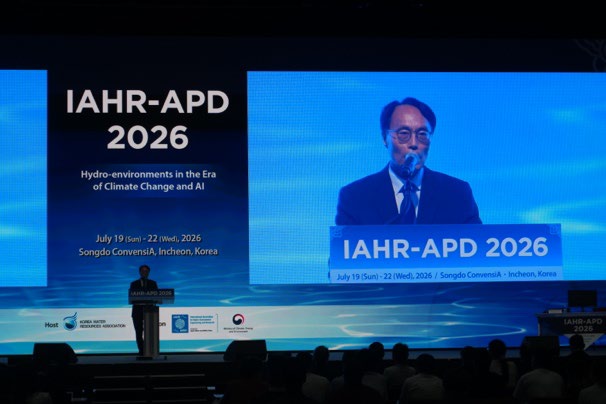
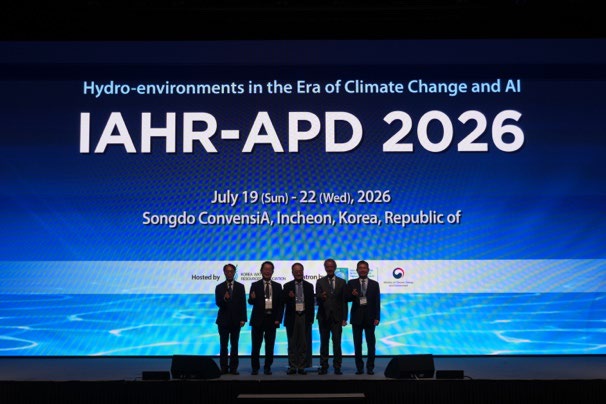
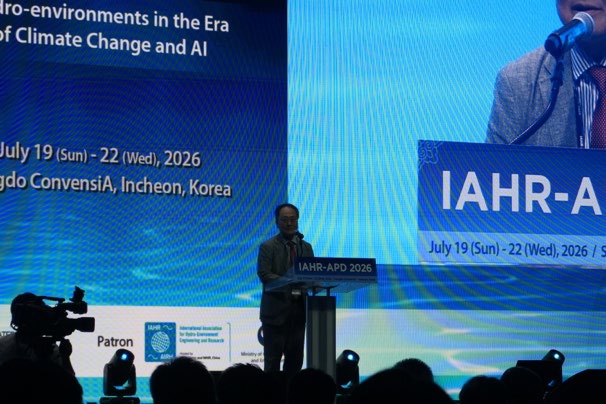
The 25th IAHR-APD Congress opened on 20 July 2026 in Grand Ballroom A/B at Songdo ConvensiA. Prof. Norio Tanaka, Chair of the IAHR-APD, delivered the opening address, followed by a welcome address from Prof. Sung-Uk Choi, Chair of the Local Organizing Committee. Congratulatory addresses were given on behalf of Mr. Sung-Hwan Kim, Minister of Climate, Energy and Environment, read by Mr. Seung-Hwan Lee, Director of the Han River Basin Environmental Office; by Prof. Philippe Gourbesville, President of the IAHR; and by Dr. Kye-Woon Choi, President of the Incheon Institute. Prof. Ju-Young Shin, Secretary General of the Local Organizing Committee, presided over the ceremony, which proceeded directly to the keynote programme following the commemorative photograph.
15. Keynote and Invited Lectures
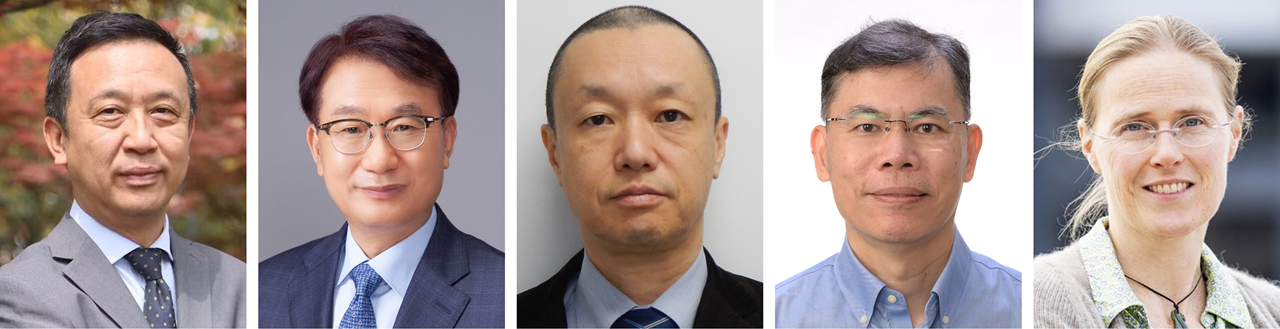
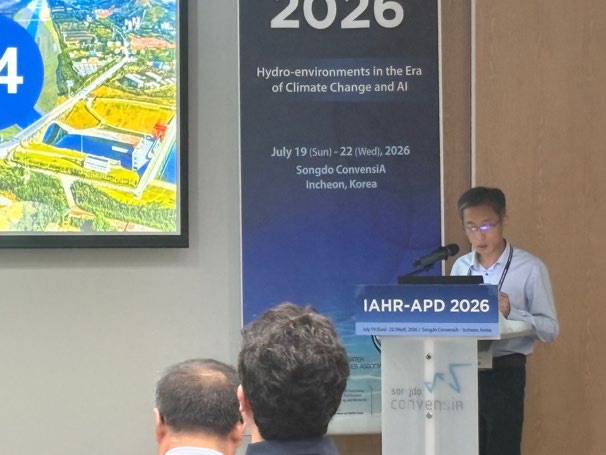
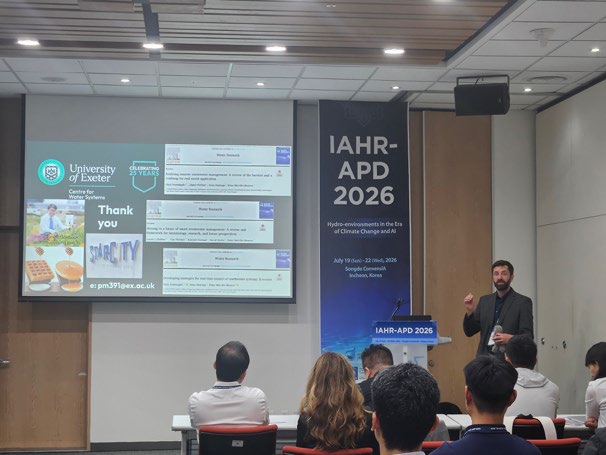
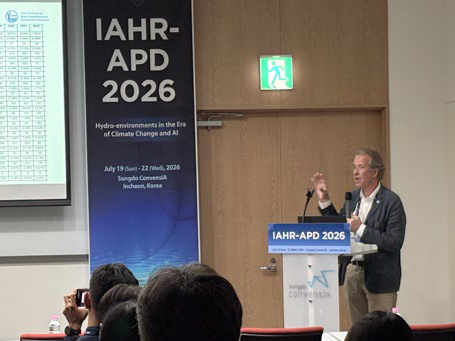
Five lectures were delivered across three keynote sessions in Grand Ballroom A/B, chaired by Prof. Woochul Kang (Kongju National University). The speakers were from China, Japan, the Republic of Korea, Singapore, and the Netherlands, and each compressed a long body of research experience into a single presentation. The third session was given by invited speakers.
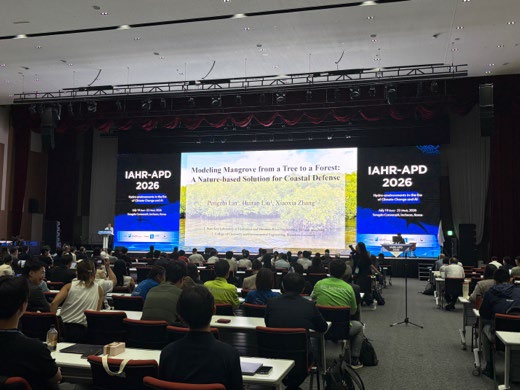
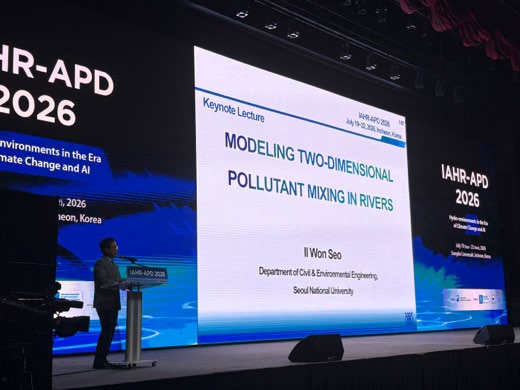
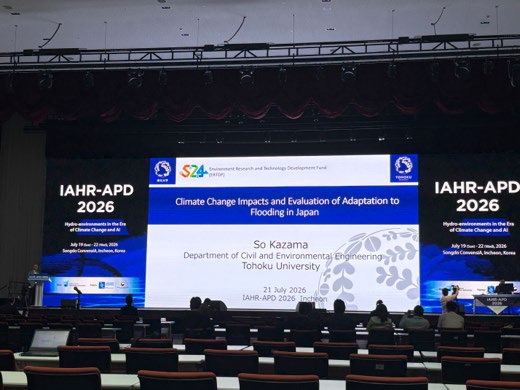
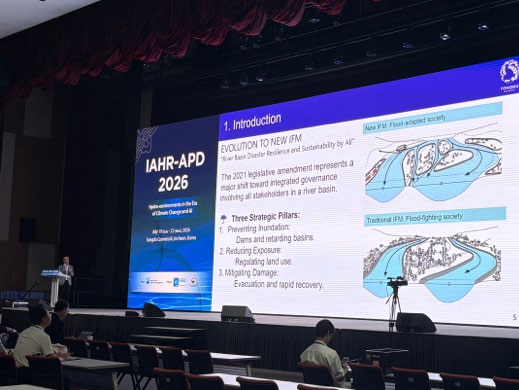
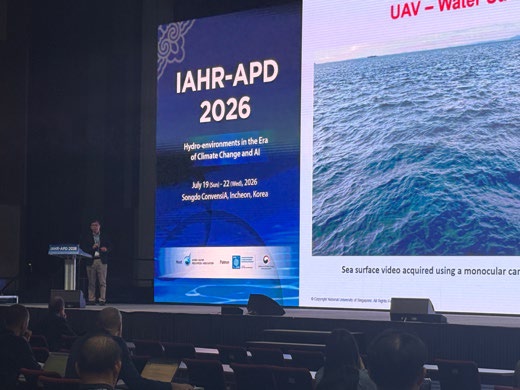
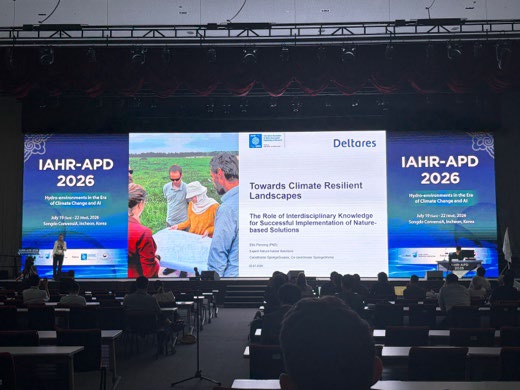
Keynote and invited speakers
Keynote 1: 20 July (Mon) 11:00 – 12:00: Prof. Pengzhi Lin, Sichuan University, China; Prof. Il Won Seo, Seoul National University, Korea
Keynote 2: 21 July (Tue) 09:00 – 09:45: Prof. So Kazama, Tohoku University, Japan
Keynote 3 (Invited): 22 July (Wed) 09:00 – 10:30: Prof. Adrian Law Wing Keung, National University of Singapore; Dr. Ellis Penning, Deltares, Netherlands
15.1 Keynote Session 1
Modeling Mangrove from a Tree to a Forest: A Nature-based Solution for Coastal Defense
Prof. Pengzhi Lin — Distinguished Professor, Sichuan University, China
The lecture traced the modeling of mangroves from the scale of a single tree to that of a whole forest, and set out how such vegetation may be represented in coastal defense design as a nature-based alternative, or complement, to hard structures.
About the speaker
Prof. Lin holds the Chang-Jiang Scholars Program Distinguished Professorship at Sichuan University. He received his B.E. in Civil Engineering from Tianjin University in 1991, his M.S. from the University of Hawaii at Manoa in 1993, and his Ph.D. from Cornell University in 1998. His research concerns coastal, offshore and hydraulic engineering, and in particular the numerical modeling of water waves, turbulent free-surface flows and fluid–structure interaction. He has held academic appointments at Cornell University, the Hong Kong Polytechnic University and the National University of Singapore. He is a Member of the European Academy of Sciences and Arts and serves as Editor-in-Chief of Applied Ocean Research.
Modeling Two-Dimensional Pollutant Mixing in Rivers
Prof. Il Won Seo — Emeritus Professor, Seoul National University, Republic of Korea
The lecture set out approaches to modelling the two-dimensional mixing of pollutants in rivers, addressing transverse dispersion and the estimation of the mixing coefficients on which the prediction of contaminant transport depends.
About the speaker
Prof. Seo is Emeritus Professor in the Department of Civil and Environmental Engineering at Seoul National University. He earned his B.S. and M.S. degrees in Civil Engineering at Seoul National University and his Ph.D. in Hydrosystems Engineering at the University of Illinois at Urbana-Champaign in 1990. His research concerns the modeling of hydrodynamics and water quality in rivers, diffusion and dispersion processes, turbulent buoyant jets and plumes, ocean outfall design, and machine learning applied to water quality and sediment studies. His honors include the Songsan Grand Award of the Korean Society of Civil Engineers in 2020 and the Distinguished Faculty Award of Seoul National University in 2018.
15.2 Keynote Session 2
Climate Change Impacts and Evaluation of Adaptation to Flooding in Japan
Prof. So Kazama — Professor, Tohoku University, Japan
The lecture presented assessments of the effect of a changing climate on flooding in Japan, and the evaluation of adaptation measures against the flood risk those assessments project.
About the speaker
Prof. Kazama is Professor in the Department of Civil and Environmental Engineering at Tohoku University, from which he received his B.E. in 1990 and his Ph.D. in 1995. He held positions at the University of Tsukuba and the Asian Institute of Technology before returning to Tohoku University, where he has been Professor since 2010. His research concerns hydrological modeling, climate change impact assessment, flood adaptation and ecohydrology. He serves as Vice President of the Japan Society of Hydrology and Water Resources.
15.3 Keynote Session 3 — Invited Speakers
Spatial Field Monitoring of Surface Hydrodynamics and Sediment Transport for Coastal Protection
Prof. Adrian Law Wing Keung — Professor, National University of Singapore
The lecture presented the spatial field monitoring of surface hydrodynamics and sediment transport, and considered how measurement at that scale informs the design of coastal protection.
About the speaker
Prof. Law has been Professor in the Department of Civil and Environmental Engineering at the National University of Singapore since 2024. He holds Ph.D. and M.Sc. degrees in Civil and Environmental Engineering from the University of California, Berkeley, with specialisation in coastal and hydraulic engineering, and a B.Eng. in Civil Engineering from the University of Hong Kong. He practiced as a senior engineer in the United States for over seven years while pursuing graduate study, before joining the School of Civil and Environmental Engineering at Nanyang Technological University in Singapore in 1995. He chaired the Joint IAHR/IWA Committee on Marine Outfall Systems from 2014 to 2016 and represented Singapore at the ASEAN Hydroinformatics Data Centre from 2022 to 2023. He is Editor-in-Chief of the Journal of Hydro-environment Research and serves on the editorial boards of related technical journals.
Towards Climate Resilient Landscapes: The Role of Interdisciplinary Knowledge for Successful Implementation of Nature-Based Solutions
Dr. Ellis Penning — Deltares, Delft, Netherlands
The lecture argued that the successful implementation of nature-based solutions rests on knowledge drawn from several disciplines at once, and considered what that requirement asks of practice in building climate-resilient landscapes.
About the speaker
Dr. Penning is among the leading specialists in nature-based solutions at Deltares, where she conducts national and international projects on the subject. She holds an M.Sc. in Biology from Wageningen University and a Ph.D. in Civil Engineering from Delft University of Technology on the ecohydraulics of large shallow lakes. She has served as secretary of the Dutch Working Group on Ecological Water Management and as chair of the International Steering Committee of the River Experiment Centre of the Korea Institute of Civil Engineering and Building Technology, and chairs the IAHR working group on Nature-based Solutions. She supervises M.Sc. and Ph.D. candidates and lectures at Dutch universities on nature-based solutions. She has served as guest editor of the Journal of Ecohydraulics, Hydrolink and Cambridge Prisms: Water.
16. High-Level Panel
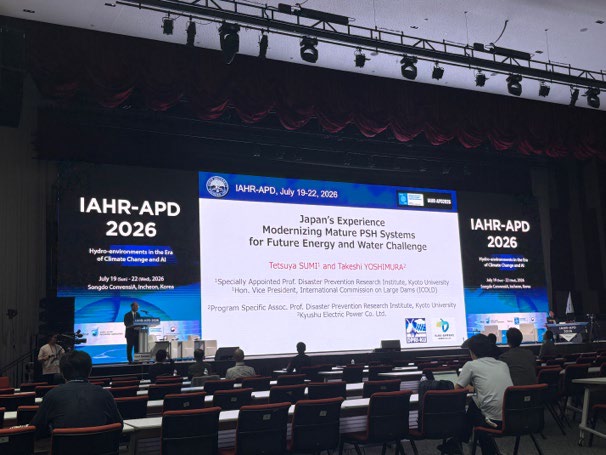
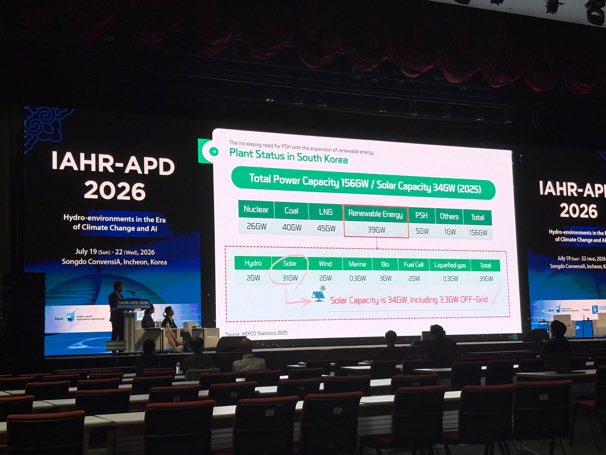
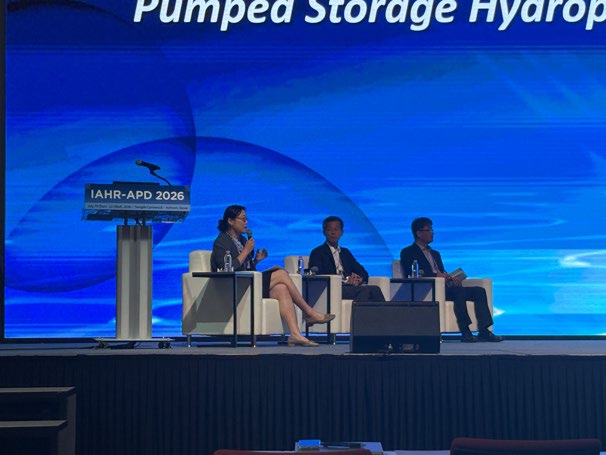
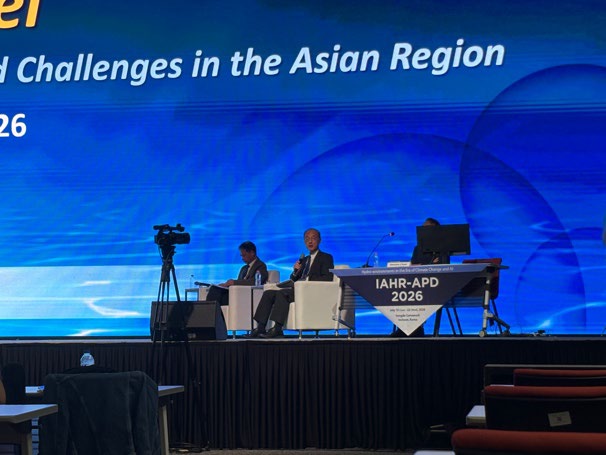
A High-Level Panel entitled “Pumped Storage Hydropower: Development Pathways and Challenges in the Asian Region” was convened on 21 July by Prof. Hyoseop Woo of Yonsei University. The session addressed pumped storage hydropower — an option receiving renewed attention alongside the expansion of renewable energy — from the perspectives of hydraulic design, numerical modeling, environmental impact and social acceptance. It brought the experience and knowledge of the Asia-Pacific region to bear on the water–energy nexus, whose importance continues to grow under a changing climate.
Convener: Prof. Hyoseop Woo (Yonsei University): Opening and session framing
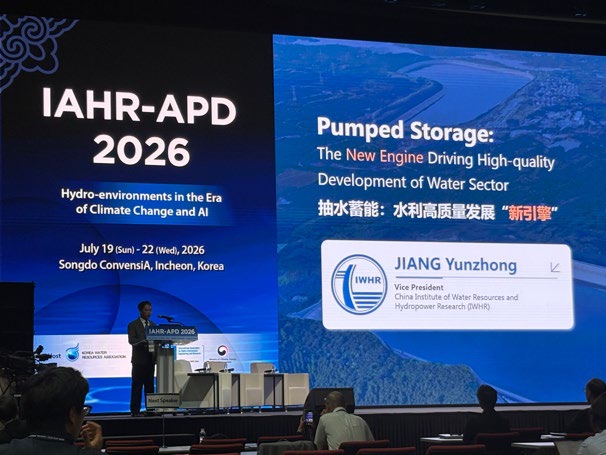
Lead Speaker: Dr. Yunzhong Jiang (IWHR, China): Pumped Storage Hydropower: A New Engine for High-Quality Water Development in China
Lead Speaker: Prof. Tetsuya Sumi (Kyoto University, Japan): Current Status and Future Challenges of Pumped-Storage Hydropower in Japan
Panellist: Dr. Liang Chen (IWHR, China): Expert panel intervention
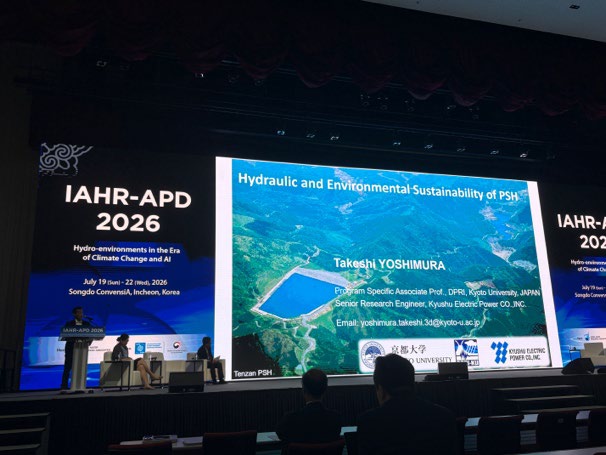
Panellist: Dr. Takeshi Yoshimura (Kyoto University, Japan): Expert panel intervention
Panellist: Dr. Cheul Jang (K-water, Republic of Korea): Expert panel intervention
17. Special Sessions and Side Events
Thirteen Special Sessions were established through an open call for proposals and delivered in fifteen session slots, comprising 77 presentations in total. Session SS02-2 was conducted as a discussion without formal presentations.
17.1 Special Sessions
SS 01: Groundwater Systems Across Scales: Toward Sustainable Water Management under Climate Change (Convener: Sun Woo Chang)
SS 02: Ecological Healthy River and Sustainable Social Development & 20th ARRN Governing Council Meeting (Convener: Jae-Kyoung Lee)
SS 03: Multidisciplinary Research and Implementation Strategies for Nature-Based Flood Management (Convener: Un Ji)
SS 04: Water Culture and River Ethics in Asia and the 4th Global River Symposium (Convener: Hyoseop Woo)
SS 05: Advanced Hydroinformatics Technologies of Catchment Digital Twin: Strategy, Tools and Applications (Convener: Qiang Ma)
SS 06: Advances in Wave Modeling and Coastal Structures (Convener: Young-Taek Kim)
SS 07: Water Security under Climate Change (Convener: Intan Supraba)
SS 08: Resilience against Flooding and Disasters in the Asia-Pacific Region (Convener: Norio Tanaka)
SS 09: Hydro-Environmental Applications and Future Prospects of AI for Water Management (Convener: Sung Hoon Kim)
SS 10: Advances in Flood Risk Modelling and Resilience (Convener: Mingfu Guan)
SS 11: From the White River to Green River – Adaptation and Management in the Climate Change (Convener: Won Kim)
SS 12: Hydroinformatics by & for Young Professionals (Convener: Morgan Abily)
SS 13: Advancing Sponge Cities and Nature-Based Water Circulation for Climate and Extreme Weather Resilience (Convener: Lee-Hyung Kim)
17.2 Side Events
Master Class 1: 19 July 10:00–13:00: The Future of CFD: Turbulence Modeling, Artificial Intelligence, and Quantum Computing — Prof. Joon Sang Lee (Yonsei University). 19 participants
Master Class 2: 19 July 09:00–17:30: NbS for Flooding and Water Management Resilience — Dr. Ellis Penning (Deltares) and Dr. Un Ji (KICT). 8 participants
IAHR Council Meeting: 19 July: Council of the International Association for Hydro-Environment Engineering and Research
IAHR-APD Council Meeting: 19 July: Council of the Asia and Pacific Division
National Associations Meeting: 19 July: Meeting of the presidents of national water associations
YPN: Meet the Leaders: 21 July: YP–Senior Dialogue with Prof. Philippe Gourbesville and Prof. Il Won Seo as invited senior guests
YP Networking Night: 21 July: Informal dinner and networking, open to participants who are not formal members of the IAHR Young Professionals Network
The first Master Class examined the next stage of numerical analysis, while the second was designed around in-depth dialogue between senior experts and early-career researchers, giving greater weight to discussion than to lecture. The two Young Professionals Network events were held in sequence on 21 July. The afternoon dialogue was conducted as an open conversation rather than a lecture, the format being intended to allow discussion of the practical trajectory of an international research career, the setting of research direction, and experiences of failure and transition that are seldom addressed in formal settings. Approximately 80 delegates attended the two events combined.
18. Parallel Sessions
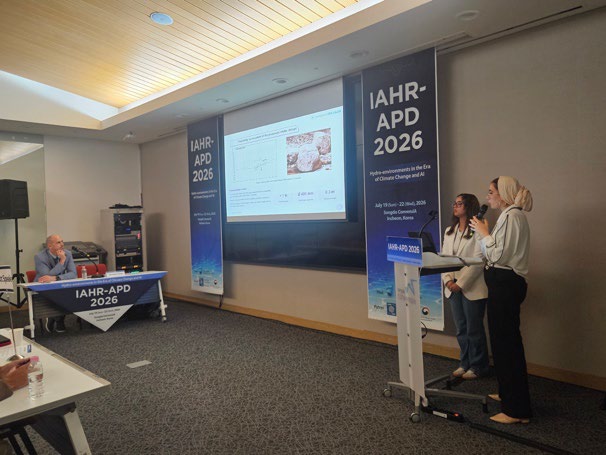
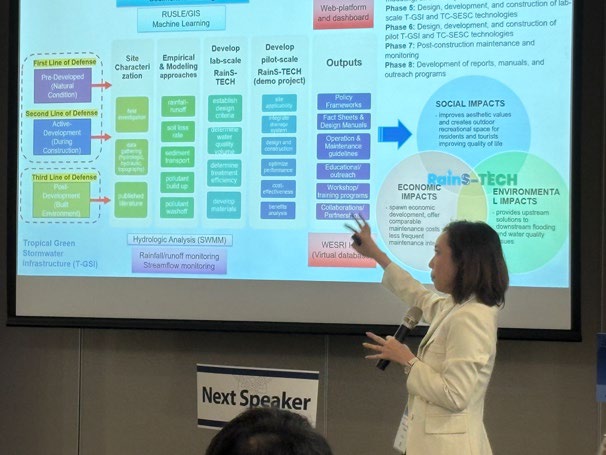
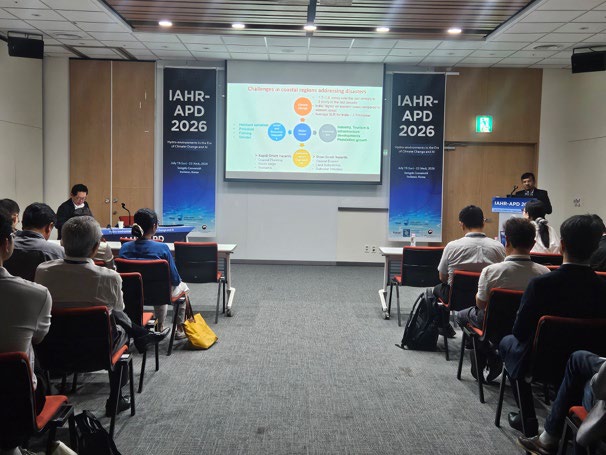
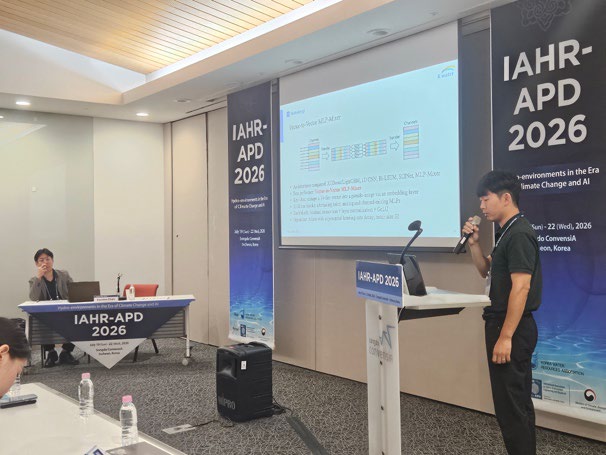
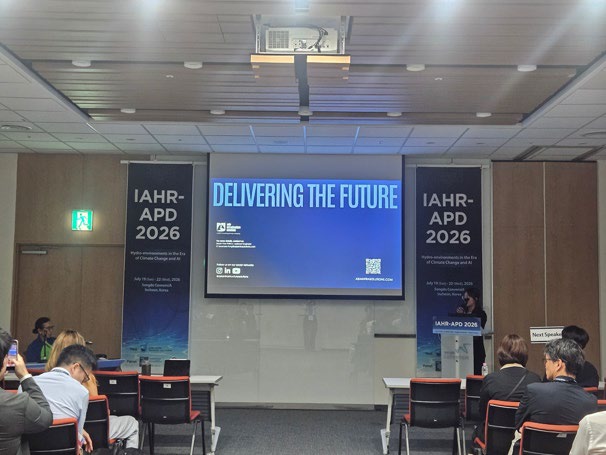
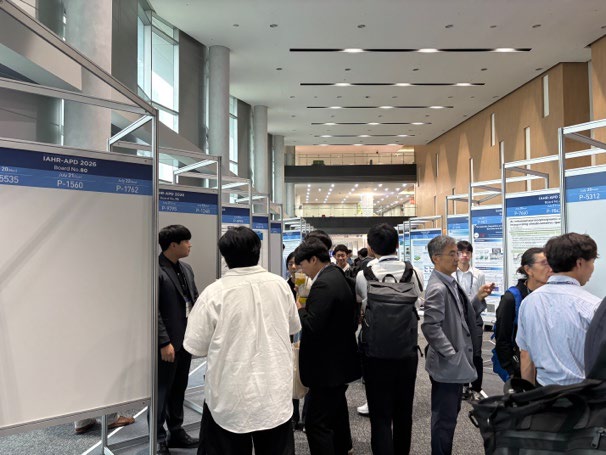
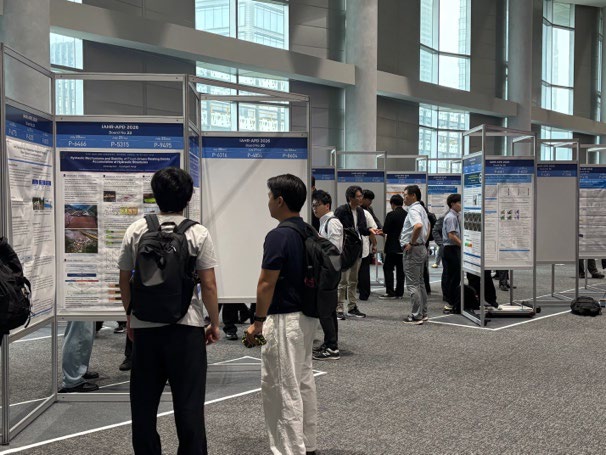
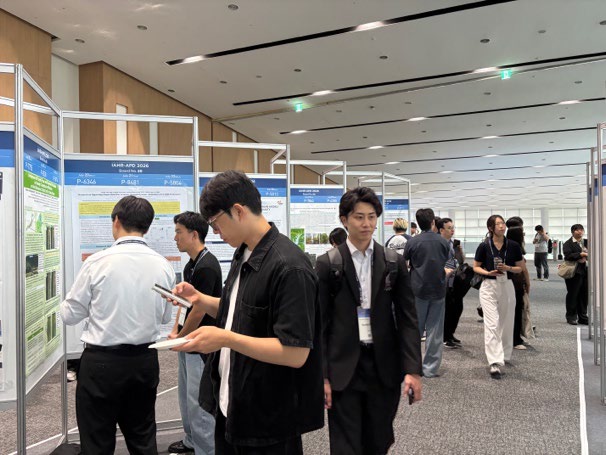
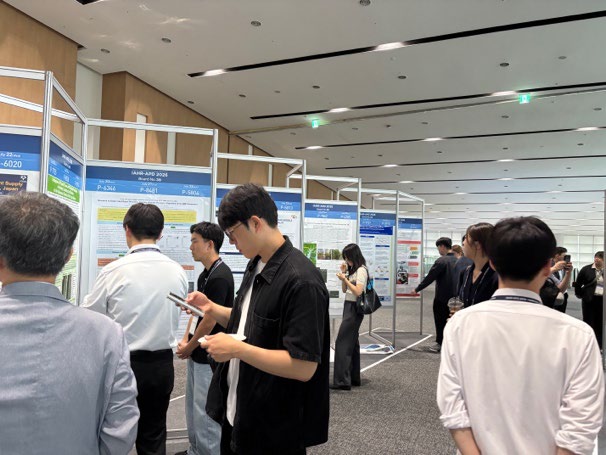
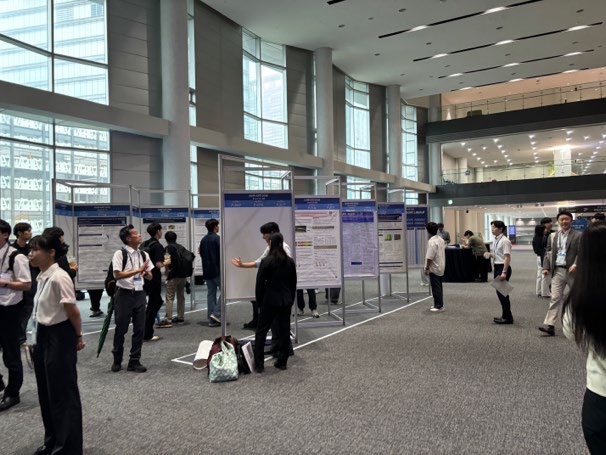
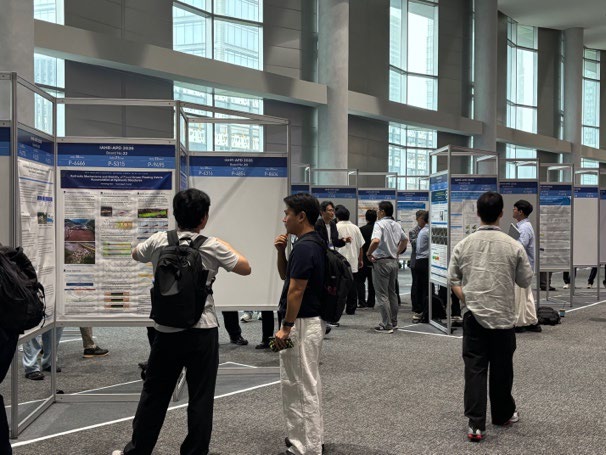
Oral and special sessions ran in six parallel streams in the six meeting rooms on the second floor, across six time slots over three days. Poster sessions were held in the second-floor lobby during the morning and afternoon refreshment breaks.
Six parallel session blocks were held over the three main days. On Monday 20 July, following the Opening Ceremony and the first keynote session, Parallel Session 1 ran from 14:00 to 15:30 and Parallel Session 2 from 16:00 to 17:30, each in six streams, with Poster Session 1 held in the intervening break.
On Tuesday 21 July the morning opened with the second keynote session and the High-Level Panel, followed by Poster Session 2 during the break and Parallel Session 3 from 11:00 to 12:30 in six streams. The afternoon was given over to the technical field trip, and no parallel sessions were scheduled.
Wednesday 22 July carried the greatest share of the programme. The third keynote session was followed by Poster Session 3 and by Parallel Session 4 from 11:00 to 12:30; the afternoon held Parallel Session 5 from 13:30 to 15:00, a further poster interval, and Parallel Session 6 from 15:30 to 17:00, each again in six streams. The Congress closed at 17:00 with the Closing Ceremony and the presentation of awards.
Oral presentations:
Poster session:
19. Social Programme
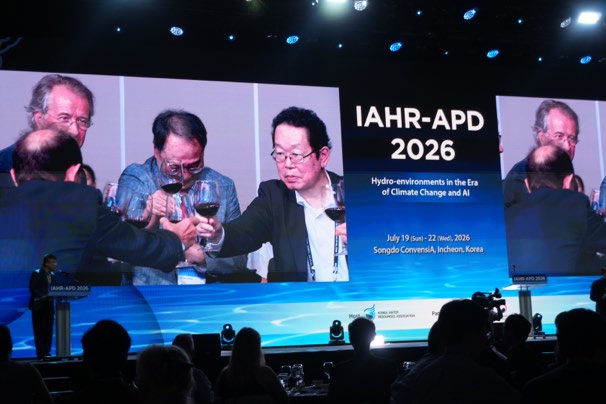
Welcome Reception: 20 July, 17:30–19:30, Grand Ballroom A: Canapés and cocktails for 300 persons. Master of ceremonies: Prof. Seung Ho Hong
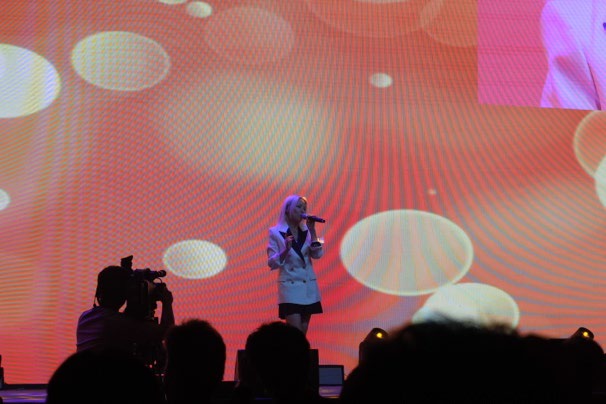
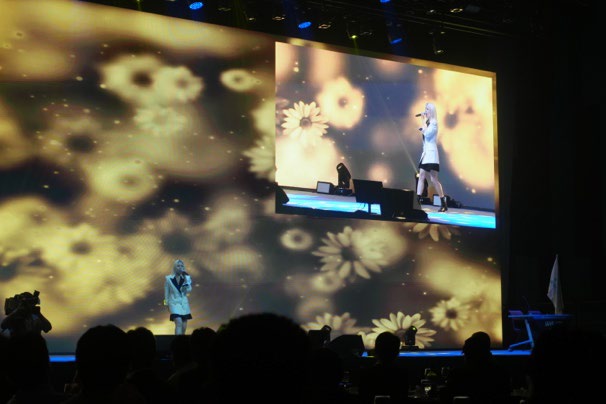
Gala Dinner: 21 July, 18:00–21:00, Grand Ballroom A: Western set menu for 200 persons; invited performance by the vocalist Ailee. Master of ceremonies: Prof. Donghwi Jung
Gala Dinner attendance comprised 46 domestic and 105 international participants, totalling 151. Admission was by coupon, and special dietary requirements, when notified in advance, were accommodated.
20. Closing Ceremony
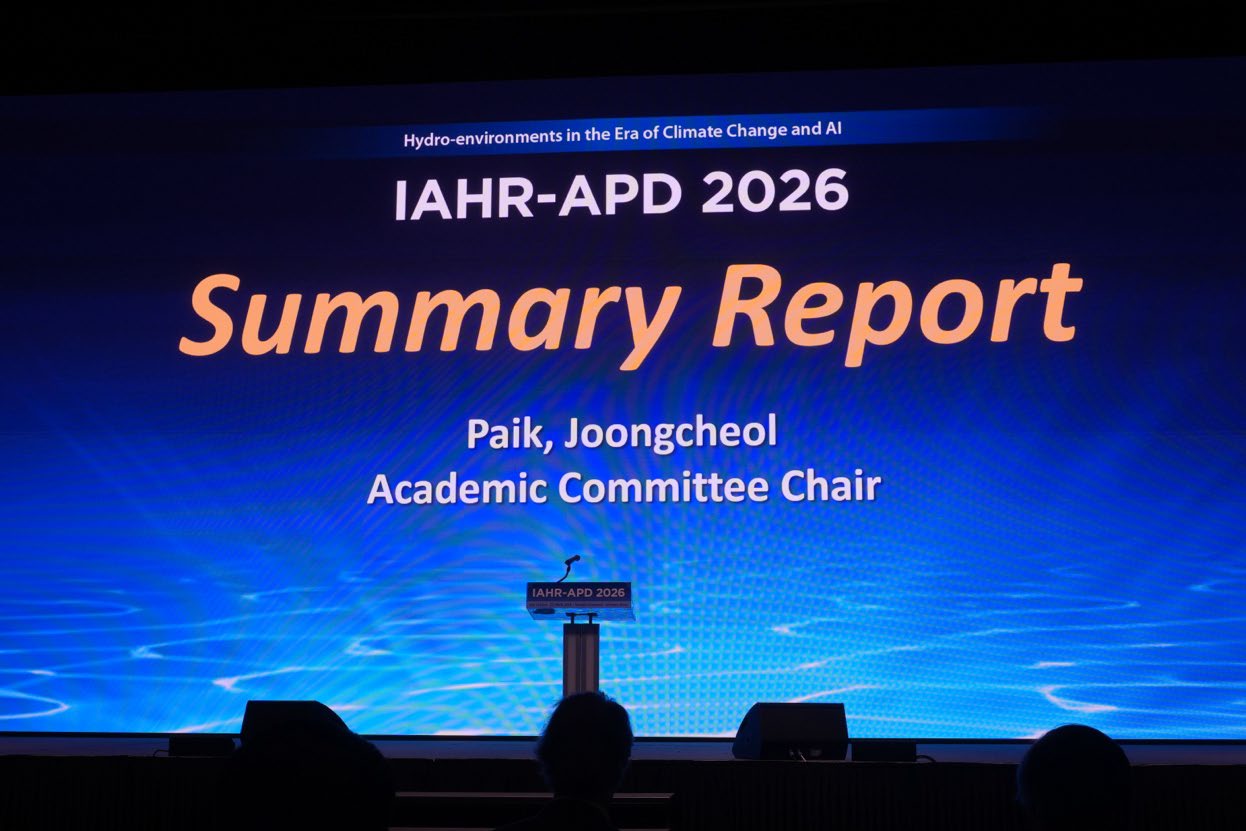
The Closing Ceremony of the 25th IAHR-APD Congress was held on 22 July 2026 from 17:00 to 18:00 in Grand Ballroom A/B, with Prof. Jaehyun Shin of Gachon University presiding. The Congress presented the Distinguished Member Award and the Water Conservancy and Environmental Heritage Award of the IAHR-APD, together with the Best Paper Award of the Congress.
20.1 Distinguished Membership Award
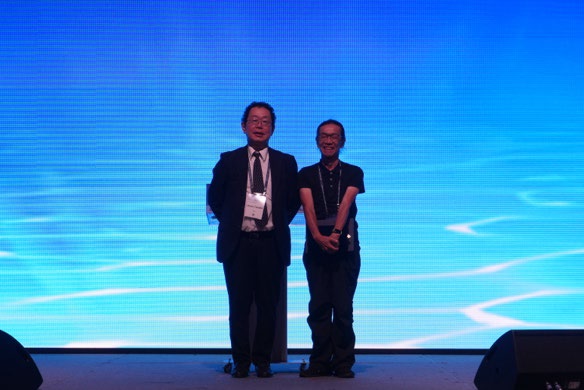
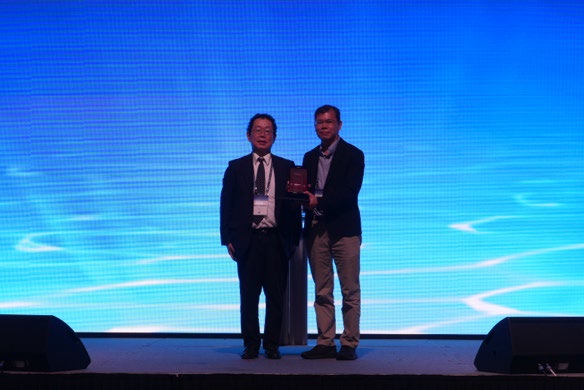
The Distinguished Membership Award of the Asia and Pacific Division was conferred on two recipients by Prof. Norio Tanaka, Chair of the IAHR-APD.
Prof. Yasuyuki Shimizu: Hokkaido University, Japan
Prof. Adrian Law Wing Keung: National University of Singapore, Singapore
20.2 Heritage Award
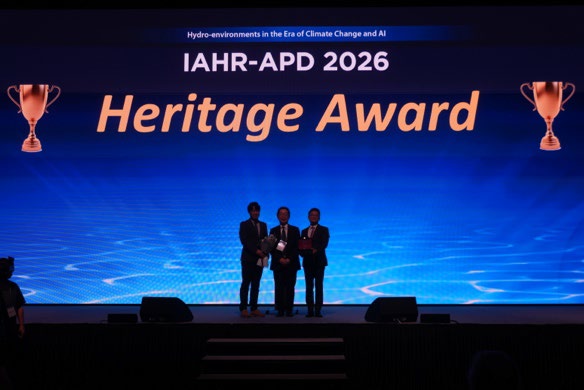
The Soyanggang Dam received the IAHR Hydro-Environment Asia and Pacific Division Heritage Award. The award recognises water infrastructure whose value has been established internationally over an extended period, and the designation of a domestic facility carries particular significance for the Korean water resources community. The award was received by Mr. Yu In-Seon, Director of the Soyanggang Dam Branch Office of K-water.
20.3 Best Paper Award
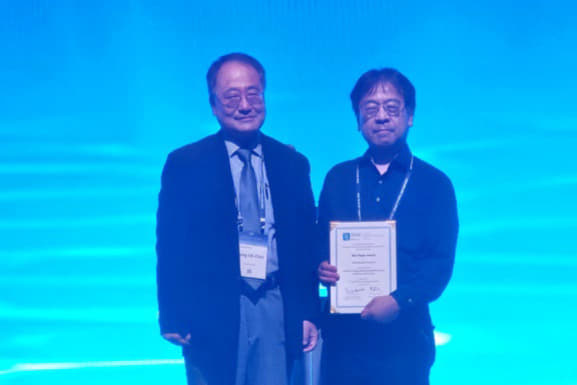
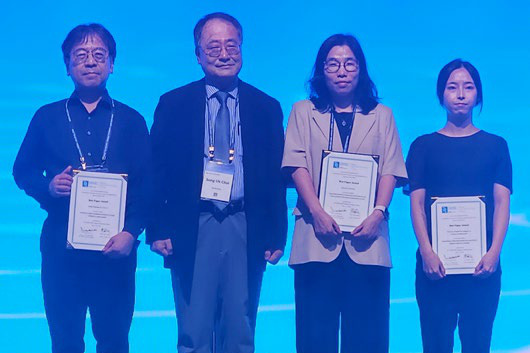
Four papers — two domestic and two international — were selected by the Local Organizing Committee.
Bomi Kim: Kumoh National Institute of Technology (Republic of Korea): High-Resolution Urban Flood Simulation for Large Domains Enabled by Multi-GPU Computing
Akihiko Nakayama: Universiti Tunku Abdul Rahman (Malaysia): Simulation of Shallow and Dispersed Overland Flow in Urban Catchment by a Particle Method
Sujin Kim: The Seoul Institute (Republic of Korea): Scenario-Based Simulation of Delayed Sluice Gate Operation for CSO Control in a Restored Urban Stream: Cheonggyecheon Case Study
Yushuang Sun: Yangzhou University (China): Effect of Particle Shielding on Cavitation Erosion Mitigation in Hyper-Concentrated Sediment Flows
20.4 Handover to the 26th Congress
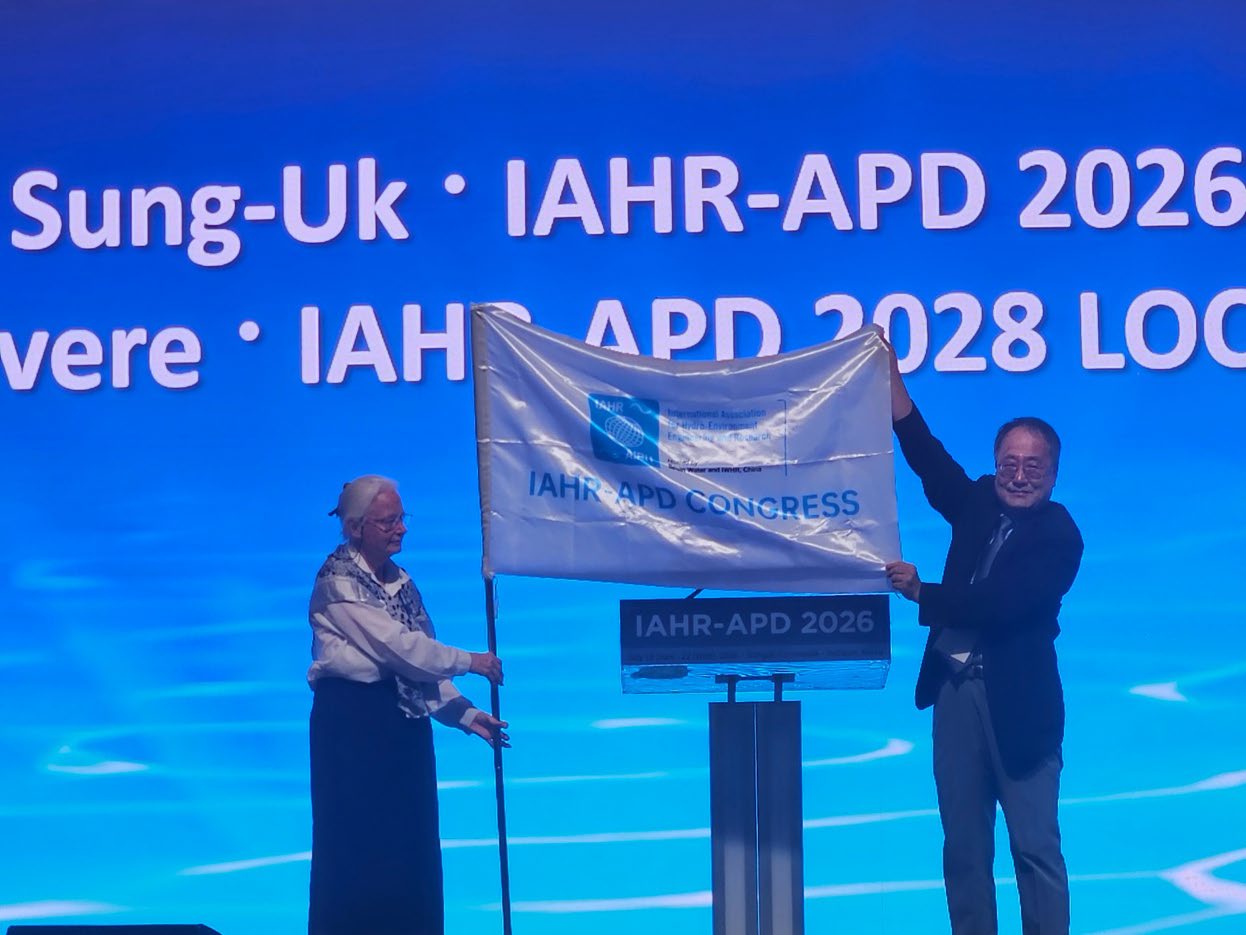
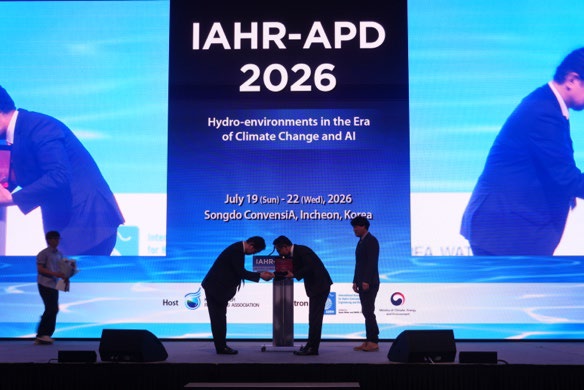
With the conclusion of the 25th IAHR-APD Congress in Incheon, attention turned to the 26th Congress of the IAHR-APD, which will be held in Wellington, New Zealand, from 8 to 11 February 2028. Dr. Guinevere Nalder of New Zealand was invited to the platform to introduce the next Congress, and received the Congress flag on behalf of its Local Organizing Committee.