587 participants from 20 countries gather in Chile for the 32nd IAHR Latin American Congress on Hydraulics
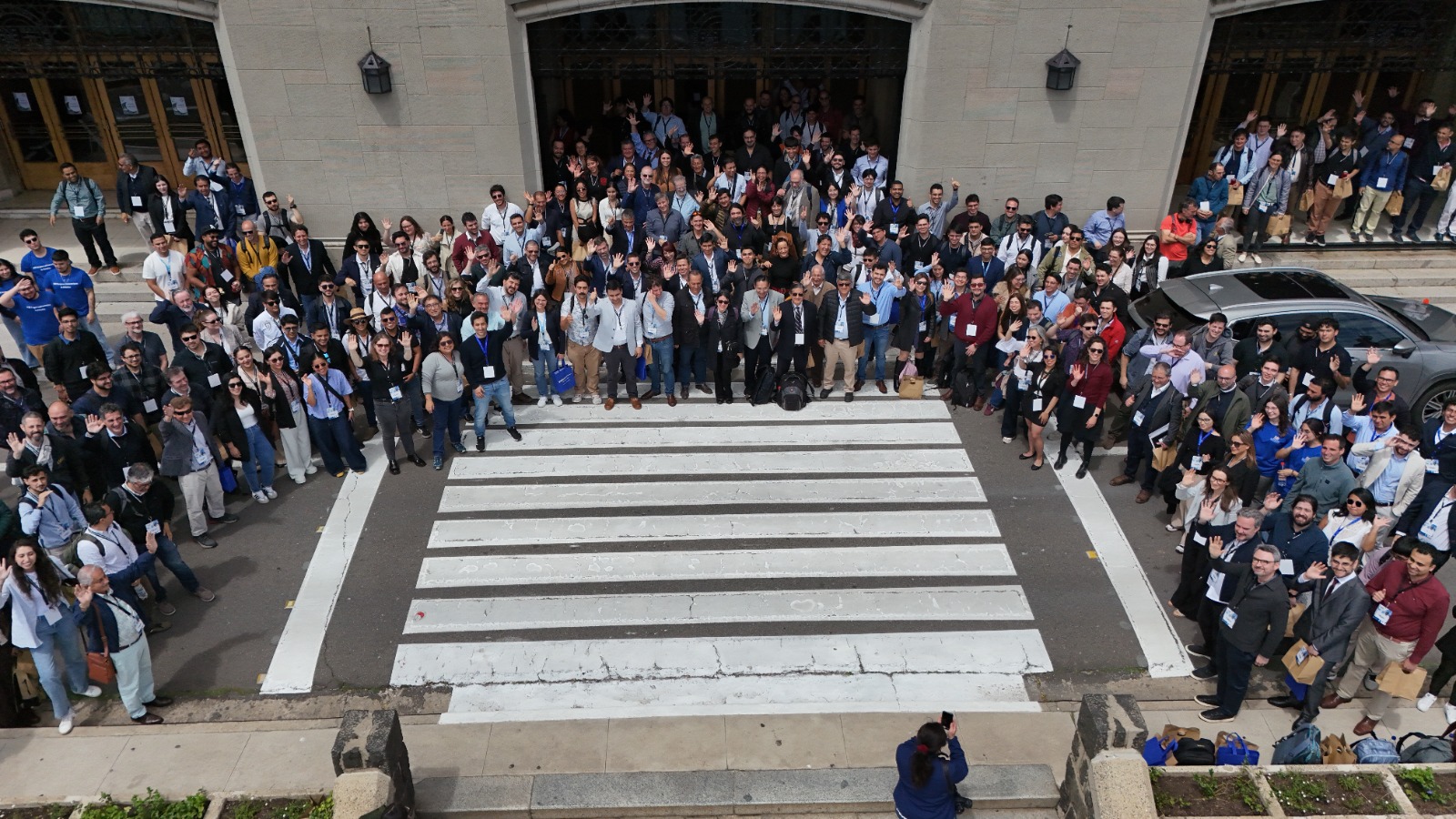
The congress brought together the Latin American hydro-environment community for five days of scientific exchange, technical discussions and collaboration on the region's water challenges.
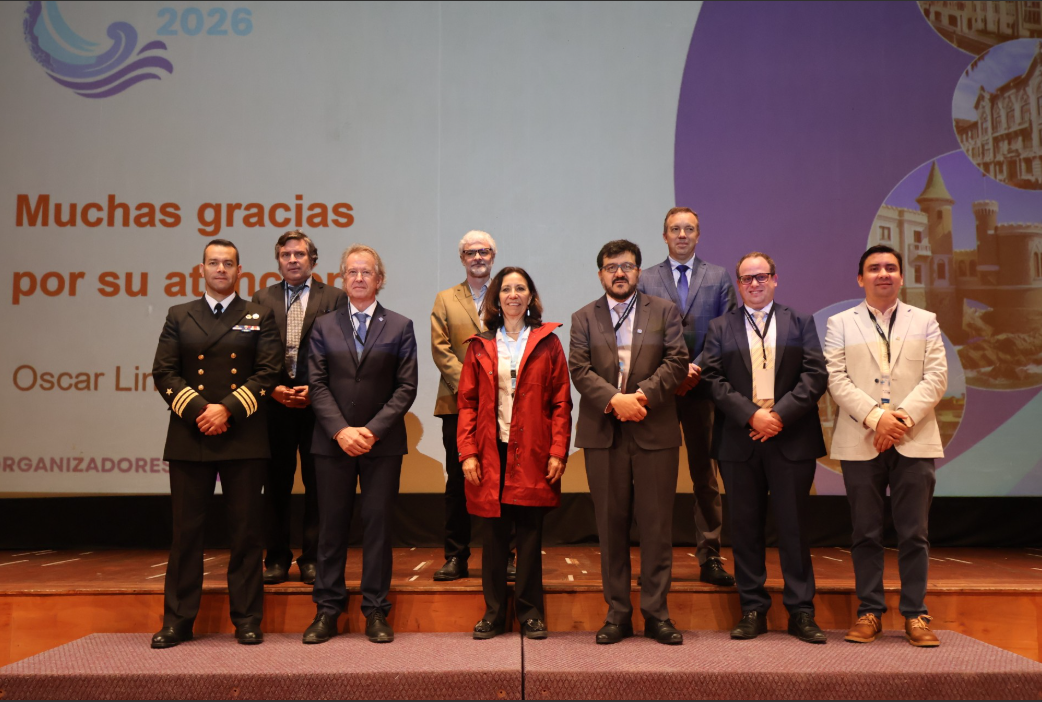
The 32nd IAHR Latin American Congress on Hydraulics concluded on 23 October 2026 in Valparaíso and Viña del Mar, Chile, bringing together 587 participants from 20 countries to exchange knowledge, present research and discuss advances in hydro-environment engineering.
Held from 19 to 23 October, the congress convened researchers, academics, engineers, public authorities, industry representatives and young professionals, reinforcing its role as a major regional platform for scientific and technical exchange. The 2026 edition marked the return of the congress to Chile after 12 years. It was also the first time the event had been held in the Valparaíso region, continuing a history that began with the inaugural Latin American Congress on Hydraulics in Chile in 1962.
The congress was organised by the National Institute of Hydraulics (INH), the Chilean Society of Hydraulic Engineering (SOCHID), the Pontifical Catholic University of Valparaíso (PUCV) and the Federico Santa María Technical University (USM), within the framework of IAHR's Latin American Division.
Scientific exchange addressing Latin America's water challenges
Scientific exchange addressing Latin America's water challenges
With nearly 500 accepted scientific and technical contributions, the congress provided an extensive programme of research presentations, keynote lectures, thematic discussions and specialised activities.
The programme reflected four major priorities for hydro-environment engineering:
Climate change adaptation and mitigation
Water for the energy transition, food security and nature
Resilience against water hazards and disasters
Digital transformation
Leading international experts, including Marcelo H. García, Blake Tullis, Sébastien Erpicum, Fabián A. Bombardelli, Christopher Scott, Ángel Menéndez, Michelle Simões Reboita, Mariano Re, Gabriela Medellín and Francina Domínguez, were featured in the congress programme.
The technical contributions covered a broad spectrum of subjects, including river and coastal hydraulics, sediment transport, water resources management, hydraulic infrastructure, hydroclimatic risks, numerical modelling and emerging technologies.
Particular attention was given to the challenges of climate change and desalination, with dedicated discussions bringing together scientific, institutional and professional perspectives on issues of growing relevance across Latin America.
Connecting research with engineering practice
Connecting research with engineering practice
Beyond the conference sessions, technical visits provided participants with opportunities to examine real-world infrastructure and water management challenges.
One of these activities, held on 21 October, focused on Valparaiso Bay and its port infrastructure. Participants explored the port's history, engineering developments and research initiatives, including a visit to the Chilean Navy's Hydrographic and Oceanographic Service (SHOA), where they learned about oceanographic and hydrographic activities and the National Tsunami Warning System.
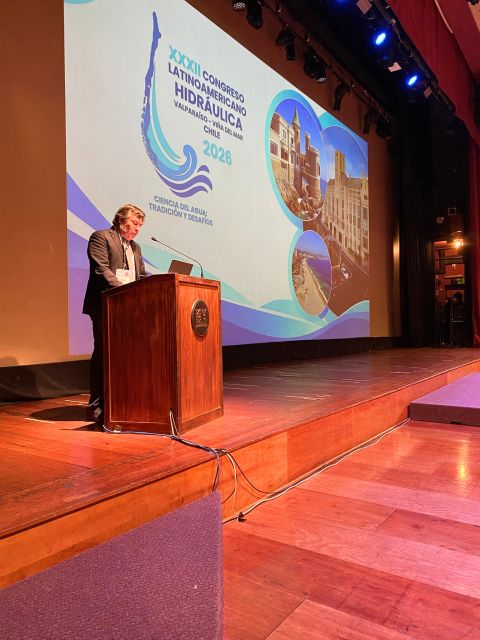 | The congress officially opened on 20 October at the Federico Santa Maria Technical University. The opening programme featured IAHR President Philippe Gourbesville and Blanca Botero, Chair of the IAHR Latin American Division, alongside representatives of Chilean public institutions, professional associations and the organising universities. The ceremony also included contributions from representatives of the National Institute of Hydraulics, SOCHID and the host institutions, reflecting the cooperation between scientific organisations, public authorities and the engineering profession that underpins the congress. |
Strengthening IAHR's Latin American community
Strengthening IAHR's Latin American community
The IAHR Latin American Congress on Hydraulics plays an important role in promoting research, innovation, knowledge exchange and professional cooperation across the region.
The 2026 edition provided an opportunity to strengthen connections between institutions and specialists from different countries, encourage the participation of emerging professionals and explore technical approaches to shared water challenges.
These exchanges contribute to IAHR's wider mission of advancing hydro-environment engineering and strengthening the links between scientific knowledge, public authorities and practical implementation.
 | The congress concluded on 23 October following its final keynote lectures, oral presentations, poster sessions and closing activities. Organisers highlighted the positive balance of the five-day event, particularly the level of participation, the diversity of subjects addressed and the opportunities created for exchanging knowledge and experience. IAHR congratulates the local organising committee, the IAHR Latin American Division, the scientific contributors, speakers, supporting institutions and all participants for their contributions to the 32nd IAHR Latin American Congress on Hydraulics. |
Organisers


Related
Related