The Future of Water in Cities: Needs and Challenges
From Madrid to Bari 2027: building a city-led agenda for resilient, circular and intelligent urban water management
A City-led Step on the Road to Bari
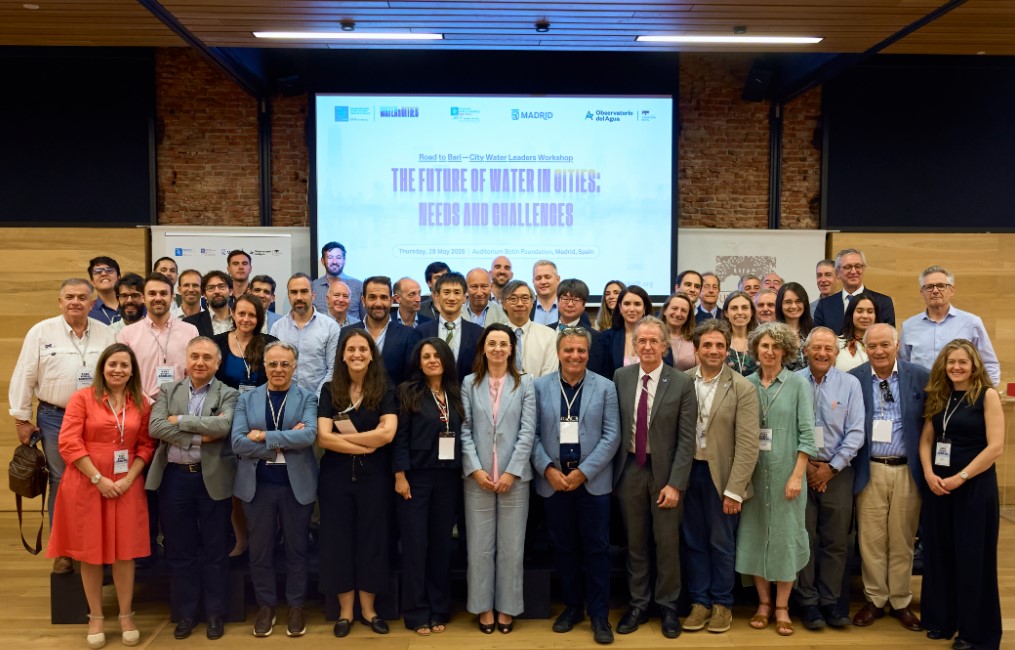
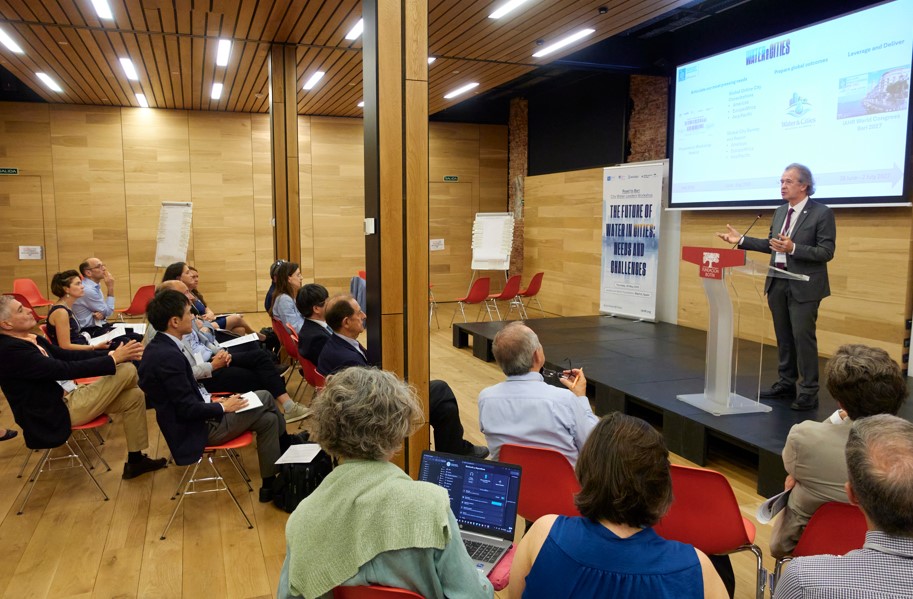
On 28 May 2026, city representatives, water utilities, researchers, public institutions, engineers and solution providers gathered in Madrid to address one of the defining challenges facing urban areas worldwide: how to ensure resilient, sustainable and future-ready water systems.
Hosted by the City of Madrid in partnership with IAHR and the National Organising Committee of the 42nd IAHR World Congress, and with the collaboration of the Water Observatory of Fundación Botín, the workshop brought together city perspectives from Athens, Bari, Berlin, Granada, Kobe, Madrid, Osaka, Paris, Porto and Seville.
The workshop marked the beginning of a dedicated Water & Cities process within the Road to Bari Framework. Its purpose was not simply to exchange technical knowledge, but to identify what cities need in order to translate existing solutions into action at scale.
Across the discussions, participants explored the relationship between water resilience, climate adaptation, public health, urban planning, infrastructure management, emergency preparedness, circularity, digital transformation and long-term investment.
The central conclusion was clear: cities do not lack ideas, technologies or examples of good practice. The main challenge is to create the political, institutional, financial and operational conditions needed to implement those solutions effectively.
Water Resilience is a City Agenda
Water resilience cannot be treated only as a utility or infrastructure issue. It is increasingly connected to urban development, climate adaptation, public health, environmental quality, economic resilience, emergency preparedness and quality of life. Cities need to consider water earlier and more systematically in planning, investment and decision-making processes.
The workshop highlighted the need to move beyond fragmented approaches. Water systems cannot be planned in isolation from housing, public space, mobility, land use, nature, energy, public health or social resilience.
The Road to Bari will build on this understanding by bringing together city leaders, utilities, researchers, public authorities, professional associations, companies and solution providers around a shared agenda for urban water action.
From Technical Solutions to Practical Delivery
The discussions in Madrid showed that many relevant solutions already exist. Cities are increasingly working with nature-based and sponge-city approaches, water reuse, smart monitoring, digital planning, early warning systems, water-sensitive urbanism, infrastructure renewal and improved operational management. However, technical solutions alone are not sufficient.
Participants repeatedly stressed that implementation depends on political leadership, coordinated governance, credible investment pathways, long-term planning, reliable data, institutional capacity, public engagement and trust. This is one of the most important messages emerging from the workshop: urban water resilience is not only an engineering challenge. It is also a challenge of leadership, coordination, financing and implementation.
The Road to Bari will therefore focus not only on what solutions are available, but on how cities can create the conditions needed to adapt, combine, finance and scale them.
Four Connected Priorities for Urban Water Action
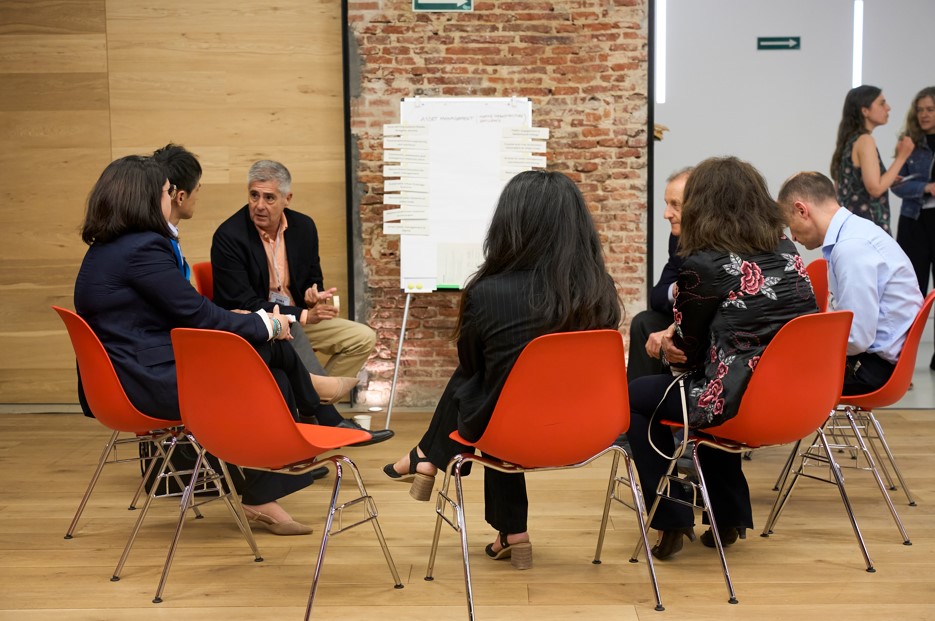
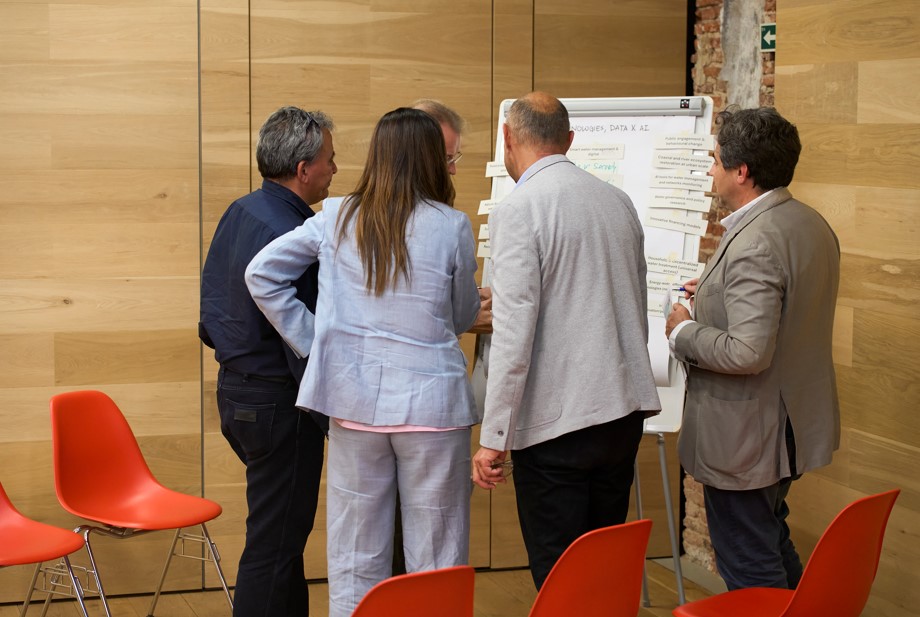
The workshop discussions were structured around four priority areas. They should not be understood as separate technical agendas, but as connected dimensions of a more resilient and sustainable urban water future.
Water Reuse and Circular Water Systems: Water reuse and circular economy approaches are increasingly important for cities facing water scarcity, population growth and pressure on natural resources.
Participants highlighted the potential of reclaimed water, resource recovery and water-sensitive planning to strengthen urban resilience and improve efficiency across the water cycle. At the same time, the discussion made clear that technical feasibility alone does not guarantee implementation. Wider uptake of reuse systems depends on public confidence, effective communication, appropriate regulation, political commitment and investment.
The Road to Bari will explore how cities can connect circular water solutions with public engagement, urban planning and long-term resilience strategies.Asset Management and Ageing Infrastructure: Urban resilience depends not only on new infrastructure, but also on the ability to maintain, renew and manage the systems that cities already rely on.
Ageing water infrastructure creates long-term risks for service reliability, operational efficiency, public safety and investment planning. Participants highlighted the importance of stronger asset management, better information, digital monitoring, coordinated responsibilities and long-term investment strategies.
The discussion also reinforced the need to move beyond short-term project cycles. Infrastructure renewal requires sustained planning, clear mandates and the capacity to demonstrate the long-term value of resilience investments.Extreme Events: Floods, Droughts and Preparedness: Floods, droughts, intense rainfall and other climate-related shocks are placing growing pressure on urban water systems.
The workshop highlighted the need for cities to strengthen preparedness before emergencies occur. This includes early warning systems, reliable data, emergency response planning, public awareness, institutional coordination and communication with communities.
Participants also emphasised that resilience requires a combination of approaches. Nature-based solutions, conventional infrastructure, digital tools, planning, risk communication and community engagement should reinforce one another.
Extreme events must therefore remain an explicit part of the Water & Cities agenda towards Bari 2027.Digital Transformation, Data and Artificial Intelligence: Digital transformation was recognised as a practical enabler of more effective urban water management.
Cities need better tools for planning, monitoring, modelling, forecasting, operational decision-making and coordination across the urban water cycle. Digital systems can help make investment more strategic, improve the understanding of risk and support more responsive management.
However, participants stressed that technology should not be treated as an objective in itself. Digital tools must serve real operational needs and be supported by reliable data, data-sharing arrangements, cybersecurity, institutional readiness and skilled people.
The Road to Bari will examine how data, digital tools and artificial intelligence can help cities make better and more integrated water decisions.
An Integrated Agenda for Resilient Cities
The workshop did not point towards a single priority solution. Instead, it showed that cities need integrated action.
Nature-based solutions need to be supported by planning and investment. Water reuse needs trust, regulation and public engagement. Digital tools need data, institutional coordination and operational capacity. Infrastructure renewal needs long-term financing and clearer responsibilities. Emergency preparedness needs public awareness, communication and collaboration across institutions.
The Water & Cities process will therefore seek to connect technical solutions with the practical conditions required to deliver them.
This means bringing together cities, utilities, researchers, public authorities, companies and other partners around shared questions:
How can cities accelerate implementation rather than remain trapped in pilot projects?
How can long-term resilience be made visible in political and investment decisions?
How can governance, data, planning and public engagement support better water outcomes?
How can cities learn from one another while adapting solutions to local contexts?
City Perspectives at the Centre of the Discussion
The City Water Leaders Session gave representatives and experts from ten cities the opportunity to share local realities, priorities and experiences.
The discussions reflected a wide range of urban water challenges, including water scarcity, climate adaptation, reclaimed water, public water services, flood management, sediment and environmental processes, ageing infrastructure, urban renewal, catchment pressures and digital transformation.
The city-led format was essential to the workshop. It ensured that the conversation moved beyond technical examples and focused on the real conditions under which cities must operate: political support, investment, planning cycles, public acceptance, institutional coordination and operational capacity.
From Madrid to Bari 2027
Madrid was the first milestone in a wider process designed to build a collective Water & Cities agenda for the Road to Bari.
May 2026 | Madrid Preparatory Workshop: The workshop helped articulate the most pressing urban water needs, identify shared challenges and establish an initial framework for further collaboration.
June-August 2026 | Global Online City Consultations: The process will broaden the dialogue through consultations with cities in the Americas, Europe and Africa, and Asia and the Pacific. These consultations will help bring more local experience, institutional perspectives and practical needs into the Water & Cities agenda
2026-2027 | Global City Survery and Report: A global city survey and report will help develop a broader evidence base around urban water priorities, barriers, opportunities and implementation pathways. The aim is to translate city perspectives into a clearer collective agenda for action.
28 June-2 July 2027 | 42nd IAHR World Congress, Bari (Italy): The process will culminate at the 42nd IAHR World Congress in Bari, Italy. Bari will provide a global platform for cities, water authorities, researchers, practitioners, companies and decision-makers to share experiences, discuss practical solutions and advance collective outcomes for resilient, circular and intelligent urban water management. The wider objective is not simply to present conclusions. It is to help connect city challenges with the science, innovation, partnerships and implementation pathways needed to respond to them.
Beyond the Workshop
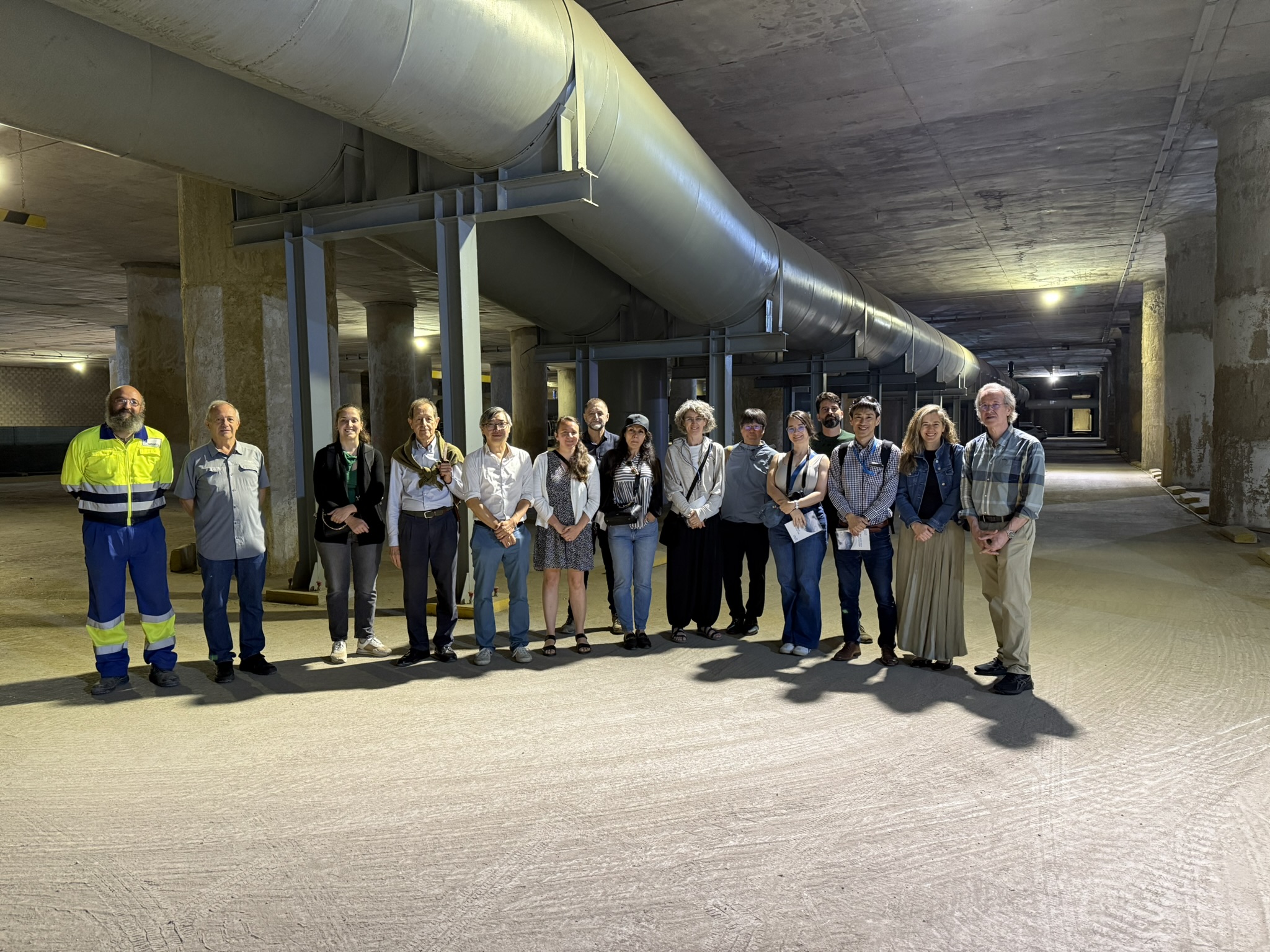
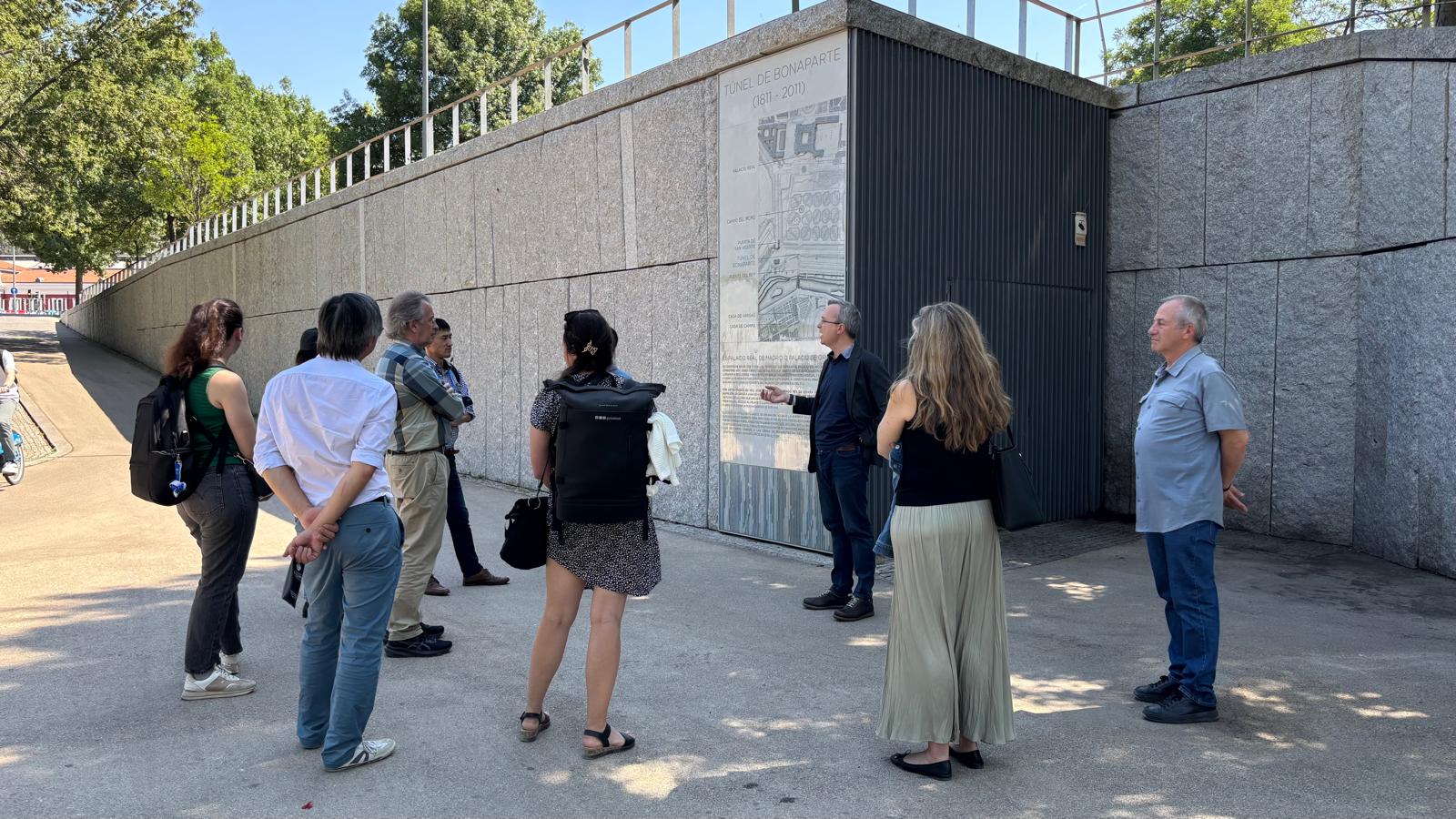
The workshop was complemented by a technical visit for city representatives. The visit included:
Arroyofresno Stormwater Retention Tank
Madrid Río Project
These exchanges helped connect the strategic discussion with practical examples of urban water management and strengthened the collaborative spirit of the Road to Bari initiative.
Building a Shared Platform for Water & Cities
The workshop confirmed strong interest in continued peer learning and collaboration among cities, water utilities, researchers, institutions and solution providers. Water & Cities can provide a space for this exchange. Its role will be to help connect urban water challenges with practical experience, technical knowledge, public leadership, investment, innovation and implementation capacity.
The process should remain collective and non-prescriptive. Its purpose is not to impose a single model on cities, but to create a platform through which different actors can share experience, identify common priorities and develop more effective pathways towards resilient urban water systems.
Madrid opened that process. Bari 2027 will be the next major opportunity to consolidate it.
Supporting Organisations
The workshop was supported by organisations representing cities, water utilities, research and higher education, professional engineering bodies, water and basin networks, and innovation platforms.
Their engagement reflects the cross-sectoral collaboration needed to connect urban water challenges with knowledge, practice and implementation on the Road to Bari.
Organisers


Supporting Organisations





Related
Water & Cities Workshop Programme
The Road to Bari Framework
42nd IAHR World Congress 2027