3rd Flood Risk Management Webinar
~ FREE ZOOM WEBINAR ~
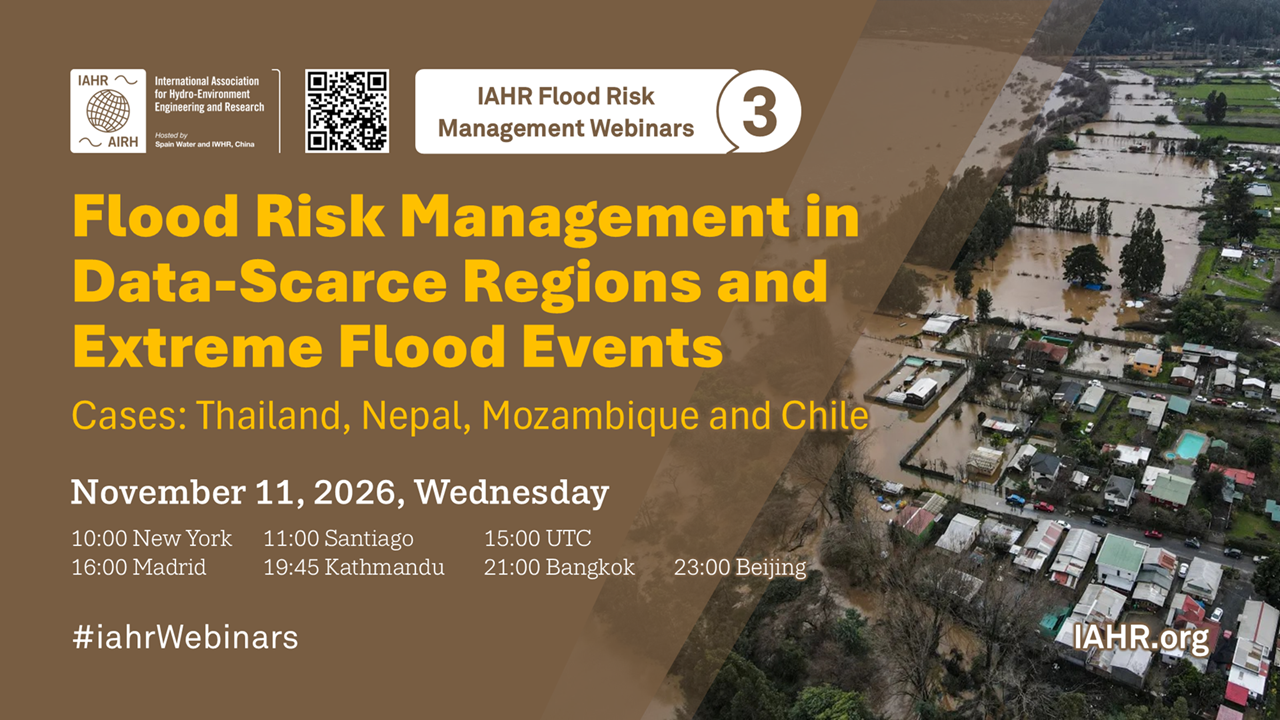
3rd Flood Risk Management Webinar - Data-Scarce Regions and Extreme Flood Events
November 11, 2026, Wednesday
10:00 New York | 11:00 Santiago | 15:00 UTC | 16:00 Madrid | 19:45 Kathmandu | 21:00 Bangkok | 23:00 Beijing
The third webinar of the IAHR Technical Committee on Flood Risk Management will focuses on the flood risk management in data-scarce regions and extreme flood events. Cases: Thailand, Nepal, Mozambique and Chile.
Speakers
Somporn Chuai-Aree
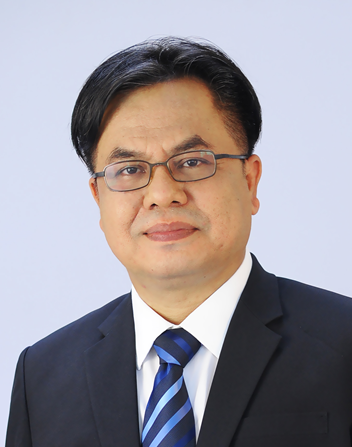
Basanta Raj Adhikari
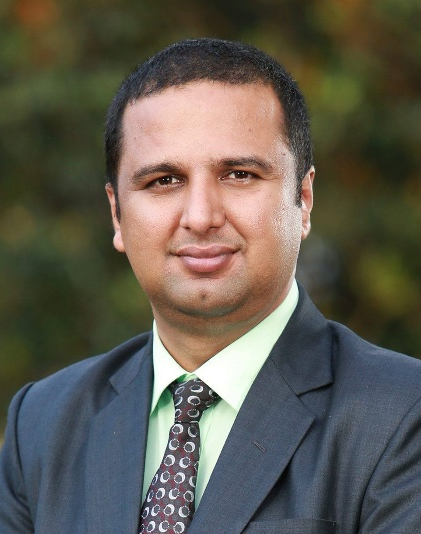

Sara Rrokaj
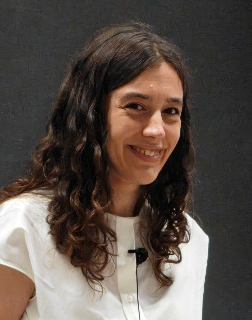
Rodrigo Cienfuegos
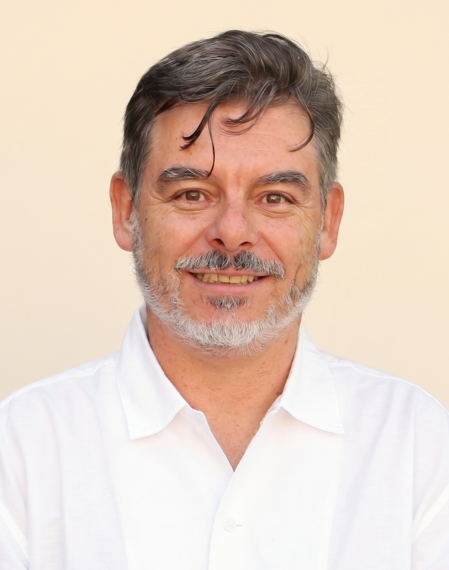
Oscar Link

Wernher Brevis
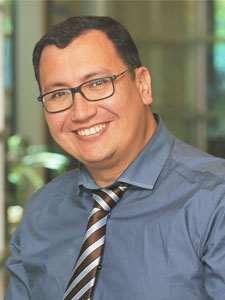
Chairs


Program
Opening address (10 mins)
Daniela Molinari | Politecnico di Milano
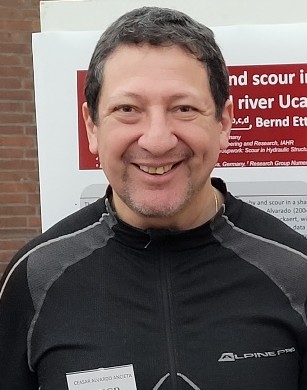
Cesar Alvarado Ancieta | Academic Leader Postgraduate Flood Risk Management, University of Technology and Engineering, Lima-Peru
Presenters
Integrated Flood Risk Management in Data-Scarce Regions: From Computational Modelling to Community Decision Support (30 mins)
Somporn Chuai-Aree | Assistant Professor and Director, Office of Academic Resources, Department of Mathematics and Computer Science - Faculty of Science and Technology, Prince of Songkla University, Pattani Campus, ThailandLiving with Himalayan Extremes – Lessons from the Bhotekoshi Flood Disaster (40 mins)
Basanta Raj Adhikari & Pawan K Bhattarai | Director and Assistant Professors of the Centre for Disaster Studies, Institute of Engineering, Tribhuvan University, and the Department of Civil Engineering, Pulchowk Campus, Tribhuwan University, NepalFlood risk assessment and participative process in the data-scarce Metuge district of Mozambique (30 mins)
Alessio Radice & Sara Rrokaj | Professors of the Civil and Environmental Engineering of the Politecnico di MilanoRecent Extreme Rainfall and Flooding Events in Chile: An Integrated Analysis of Downstream Effects (40 mins)
Rodrigo Cienfuegos | Civil Engineer (concentration in Hydraulics) from the Pontificia Universidad Católica de Chile and holds a Ph.D. in Earth Sciences from the Institut Polytechnique de Grenoble, France
Oscar Link | Full Professor / Associate Researcher, Facultad de Ingeniería, Universidad de Concepción / CIGIDEN R+
Wernher Brevis | Associate Professor and the Director of the Department of Hydraulic and Environmental Engineering at the Pontificia Universidad Católica de Chile (PUC)
Open Discussion (15 minutes)
Closing Remarks (5 mins)
Stefan Haun | Chair of Committee on Flood Risk Management IAHR, Head of Institute of Hydraulic Engineering and Water Resources Management, Graz University of Technology
Video credit: Basantha.
Abstracts of the Presentations
Integrated Flood Risk Management in Data-Scarce Regions: From Computational Modelling to Community Decision Support (by Somporn Chuai-Aree): Flood risk management in data-scarce regions is constrained by incomplete observations and the difficulty of translating model outputs into timely decisions. This presentation shares experience from Southern Thailand in integrating 2D shallow-water-equation modelling, GPU-accelerated computation, geospatial and weather data, Earth observation, and community information within a practical flood-intelligence workflow. The approach uses the best available data, makes uncertainty explicit, and communicates inundation depth, flow pathways, hazard zones, and scenario results through decision-support dashboards and geospatial products. Examples show how an integrated system can support preparedness, emergency response, infrastructure planning, and communication with local authorities and communities while remaining scalable and locally maintainable.
Living with Himalayan Extremes – Lessons from the Bhotekoshi Flood Disaster (by Basanta Raj Adhikari & Pawan K Bhattarai): This presentation examines the Bhotekoshi flood disaster as a cascading Himalayan hazard, where high-mountain ice–rock and debris processes evolved into a destructive downstream flood. It highlights why conventional flood-risk approaches are insufficient for such events and discusses key lessons for hazard-corridor mapping, early warning, hydropower and infrastructure safety, land-use planning, and resilient reconstruction. The presentation argues for a shift from project-specific flood management toward integrated, basin- and corridor-scale risk management suited to Nepal’s rapidly changing Himalayan environment.
Flood risk assessment and participative process in the data-scarce Metuge district of Mozambique (by Alessio Radice & Sara Rrokaj): As many African rural regions, the Metuge district in Northern Mozambique is prone to inundation during the rainy season and water scarcity during the dry one. Furthermore, quantitative assessment is hindered by data scarcity. In this work we present a flood risk study, coordinated by an Italian NGO with offices on site, for some villages of the district, crossed by the Muaguide river. The study combines hydrological, hydrodynamic, and damage modelling with a multi-level participatory process involving stakeholders from governmental institutions to local communities. Hazard and risk mitigation by structural interventions would require restoring the river conveyance as the river section has been progressively reduced by major siltation, as well as restoring and taking back into function some storage basins that would also enable water reuse. As a non-structural, emergency mitigation measure, instead, population awareness is sought, and flood-related information panels have been designed together with the local civil protection volunteer groups.
Recent Extreme Rainfall and Flooding Events in Chile: An Integrated Analysis of Downstream Effects (by Rodrigo Cienfuegos & Oscar Link & Wernher Brevis): High-intensity rainfall has triggered severe and repeated flooding across Chile in recent years, highlighting the urgent need to understand their physical impacts and connections with exposure and urban planning. This presentation synthesizes findings from comprehensive post-inundation surveys and downstream analyses of major hydro-meteorological extremes. The talk will focus specifically on the flood sequences in Central-South Chile during 2023 and 2024, as well as the more recent extreme rainfall events that impacted Central-North Chile in 2026. By examining the integrated downstream effects of these events, we will explore the mechanisms of the floods, their impacts on local river systems, and critical lessons for future flood risk management and infrastructure resilience..
About the Speakers
Assistant Professor Somporn Chuai-Aree is an applied mathematician and computer scientist at the Department of Mathematics and Computer Science, Faculty of Science and Technology, Prince of Songkla University, Pattani Campus, Thailand. He also serves as Director of the Office of Academic Resources. His research focuses on computational hydrodynamics, flood inundation modelling using the shallow-water equations, GPU-accelerated scientific computing, GIS and geospatial visualization, and decision-support systems for water and disaster management. He has developed and applied flood-modelling and community-based disaster-monitoring platforms in Southern Thailand, emphasizing the integration of scientific models, hydrometeorological observations, Earth observation, and local information into practical tools for local authorities and communities.
Basanta Raj Adhikari is a renowned expert in disaster risk management with over two decades of experience in advancing sustainable solutions for disaster risk reduction and resilience in the Himalayas and adjacent region. He currently serves as the Director of the Centre for Disaster Studies, Institute of Engineering, Tribhuvan University, Nepal. He is a Senior Research Fellow at the University of Melbourne. Dr. Adhikari has also been a visiting professor at Sichuan University, China, and Keio University, Japan, reflecting his international expertise and academic leadership. Dr. Adhikari specializes in climate change impacts, landslide early warning systems, and multi-hazard risk assessments. He has led transformative projects funded by global institutions such as the World Bank, USAID, and ICIMOD, focusing on community-centered approaches to disaster risk reduction. Notably, he pioneered low-cost, community-based landslide early warning systems in Nepal’s Himalayas, significantly contributing to risk mitigation in vulnerable regions.A prolific researcher, Dr. Adhikari has authored over 70 peer-reviewed publications and collaborated extensively with international institutions. His contributions have earned him prestigious awards, including the “Young Scientist Award” from Integrated Research on Disaster Risk and the “Young Affiliates” honor from The World Academy of Sciences. Dr. Adhikari’s leadership blends cutting-edge research, policy innovation, and capacity-building, emphasizing nature-based solutions and community resilience, making him a transformative leader in disaster management.
Pawan K Bhattarai is an Assistant Professor in the Department of Civil Engineering at the Institute of Engineering, Tribhuvan University, Nepal, and Coordinator of the Water Resources Engineering program at Pulchowk Campus. He holds a PhD in Civil Engineering from Kyoto University, Japan, with expertise in water resources, hydropower, flood and debris-flow risk, climate resilience, and disaster management. He has been involved in academic research, consultancy, policy dialogue, and infrastructure risk assessment in Nepal, with particular interest in Himalayan hydrological hazards and science-to-policy applications. He also serves as President of the Japan Universities Alumni Association Nepal (JUAAN) and is actively engaged in national and international professional collaborations.He is an active member of IAHR, ASCE, JSCE, JSNDS, IWRA etc.
Alessio Radice received his Ph.D. in Hydraulic Engineering in 2005 and has been a Full Professor of Hydraulics at Politecnico di Milano since 2023, where he also serves as the Scientific Director of the Mountain Hydraulics Lab. His teaching activities cover Fluid Mechanics, River Hydraulics, and Hydro-Geological Risk. He has been an elected member of the IAHR Technical Committee on Fluvial Hydraulics since 2023. Previously, he served as Vice-Chair (2015–2017), Chair (2017–2019), and Past-Chair (2019–2022) of the IAHR Technical Committee on Experimental Methods and Instrumentation. He also chaired HydroSenSoft 2019, the 2nd International Conference and Exhibition on Hydro-Environment Sensors and Software.
Sara Rrokaj received her Ph.D. in Hydraulic Engineering from Politecnico di Milano in 2026. Her research focuses on flood modelling, field-based post-event damage assessment, and the analysis of flood impacts on populations. She has also served as a teaching tutor for Fluid Mechanics and River Hydraulics.
Rodrigo Cienfuegos is a Civil Engineer (concentration in Hydraulics) from the Pontificia Universidad Católica de Chile and holds a Ph.D. in Earth Sciences from the Institut Polytechnique de Grenoble, France. He specializes in the physical and numerical modeling of nonlinear shallow water waves and tsunami hydrodynamics. For the past decade, Dr. Cienfuegos has led interdisciplinary research at CIGIDEN, a Center of Excellence focused on disaster risk reduction and climate change adaptation. Starting this year, he serves as co-PI for the “Hazards” research line at CIGIDEN, where efforts to develop a new generation of early warning systems for coastal flooding, including compound interactions at river inlets are now being developed. In collaboration with graduate students and international peers, he has authored over 100 peer-reviewed publications and frequently serves on national advisory committees dedicated to building resilience against natural hazards.
Oscar Link holds a degree in Civil Engineering from the University of Concepción (1998) and a Ph.D. in Engineering from the University of Darmstadt, Germany (2006). His doctoral dissertation is titled: Scour around a slender cylindrical pier embedded in a sandy streambed. His area of specialization is hydraulic engineering. Upon graduation, he received the Chilean College of Engineers’ Distinction for the top graduate in the Civil Engineering program in 1997 and the Edgar Pino Barrueto Award for the best thesis in the Department of Civil Engineering at the University of Concepción. In 1999, the Chilean Society of Hydraulics awarded him the National Hydraulics Prize. As a professor at the University of Concepción, he has consistently received the University of Concepción Academic Excellence Award for the periods 2009–2011, 2012–2014, 2015–2017, 2018–2020, 2021 –2023, and 2024–2026. He serves on various international expert panels related to water resources. He regularly teaches several undergraduate courses in the Civil Engineering program of the Universidad de Concepción, particularly Hydraulics and Hydrology, as well as electives courses such as River Engineering, Advanced Hydrology, and Numerical Methods and Modeling in Hydraulic Engineering. He also actively participates in the development of graduate-level courses such as the Sociohydrology of Floods and the new Civil Engineering curriculum: Conceptual Engineering Design, Basic Engineering Design, and Detailed Engineering Design—a series of courses that provide professional skills for the development of infrastructure projects. He has participated in more than a dozen projects of the highest scientific level, including—in his role as principal investigator—one Fondecyt Iniciación, three Fondecyt Regular, and one ANILLO research network grant. In 2024, he was honored by the Awards for Excellence in Research and Artistic Creation of the Universidad de Concepción. He is currently an associate researcher at the CIGIDEN R+ Interdisciplinary Research Center. He has published more than 75 articles in international scientific journals indexed in Web of Science, such as: Journal of Hydraulic Research, Journal of Hydraulic Engineering, River Research & Applications, Hydrological Sciences Journal, Journal of Hydrology, Hydrological Processes, Ecological Engineering, and Natural Hazards. He is an associate editor of the Hydrological Sciences Journal. Recently, he was invited to deliver keynote lectures at the 12th International Conference on Scour and Erosion held in Chongqing in 2025, at the 2026 Annual Plenary Session of the Chilean Hydraulics Society, and at the 13th International Conference on Fluvial Hydraulics at Aristotle University of Thessaloniki in 2026. In January 2026, he was invited as a speaker to the main event of the Congreso Futuro. He is a consultant for the Institute for Technological Research at the School of Engineering of the University of Concepción. He has led various projects related to infrastructure projects and river management in Chile. His research deals with river Engineering, bringing together all related fundamental and engineering sciences for the analysis of complex problems. He is active in three research lines related to Bridge Scour, Fishways design, and Flood risk management.
Wernher Brevis is an Associate Professor and the Director of the Department of Hydraulic and Environmental Engineering at the Pontificia Universidad Católica de Chile (PUC). He is an academic and researcher specializing in environmental and industrial fluid dynamics, complex fluids, turbulence, and fluid-structure interaction. Dr. Brevis holds a Ph.D. in Engineering Sciences (Fluid Dynamics) from the Universidad de Chile, completed in 2009 as a cooperative project with the University of Karlsruhe, Germany. He also earned his Civil Engineering degree with distinction from the Universidad de Concepción in 2001. Prior to his current role at PUC, which he assumed in August 2017, Dr. Brevis was a Lecturer in Applied Fluid Mechanics at The University of Sheffield in the UK from 2011 to 2017. Before that, he served as a Postdoctoral Researcher and Head of the Environmental Fluid Mechanics Division at the Karlsruhe Institute of Technology in Germany. His academic leadership includes serving as the Head of the Ph.D. Program in Engineering and Technology at PUC from 2020 to 2023, and as an elected member of the Engineering School Council from 2020 to 2022. He has led several major research initiatives as a Principal Investigator, including projects funded by FONDECYT, FONDEQUIP, and EPSRC, focusing on fluid dynamics and interdisciplinary measurement systems. Additionally, he serves as an Associate Researcher for the Center for Interdisciplinary Research on Disaster Risk, Resilience and Recovery (Cigiden R+). Dr. Brevis has been widely recognized for his teaching and academic contributions. He received the Most Inspiring Professor Award from his department at PUC in 2021, 2023, and 2025, along with the School of Engineering's Social Responsibility Award in 2021. He also holds an Excellence in Teaching and Learning Award from The University of Sheffield and a Best Reviewer Award from the Journal of Hydraulic Research. Beyond academia, he engages in public service as a member of the Water Resources Committee for Chile's Infrastructure Policy Council and contributes to the Ministry of Mining's Environmental Sustainability Board.
How to Participate
This webinar will be held via ZOOM Webinar, please click here to register the Zoom Webinar.
About the Technical Committee
The IAHR Technical Committee on Flood Risk Management is dedicated to providing a platform within IAHR to promote and support discussion and research on flood risk management, with focuses on prevention, protection, preparedness, emergency response, recovery and lessons learned, and resilience. Find out more details and join this committee:
» IAHR Technical Committee on Flood Risk Management
Related Event
2025-10-28

2025-03-20