ISE 2026 Closed Successfully in Lausanne as Community Looks Ahead to ISE 2028 in Warsaw
Book of Abstracts IAHR Committee on Ecohydraulics ISE 2026 Lausanne ISE 2028 Warsaw
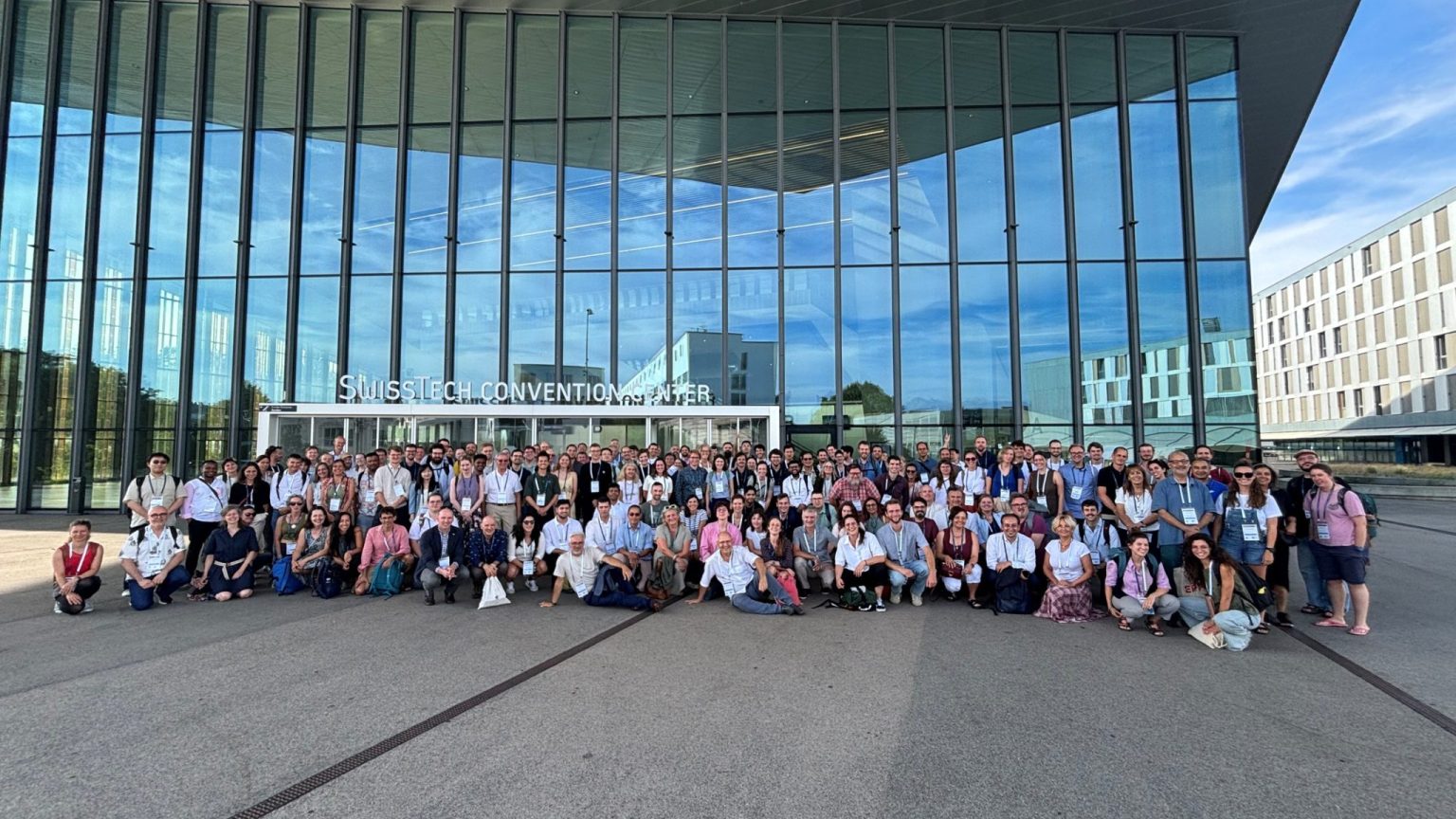
Approximately 300 delegates gathered at EPFL in Lausanne, Switzerland, for the 16th International Symposium on Ecohydraulics (ISE 2026), marking the first ISE held in Switzerland and the first on European soil since 2014, while looking forward to ISE 2028 in Warsaw, Poland.
The 16th International Symposium on Ecohydraulics (ISE 2026) convened from 16 to 20 August 2026 at the SwissTech Convention Center on the EPFL campus in Lausanne, Switzerland, successfully closing a scientifically dense week. Organised under the auspices of the IAHR Technical Committee on Ecohydraulics, approximately 300 delegates took part in this landmark event, which represented the first ISE held in Switzerland and the first on European soil since Trondheim, Norway in 2014.
The community extends its sincere appreciation to the Local Organising Committee, led by Prof. Dr Eng. Paolo Perona and Dr sc. Giovanni De Cesare, for an successful symposium that fostered rich international exchange across ecohydraulics research and practice.
About the International Symposia on Ecohydraulics
About the International Symposia on Ecohydraulics
Launched in 1994, the International Symposia on Ecohydraulics (ISE) aim to provide a global platform for scientists and engineers worldwide to discuss cutting-edge scientific progress, compare and evaluate state-of-the-art technical methods, and recommend sustainable solutions to end users across the water sector.
The symposium series typically runs from Sunday to Friday, starting with workshops and technical meetings on Sunday, technical sessions from Monday through Friday, and an immersive mid-week field trip on Wednesday. A complete list of past ISE conferences is available through the IAHR website.
Keynote Sessions, Scientific Leadership, and Program Highlights
Keynote Sessions, Scientific Leadership, and Program Highlights
The ISE 2026 keynote programme brought together eight leading international voices in ecohydraulics, river morphodynamics, and aquatic ecosystem restoration, framing the scientific sessions across the week:
Monday, 17 August
Elowyn Yager, speaking on "Predicting seedling removal by the flow: the importance of sediment scour, plant structure, and bed grain size". This keynote addressed the physical mechanisms governing vegetation uprooting and seedling survival in dynamic riverbeds.
Guido Zolezzi, speaking on "Ecohydraulics and river morphodynamics: an expanding research interface". This lecture explored the evolving interconnections between river channel evolution, sediment dynamics, and biological communities.
Prof. Dr Piotr Parasiewicz, speaking on "From micro to macro: applying the principles of habitat modelling across the scales". This presentation focused on scaling habitat suitability methodologies from local micro-habitats to catchment-wide river management.
Tuesday, 18 August
Roman Stocker, speaking on "Movement behavior in ecohydraulics, from bacteria to fish". This talk examined the biophysical drivers of organism motility and transport across vastly different aquatic scales.
Gregory Pasternack, speaking on "Ecohydraulics can contribute to a more equitable and resilient civilization". This address highlighted the vital role of ecohydraulic science in supporting climate resilience and equitable water resource governance.
Thursday, 20 August
Maria T. Ferreira, speaking on "Ecohydraulics at the heart of river restoration in a changing world". This lecture emphasized ecohydraulic principles as foundational tools for restoring resilient river ecosystems under global environmental change.
Christine Weber, speaking on "Shifting a paradigm: from anecdotal to systematic learning in river restoration". This keynote advocated for a transition toward evidence-based evaluation and systematic learning in restoration practice.
Paola Viganò, speaking on "Water designs". This presentation explored interdisciplinary links between ecohydraulics, urban planning, and spatial design.
These eight plenary lectures examined pivotal frontiers in modern ecohydraulics, spanning vegetation dynamics, multiscale habitat modelling, biophysical organism interactions, morphodynamic feedbacks, and climate-resilient restoration.
Complementing the keynotes, the symposium encompassed five core scientific sessions, six specialised masterclasses, and a dedicated Swiss Ecohydraulics Day (SED) focused on regional connectivity, fish passage design, and hydropeaking mitigation.
Book of Abstracts
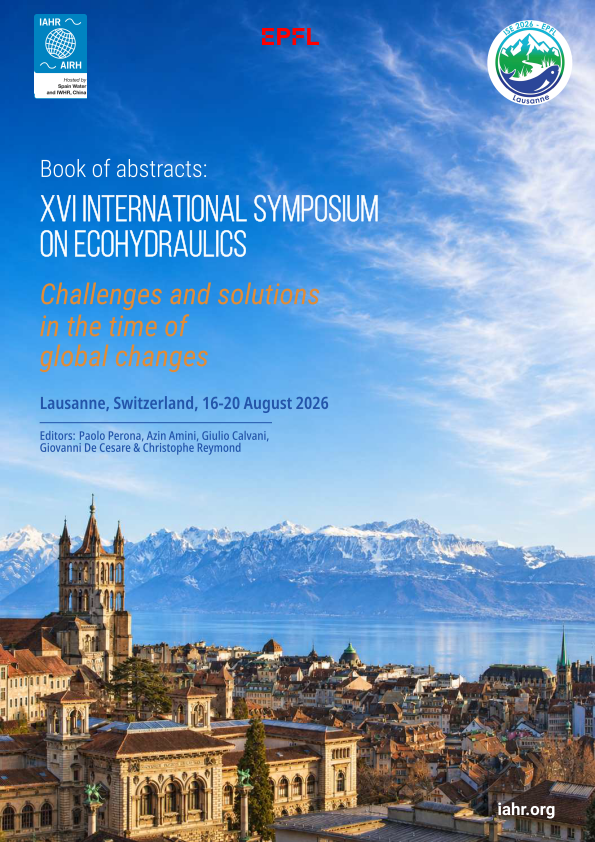
During the Lausanne symposium, a broad range of themes were addressed under the overarching banner “Challenges and solutions in the time of global changes”, including research findings, innovative technologies, and sustainable engineering practices aimed at protecting and restoring aquatic environments.
The accepted contributions are collected in the Book of Abstracts of the 16th International Symposium on Ecohydraulics (Lausanne, 2026), edited by Paolo Perona, Azin Amini, Giulio Calvani, Giovanni De Cesare and Christophe Reymond.
The Book of Abstracts of the 16th International Symposium on Ecohydraulics is now available in the IAHR Document Library
Looking Ahead: ISE 2028 in Warsaw, Poland
Looking Ahead: ISE 2028 in Warsaw, Poland
The 17th International Symposium on Ecohydraulics (ISE 2028) will convene from 25 June to 1 July 2028 on the campus of the Warsaw University of Life Sciences (SGGW) in Warsaw, Poland. This event will mark the first ISE hosted in Central-Eastern Europe.
ISE 2028 is organised jointly by SGGW, the National Inland Fisheries Research Institute, and the Institute of Geophysics of the Polish Academy of Sciences (IG PAS).
Held under the central theme “Ecohydraulic Upscaling for Nature Restoration: advancing ecohydraulic methods from site-scale application to regional and continental strategy, in the light of EU Nature Restoration Law”, the symposium aims to translate local ecohydraulic techniques into broader policy and restoration frameworks.
The symposium is co-chaired by Piotr Parasiewicz, originator of the MesoHABSIM mesohabitat simulation system, together with Tomasz Okruszko (SGGW) and Paweł Rowiński (IG PAS).
Programme updates, session proposals, and registration details are published on the official ISE 2028 website, and enquiries can be directed to ise2028@sggw.edu.pl.
Related
Related
IAHR Technical Committee on Ecohydraulics
Book of Abstracts of the 16th International Symposium on Ecohydraulics (Lausanne, 2026)
Journal of Ecohydraulics