Summary of Global Water Security Webinar on Water Resilience and Urban Flood Management
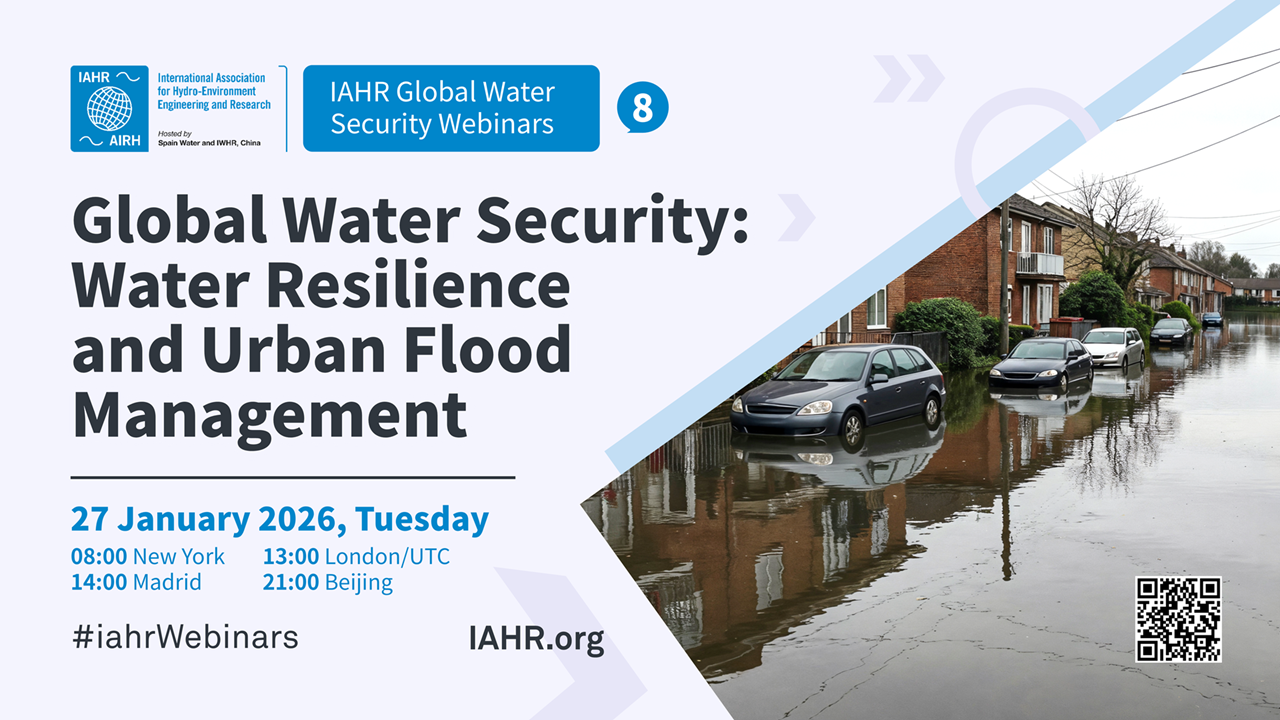
On 27 January 2026, IAHR hosted a Global Water Security webinar focused on water resilience and urban flood management, bringing together experts to discuss the growing challenges posed by climate change, rapid urbanization, and increasing water risks worldwide. The event featured keynote presentations from Jan Hofman (University of Bath) and Jiahong Liu (China Institute of Water Resources and Hydropower Research, IWHR), alongside updates on the IAHR Global Water Security Technical Committee (GWS TC), and was co-chaired by Qiuwen Chen (Nanjing Hydraulic Research Institute) and Reza Ahmadian (Cardiff University).
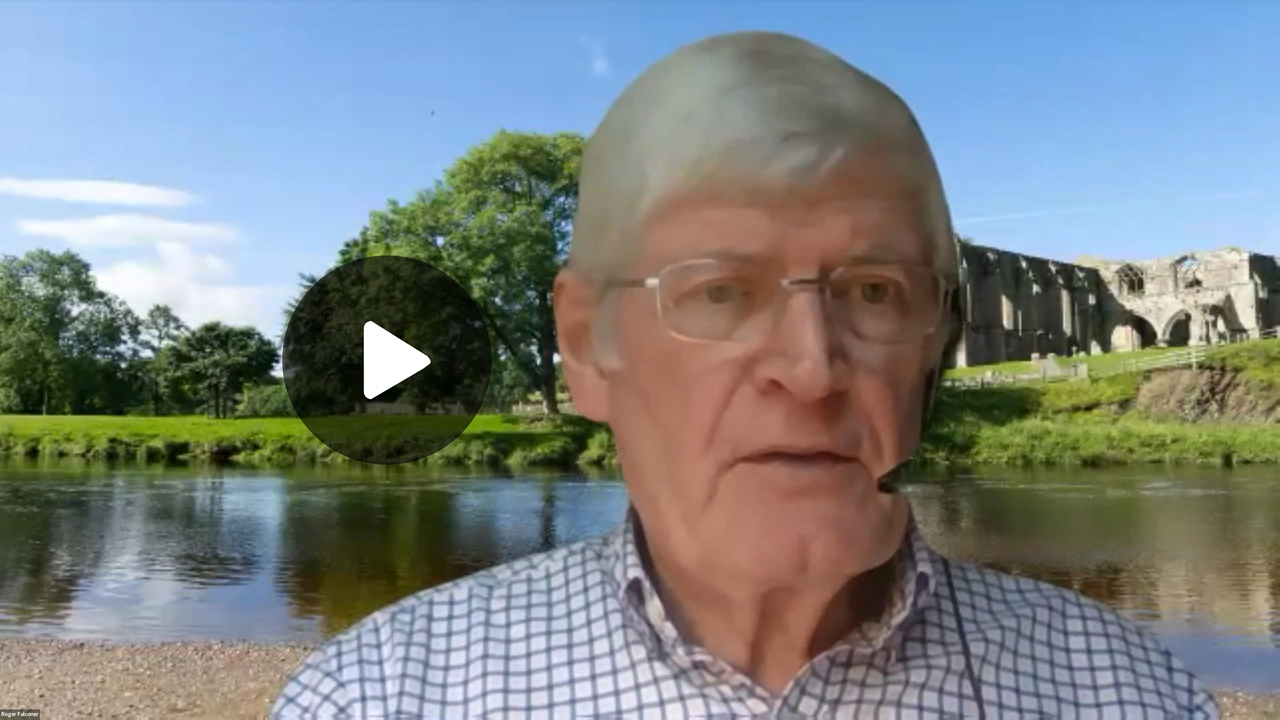
The webinar opened with a tribute delivered by Roger Falconer (IAHR past president) who shared the sad news of the passing of Arthur Mynett at the age of 74 following a short illness. A globally respected hydro-environmental engineering expert, Mynett made exceptional and enduring contributions to IAHR. Since joining the association in 1985, he served in numerous leadership roles, including as Vice President and long-standing Chair of the Finance Committee during financially challenging periods. He co-established the hydroinformatics committee, co-founded the IAHR Global Secretariat Beijing Office, and later co-chaired the IAHR Technical Committee on Global Water Security. Falconer highlighted Mynett’s intellectual leadership, dedication to supporting young professionals, and commitment to solving real-world challenges, noting that he will be deeply missed across the IAHR community.
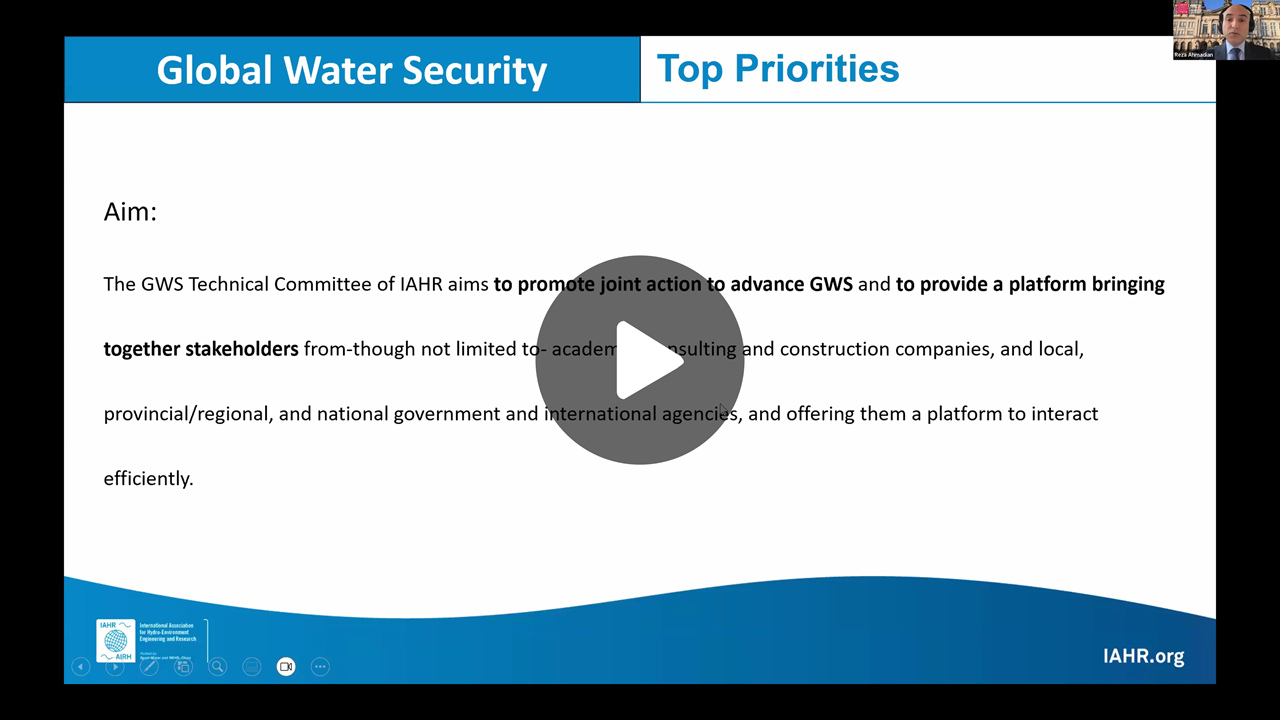
Reza Ahmadian then introduced the roadmap for the IAHR Global Water Security Technical Committee (view slides), emphasizing its mission to drive collective action by uniting academia, industry, governments, and international organizations to advance global water security. He outlined major threats—including climate change, water scarcity, aging infrastructure, and governance challenges—and noted that the committee’s 2024 activities focus on urban flooding, with future webinars addressing additional priority topics. Four core priorities were presented: strengthening engagement with IAHR members, expanding collaboration with partner organizations, planning a dedicated conference in 2027 or 2028, and ensuring diverse and inclusive committee representation. Participants were encouraged to engage with the committee and consider upcoming management opportunities.
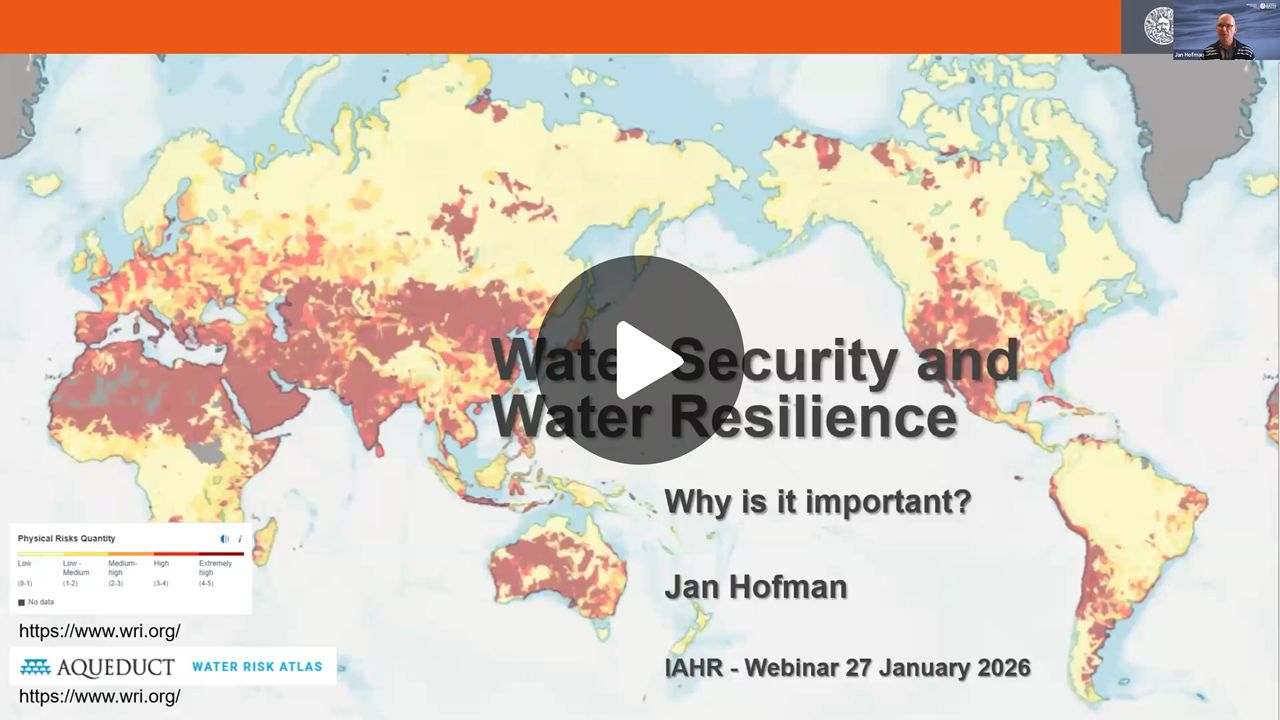
Jan Hofman explored the concepts of water security and resilience (view slides), describing water as an invaluable resource with social, economic, ecological, and even spiritual significance—one that is increasingly implicated in geopolitical tensions. Drawing on the UN definition, he framed water security as ensuring sustainable access to adequate, high-quality water for livelihoods, economies, and ecosystems while reducing risks from water-related disasters and pollution. Hofman presented a localized urban water security assessment framework, applied in Campinas (Brazil) and Mexico City, that evaluates conditions at neighborhood scale to identify inequalities and guide targeted interventions. The framework employs more than 100 indicators spanning drinking water, ecosystems, economic activity, and climate hazards.
He also highlighted emerging sources of water demand linked to rapidly expanding sectors such as artificial intelligence, semiconductor manufacturing, and green hydrogen production. Discussing the European Union’s 2024 Water Resilience Strategy, Hofman underscored a holistic approach that prioritizes demand reduction, efficiency, and reuse over developing new supplies, pointing to circular economy practices in cities such as Singapore, Barcelona, and across the Netherlands. He stressed that effective governance—anchored in the OECD principles of effectiveness, efficiency, and public trust—is fundamental to achieving water resilience, and called for cross-scale collaboration, public–private partnerships, and financial de-risking mechanisms to support long-term infrastructure investment.
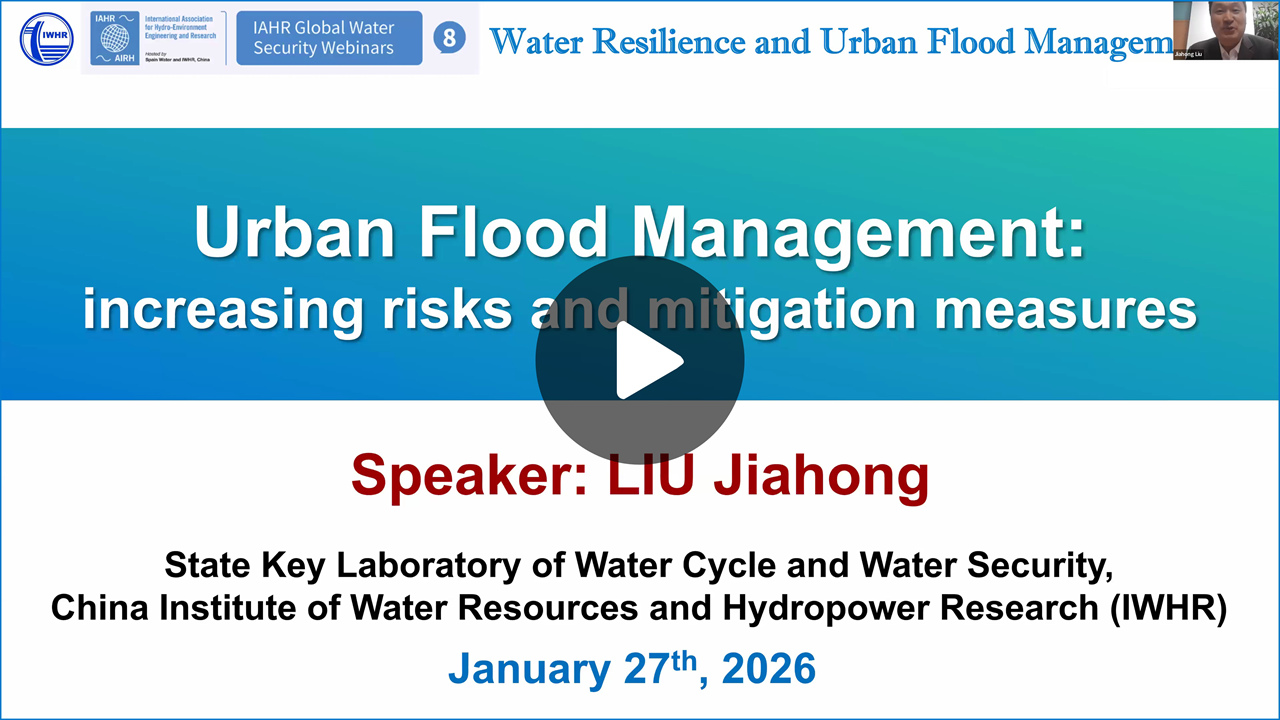
Jiahong Liu addressed the escalating risks of urban flooding (view slides), noting a global increase in severe events, including disasters in Zhengzhou, Beijing, New York, and parts of Australia. He identified three primary drivers: intensifying hydroclimatic extremes such as record rainfall and sea level rise; degradation of hydrological systems that diminishes natural water retention; and urban land-use changes that expand impermeable surfaces. Additional risk factors include compound river–storm events, outdated drainage infrastructure, and the growing concentration of high-value assets in cities.
Liu proposed a proactive three-tier strategy for flood risk reduction: incorporating flood risk zoning into urban planning, integrating blue–green infrastructure into city design, and deploying smart forecasting and early warning systems to strengthen emergency management. He highlighted successful applications in Beijing, including rainwater storage initiatives and sponge infrastructure at the city’s airport. Concluding his presentation, Liu emphasized that effective flood management requires a combination of ecological, engineering, and non-engineering measures—such as insurance mechanisms—supported by cost-effectiveness analysis to prioritize targeted interventions.
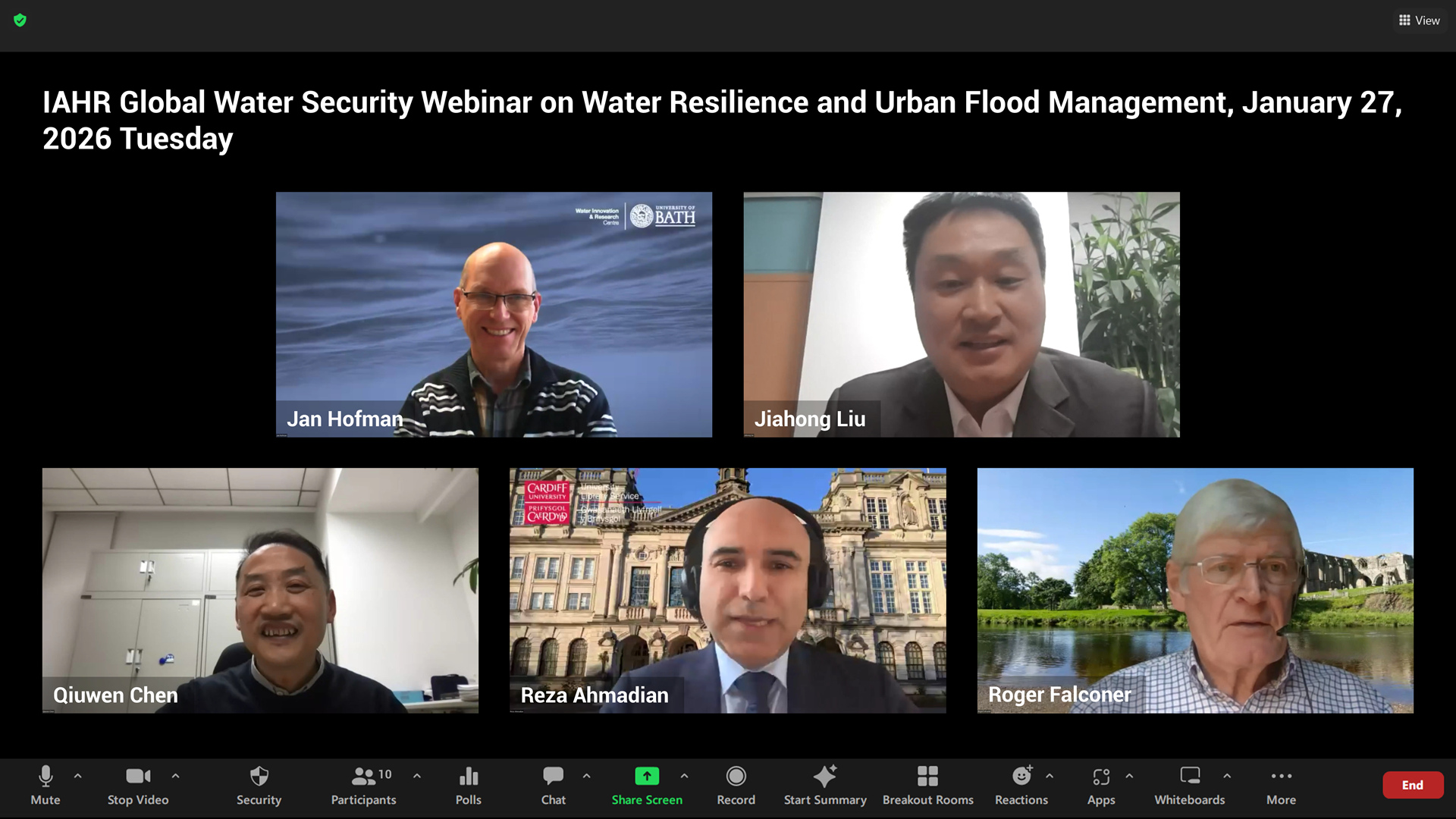
The webinar reinforced the urgency of strengthening water resilience in the face of accelerating environmental and urban pressures, while highlighting the importance of integrated governance, technological innovation, and international collaboration. Through initiatives such as the Global Water Security Technical Committee, IAHR continues to foster knowledge exchange and collective action to address some of the most pressing water challenges of our time.
» IAHR Technical Committee on Global Water Security
» Join this technical committee
» Details of this webinar
» Recording videos of this webinar
Explore the Webinar Series
2026-06-22
2026-01-27
2022-12-13
2022-03-16
2021-11-10
2021-06-09
2021-03-22
2020-12-15
2020-09-10