Call for Abstracts for the XXXII IAHR Latin American Congress 2026
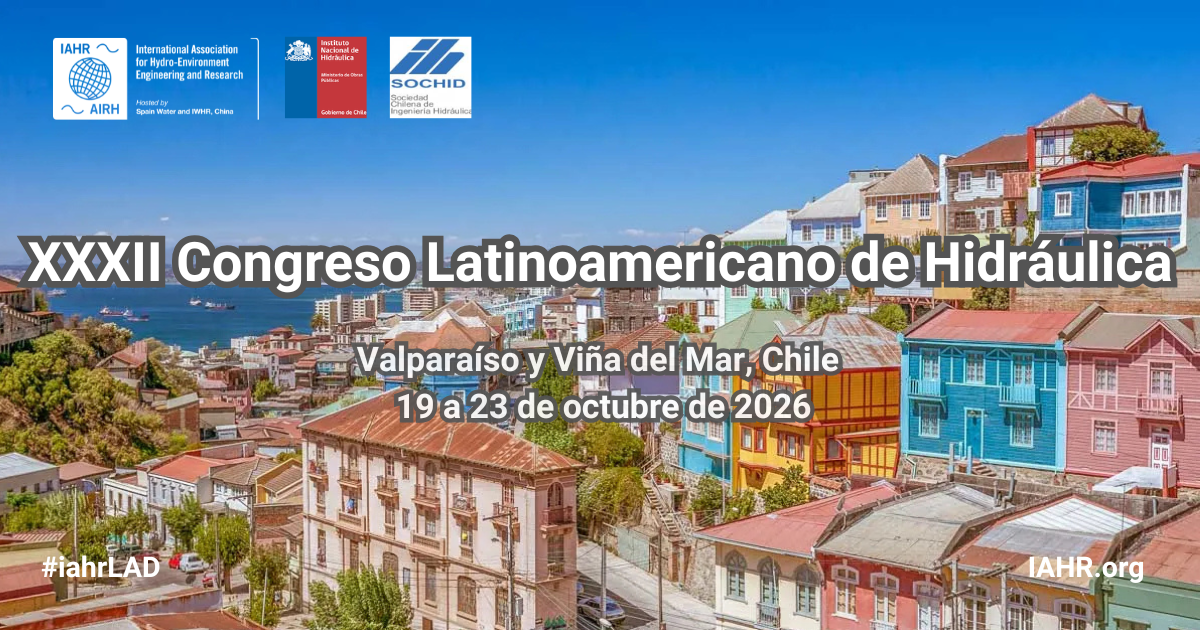
XXXII IAHR Latin American Congress on Hydraulics
19-23 October 2026 | Valparaiso, Chile
Submit your abstract Register Themes Organising Committee Venue Sponsors In Spanish
Overview
The most important event for the technical and scientific water community in Latin America. The XXXII Latin American Congress on Hydraulics will take place in Valparaíso and Viña del Mar from October 19 to 23, 2026. We look forward to seeing you all there!
The organising committee for this event is composed of the National Institute of Hydraulics (INH), the Chilean Society of Hydraulic Engineering (Sochid), the Pontifical Catholic University of Valparaíso, and the Federico Santa María Technical University.
The congress, supported by the International Association for Hydro-Environment Engineering and Research (IAHR), will feature sessions presenting participant contributions from across the region and technical papers, alongside keynote lectures and more.
Key Dates
Abstract Submission Deadline: March 15
Notification of Results: Starting June 1
Full Paper Submission: July 31 (Optional)
XIX Francisco Javier Domínguez Conference
A new feature for this edition will be the XIX Francisco Javier Domínguez Conference by Sochid, held in parallel with the pre-congress courses. This meeting brings together invited authorities, academics, researchers, and professionals from both the public and private sectors with expertise in various water-related fields to present and reflect on advancements and challenges in the water sector.
Themes
The IAHR Chile 2026 Congress invites the submission of contributions centered around four main topics that articulate the water challenges and solutions in Chile and the region. These topics correspond to the four pillars established by the IAHR and integrate the eleven official technical sub-topics of the congress, facilitating the submission of work ranging from fundamental research to applied solutions.
I. Climate Change Adaptation and Mitigation
Research and experiences aimed at understanding and reducing the impacts of climate change and variability on water systems, ecosystems, and communities. This includes hydro-climatic risks, trends and extremes, nature-based solutions, and transferable case studies.
II. Water for Energy Transition, Food Security, and Nature
Water as an enabler for decarbonization, food production, and the conservation/restoration of ecosystems. This includes hydraulic infrastructure for energy and irrigation, efficient water use, integrated watershed management, and ecosystem services.
III. Enhancing Resilience against Water Hazards and Disasters
Reducing exposure and vulnerability to floods, droughts, flash floods, storm surges, and tsunamis. This includes modeling and monitoring, the design and operation of works, resilient planning, and early warning communication.
IV. Digital Transformation (Applied to Hydraulics)
Data science, AI, sensors, digital twins, and advanced modeling to improve observation, forecasting, infrastructure operation, and decision support, promoting interoperability and water governance. Due to its nature, this pillar is transversal across the other three.
Technical Sub-topics and Their Relationship to Main Topics
Some sub-topics are linked to more than one main topic; therefore, you may choose the topic that best reflects the primary objective of your contribution during the submission process.
I. Climate Change Adaptation and Mitigation
Water, Environment, and Society
Climate Change and Variability
Case Studies and Emblematic Projects
Fluvial and Environmental Hydraulics
Surface and Groundwater Hydrology
Water Resources and Integrated Management
Hydro-climatic Risks
II. Water for Energy Transition, Food Security, and Nature
Water and Industry
Fluvial and Environmental Hydraulics
Surface and Groundwater Hydrology
Hydraulic Engineering and Infrastructure
Fluid Mechanics and Fundamental Hydraulics
Water Resources and Integrated Management
III. Enhancing Resilience against Water Hazards and Disasters
Case Studies and Emblematic Projects
Maritime and Coastal Hydraulics
Fluvial and Environmental Hydraulics
Surface and Groundwater Hydrology
Hydraulic Engineering and Infrastructure
Fluid Mechanics and Fundamental Hydraulics
Hydro-climatic Risks
IV. Digital Transformation (Applied to Hydraulics)
Fluvial and Environmental Hydraulics
Surface and Groundwater Hydrology
Fluid Mechanics and Fundamental Hydraulics
Local Committee
Organising Committee
Executive and Specialized Committees
Luis A. Zamorano Riquelme, Ph.D. - Chair of the Organising Committee. Civil Engineer from the Pontifical Catholic University of Chile, specializing in Hydraulics. Head of Research, Development, and Innovation at the National Institute of Hydraulics of Chile.
Emilio Torres Valdebenito, Dr. Cs., MSc - Executive Committee. Industrial Civil Engineer from the Federico Santa María Technical University. Director of the National Institute of Hydraulics of Chile.
Verónica Meneses Fredes - Communications Committee. Journalism graduate from the Pontifical Catholic University of Chile. Journalist at the National Institute of Hydraulics of Chile.
Damaris Orphanopoulos Stehr, MBA - Finance Committee. Hydraulic and Structural Civil Engineer from the University of Chile. Consultant at RODHOS Advisory & Projects SpA. Director of SOCHID.
Álvaro Ossandón, Ph.D. - Logistics Committee. Civil Engineer and Assistant Professor in the Department of Civil Works at the Federico Santa María Technical University.
Jorge Gironás, Ph.D. - Scientific Committee. Civil Engineer and Professor in the Department of Hydraulic and Environmental Engineering at the Pontifical Catholic University of Chile. President of SOCHID.
Lorena Jorquera Martinez - Logistics Committee. Civil Engineer. Professor and Secretary of the School of Construction and Transport Engineering at the Pontifical Catholic University of Valparaíso.
IAHR Latin American Division
Blanca Botero – President. Full Professor, Faculty of Engineering, University of Medellín.
José Gilberto Dalfré Filho – Associate Professor, State University of Campinas (Unicamp) – Department of Water Resources.
Héctor Daniel Farias – Professor, National University of Santiago del Estero.
Daniela Bonazzi Sodek – Unicamp.
José Fábrega – Director, Hydraulic Research Center, Technological University of Panama.
Pablo Garcia – National Water Institute (INA).
Óscar Jiménez – DLZ-Carbon S.A.
Tanya Llamuca Garcia – AGUA X VIDA.
Luis Eduardo Mora – CIDIAT_ULA / Novastudio.
Nikte Ocampo – National Autonomous University of Mexico (UNAM).
Edwin Pino-Vargas – Jorge Basadre Grohmann National University.
Pablo Santoro – Professor, Institute of Fluid Mechanics and Environmental Engineering.
Jeannette Del Carmen Zambrano – Professor, National University of Colombia.
Raquel Duque – General Supervisor, Estudios y Asesorías Ltd.
Klebér Jacinto Rivero – Civil Engineer and Executive Director, Hidrorivero S.A.
Pablo Daniel Spalletti – Professor, National Water Institute (INA) / National University of La Plata.
Fernando Gonzalez
Raúl Antonio Lopardo – Professor, National University of La Plata.
Raúl Alejandro López – Professor, Catholic University.
Elsa Incio – IAHR Secretariat.
Scientific Committee
Fluid Mechanics and Fundamental Hydraulics: Yarko Niño – University of Chile
Fluvial and Environmental Hydraulics: Hernán Alcayaga – Diego Portales University
Maritime and Coastal Hydraulics: Patricio Winckler – University of Valparaíso
Hydraulic Engineering and Infrastructure: Arturo Jorquera – Enel Generación Chile
Surface and Groundwater Hydrology: Jorge Gironás – Pontifical Catholic University of Chile
Water Resources and Integrated Management: Pilar Barría – University of Chile
Hydro-climatic Risks: Álvaro Ossandón – Federico Santa María Technical University
Climate Change and Climate Variability: Cristian Chadwick – Adolfo Ibáñez University
Water, Environment, and Society: Alejandra Stehr – University of Concepción
Water and Industry: Luis López and Andrés Fernández – Pontifical Catholic University of Valparaíso
Case Studies and Emblematic Projects: Pablo Spalletti and Pablo García – National Institute of Water (INA), Argentina
Valparaiso, Chile
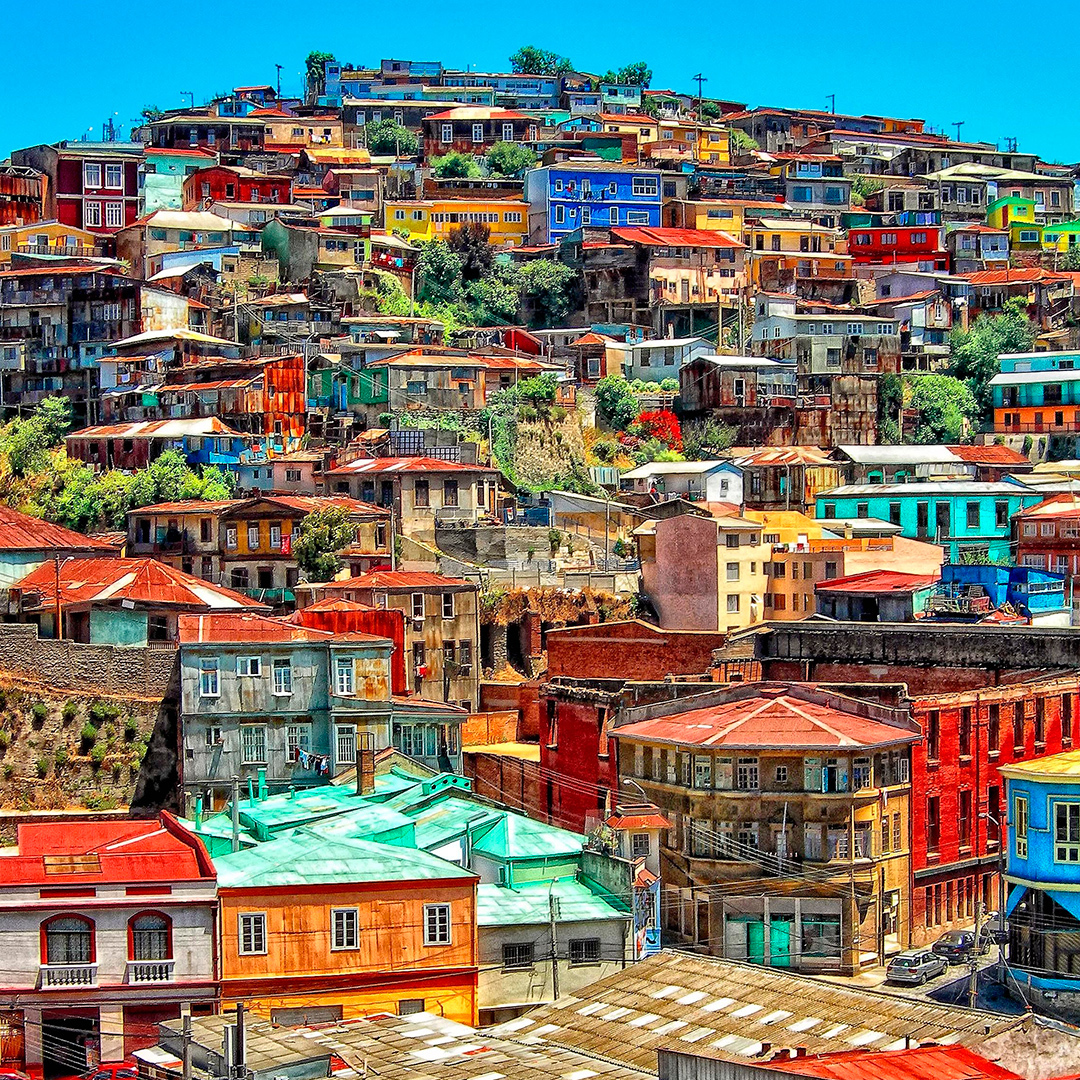
Valparaíso, a UNESCO World Heritage site, dazzles with its colorful architecture and bohemian spirit. It will host the congress at the Federico Santa María Technical University and the Pontifical Catholic University of Valparaíso, the event's host institutions. Just minutes away, Viña del Mar complements the experience with its beaches, world-class gastronomy, and stunning Pacific sunsets.
Learn more about the venue
Become a Sponsor
Why Become a Sponsor of the XXXII Latin American Hydraulics Congress?
High-Impact Regional Positioning: Present your brand at the premier gathering for Latin America’s technical and scientific water community. Gain visibility among researchers, engineers, authorities, consultants, academics, and specialized industry leaders from across the region.
Strategic Audience and Technical Decision-Makers: Enjoy direct access to professionals who define, evaluate, and recommend solutions, technologies, and investments in water management, infrastructure, energy, environment, and natural resources.
Connection with Science, Innovation, and Sustainability: Associate your brand with the values of research, technological development, climate resilience, and responsible water use—key pillars for both public and private organizations.
High-Level Networking: Participate in spaces specifically designed for creating strategic alliances, institutional links, and commercial opportunities with key Latin American players and international organizations.
Exhibition Spaces and Technical Demonstrations: Take the opportunity to present products, services, and solutions on-site through practical demonstrations and direct contact with end-users and technical leaders.
Measurable Return on Investment (ROI): Access participation metrics, visibility reports, and lead generation opportunities, making it easy to evaluate the tangible impact of your sponsorship.
Learn more about the sponsors
Organisers


Sponsors

Related
Latin American Regional Division