World Environment Day : IAHR and UNESCO highlight joint Policy Brief on Ecohydrology and Ecohydraulics for accelerating the SDGs
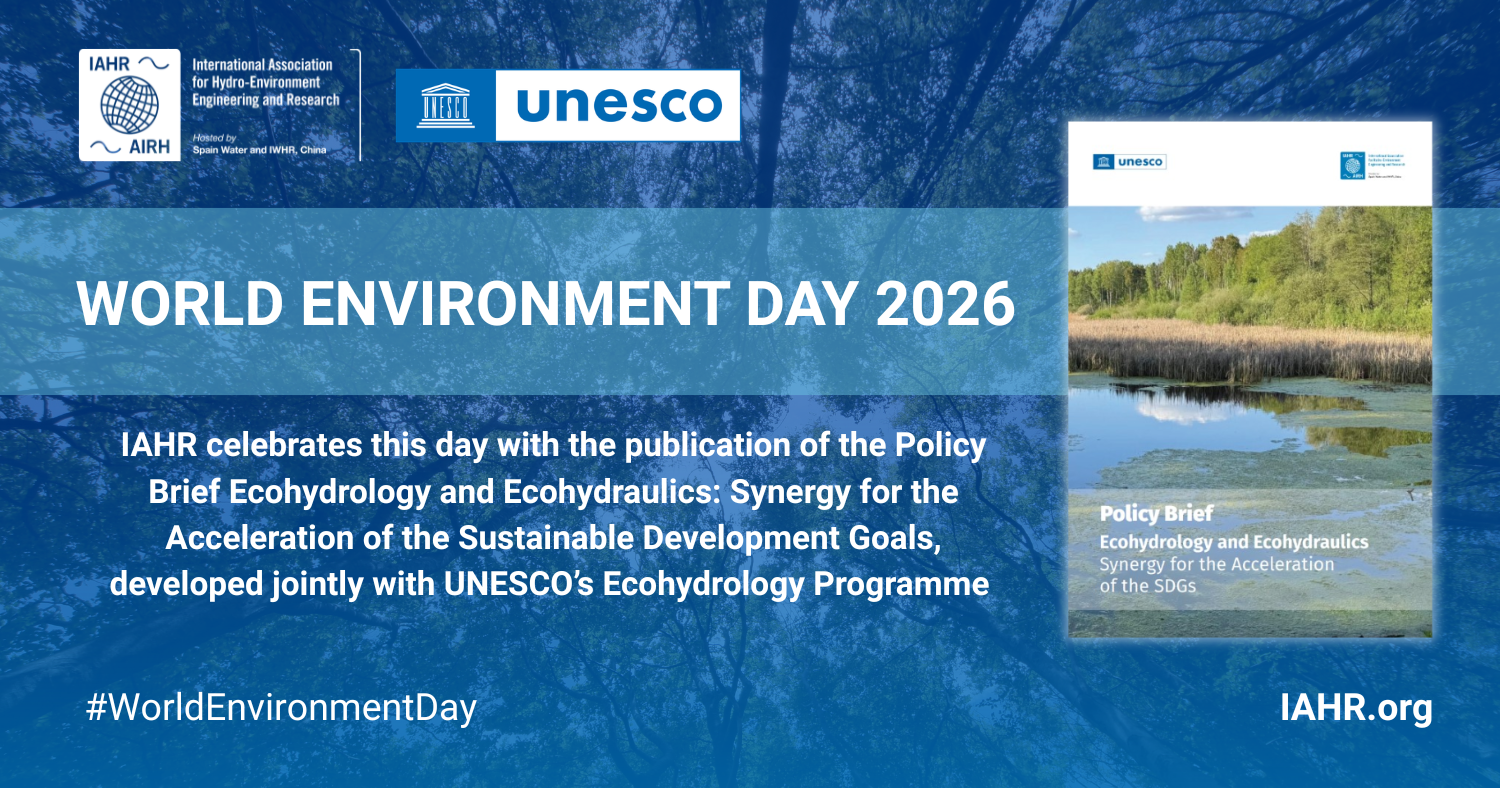
Celebrating World Environment Day 2026
Since 1974, World Environment Day has brought together governments, institutions, organisations and citizens to raise awareness and drive action on some of the world's most pressing environmental challenges. In 2026, the theme Climate Action highlights the urgent need for integrated solutions that strengthen resilience, protect ecosystems and support sustainable development.
Water lies at the centre of many of these challenges. From climate adaptation and biodiversity conservation to ecosystem restoration and disaster resilience, effective water management plays a critical role in shaping healthy environments and resilient societies.
Against this backdrop, the International Association for Hydro-Environment Engineering and Research (IAHR) highlights the publication of the Policy Brief Ecohydrology and Ecohydraulics: Synergy for the Acceleration of the Sustainable Development Goals (SDGs), developed jointly by UNESCO’s Ecohydrology Programme and IAHR. The Policy Brief was officially presented on 1 June 2026 at UNESCO Headquarters in Paris during the Global Celebration of the 30th Anniversary of Ecohydrology at UNESCO and 20 Years of UNESCO Ecohydrology Demonstration Sites, organised within the framework of the 27th Session of the Intergovernmental Council of UNESCO’s Intergovernmental Hydrological Programme (IHP).
About the publication
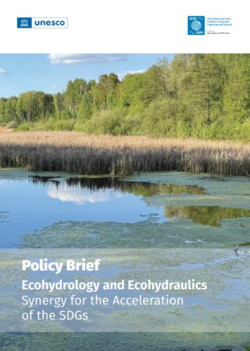 The publication represents an important contribution to the growing dialogue between the international communities of Ecohydrology and Ecohydraulics. It highlights how stronger collaboration among ecological, hydrological and engineering sciences can help address some of the most pressing environmental challenges of our time, including climate change, biodiversity loss, degradation of aquatic ecosystems, increasing hydro-meteorological extremes and growing pressures on freshwater resources.
Addressed to national governments, as well as international scientific and engineering organisations and associations, the Policy Brief calls for a more integrated approach to water management. It argues that combining the systemic perspective of Ecohydrology with the technological and engineering strengths of Ecohydraulics can support more resilient, sustainable and effective responses to environmental challenges while accelerating progress towards the SDGs.
A central message of the publication is the growing importance of Nature-Based Solutions (NbS) and Advanced Nature-Based Solutions (ANbS) in strengthening ecosystem resilience, improving water quality, supporting biodiversity and reducing risks associated with floods, droughts and environmental degradation. The document also highlights the role of emerging technologies—including artificial intelligence, Big Data, environmental DNA (eDNA) and advanced monitoring systems—in supporting more informed and adaptive water management. The Policy Brief identifies several SDGs that can particularly benefit from stronger integration between Ecohydrology and Ecohydraulics, including SDG 6 (Clean Water and Sanitation), SDG 11 (Sustainable Cities and Communities), SDG 13 (Climate Action), SDG 14 (Life Below Water) and SDG 15 (Life on Land).
The publication was authored by an international team of experts from UNESCO, IAHR, academia, industry and the wider water community, including Giuseppe Arduino, Rahmah Elfithri, Angelos Findikakis, Peter Goodwin, Michele Mossa and Maciej Zalewski, with contributions from Katarzyna Izydorczyk, Edyta Kiedrzyńska, Michael McClain, Tom Soo and Estíbaliz Serrano. It also calls for stronger international cooperation among scientific communities and institutions, wider implementation of NbS, increased use of innovative technologies for environmental monitoring and management, and enhanced policy support for ecosystem resilience and sustainability.
For IAHR, the Policy Brief reflects the value of collaboration across scientific, engineering and policy communities in addressing global water and environmental challenges. Developed jointly with UNESCO’s Ecohydrology Programme, it demonstrates how scientific knowledge, engineering expertise and interdisciplinary cooperation can contribute to addressing issues related to water, climate, biodiversity and ecosystem resilience. Many of the themes addressed in the Policy Brief—including climate adaptation, ecosystem resilience, Nature-Based Solutions and innovation in water management—will continue to shape discussions across the IAHR community, including at the 42nd IAHR World Congress, to be held in Bari, Italy, from 28 June to 2 July 2027.
As World Environment Day draws attention to the urgent need for climate action and environmental stewardship, the Policy Brief offers a timely contribution to international efforts to accelerate progress towards the SDGs and support more resilient socio-ecological systems worldwide.
Download the Policy Brief here
Launch Session during the 9th IAHR Europe Congress in Luleå, Sweden!
UNESCO-IAHR Policy Brief on "Ecohydrology and Ecohydraulics" will be launched officially on June 10th 2026, from 13:00 to 13:45, during the 9th Edition of the Europe Congress organised in Luleå, Sweden from June 8th to June 12th. Under the theme ‘Innovating Hydro-Environment Engineering for a Sustainable Future: Arctic Waters and Beyond’, the Congress will examine how scientific innovation and engineering solutions can respond to growing pressures on aquatic environments as climate change accelerates. The Arctic will be highlighted as a region of global importance, where rapid environmental change is reshaping water systems with far-reaching consequences.
For more information about the Congress or this Session, please visit the official website.
Related
IAHR Technical Committee on Ecohydraulics
42nd IAHR World Congress, Bari 2027
Water for the Energy Transition, Food Security and Nature