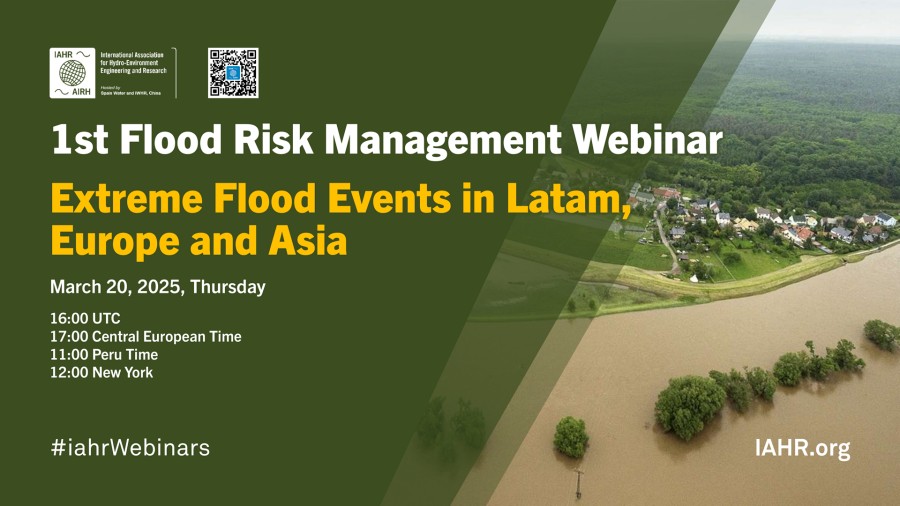
Summary Report of the 3rd Webinar on Flood Risk Management in Data-Scarce Regions and Extreme Flood Events
Flood risk management in data-scarce regions requires not only advances in computational modelling but also stronger community engagement, improved use of global datasets, and integrated approaches to disaster preparedness.
These common themes emerged throughout the IAHR webinar, organized by its Technical Committee on Flood Risk Management on November 11, 2026, which brought together researchers and practitioners from Thailand, Nepal, Mozambique and Chile to present recent developments in flood hazard assessment, risk analysis and resilience building under conditions of limited data availability and increasing climate extremes.
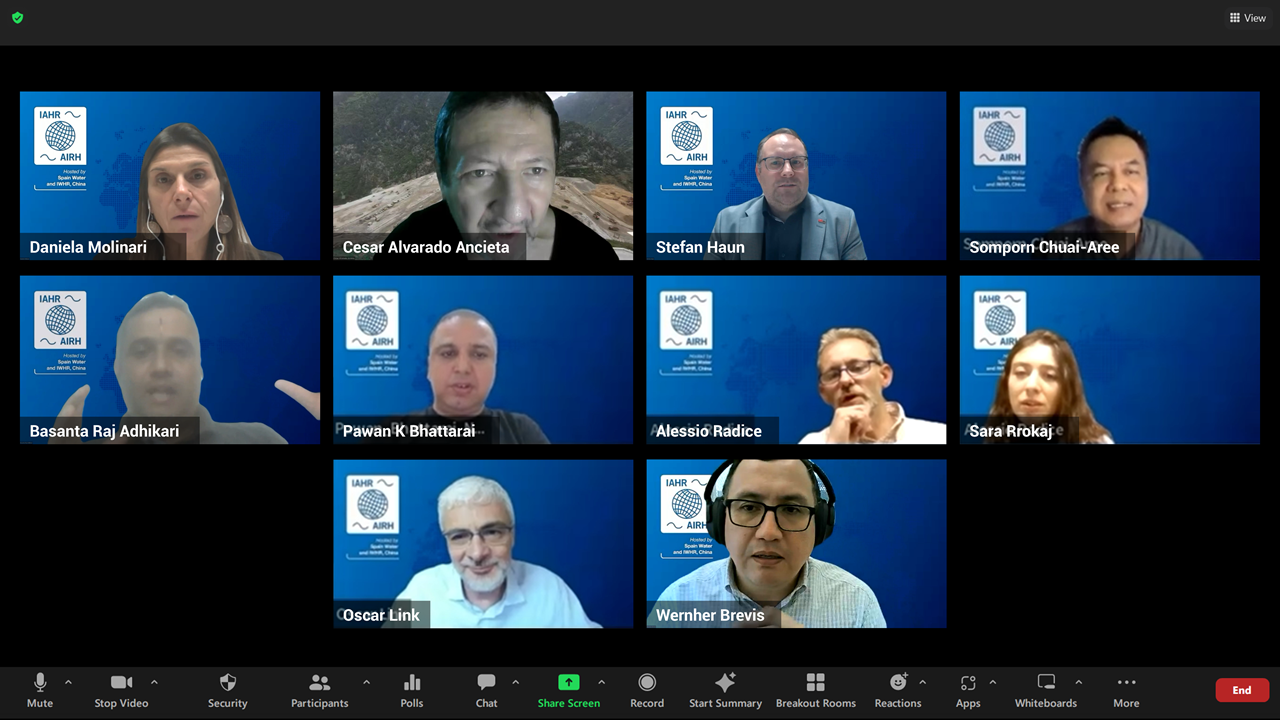
The webinar opened with welcome addresses by Daniela Molinari (Politecnico di Milano; past chair of the committee) and Cesar Alvarado Ancieta (University of Technology and Engineering, Peru; vice chair of the committee), who also chaired the technical sessions. The programme concluded with closing remarks by Stefan Haun (Head of the Institute of Hydraulic Engineering and Water Resources Management at Graz University of Technology; chair of the committee).
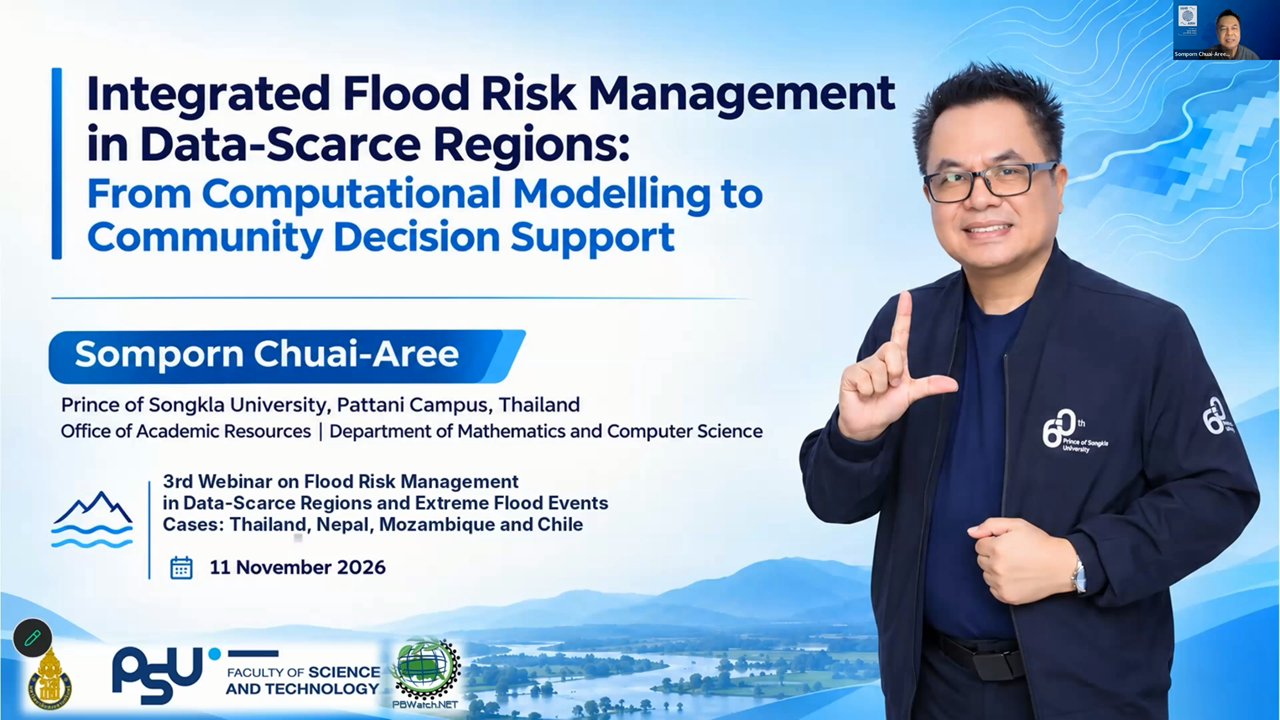
The first presentation, “Integrated Flood Risk Management in Data-Scarce Regions: From Computational Modelling to Community Decision Support,” was delivered by Somporn Chuai-Aree, Assistant Professor and Director of the Office of Academic Resources at Prince of Songkla University, Thailand. He presented an integrated flood risk management framework developed for southern Thailand, where limited monitoring data pose major challenges. The proposed ROD platform combines satellite imagery, weather radar, IoT sensors, GIS information and community observations with GPU-accelerated hydrodynamic modelling to generate flood-risk maps, water-depth estimates, flood arrival times and early warning information. Assistant Professor Chuai-Aree emphasized that effective flood risk management depends not only on advanced computational tools but also on community participation, local capacity building and close collaboration among government agencies, universities and international partners.
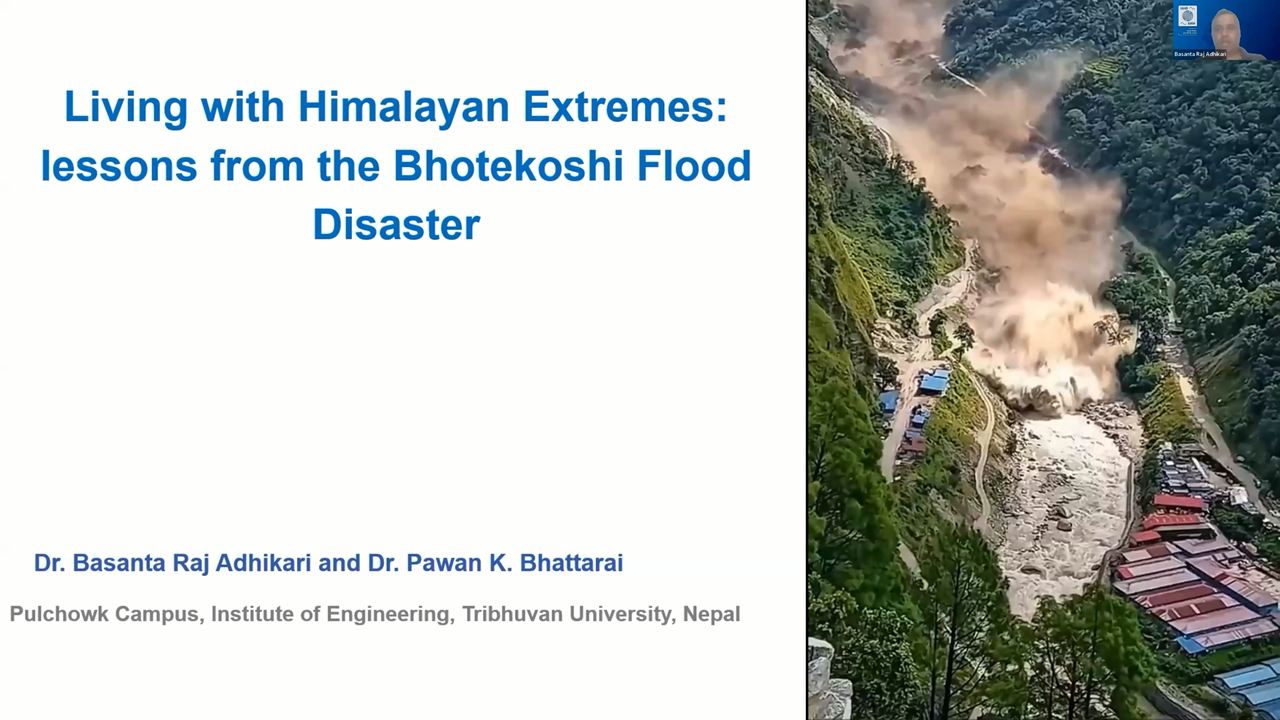
The second presentation, “Living with Himalayan Extremes – Lessons from the Bhotekoshi Flood Disaster,” was jointly delivered by Basanta Raj Adhikari, Director of the Centre for Disaster Studies, and Pawan K. Bhattarai, Assistant Professor in the Department of Civil Engineering and Coordinator of the Water Resources Engineering programme, both of the Institute of Engineering (Pulchowk Campus), Tribhuvan University, Nepal. Using the catastrophic Bhotekoshi rock–ice avalanche as a case study, they demonstrated how climate change, glacier retreat, permafrost degradation and extreme rainfall are increasing the frequency and magnitude of cascading mountain hazards. The presenters illustrated how satellite imagery, drone surveys, seismic monitoring, crowdsourced videos and hydraulic modelling can be integrated to reconstruct disaster processes and improve hazard assessment. They stressed the importance of real-time monitoring, community-based early warning systems, evacuation planning, risk-sensitive land-use planning and preserving natural river corridors to enhance resilience in Himalayan regions.
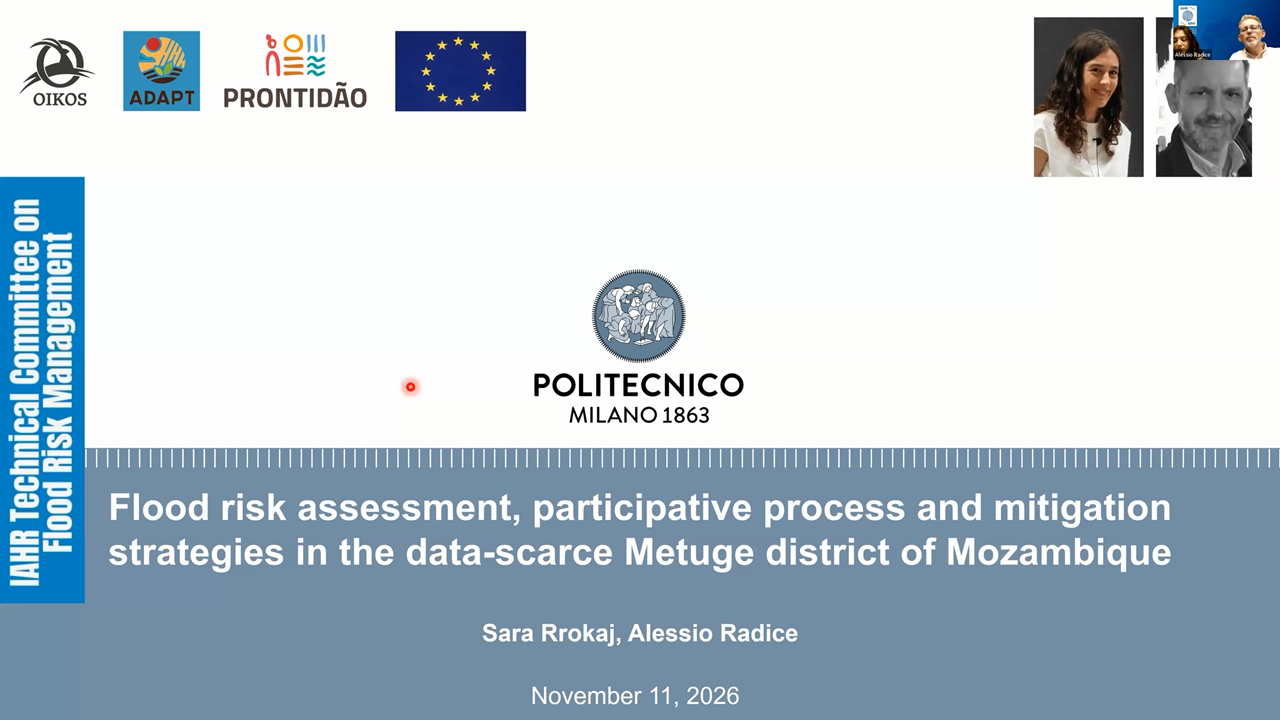
The third presentation, “Flood risk assessment, participative process and mitigation strategies in the data-scarce Metuge district of Mozambique” was presented by Alessio Radice and Sara Rrokaj from Politecnico di Milano. They described a quantitative flood risk assessment framework that combines global open-source datasets, field surveys and standard hydrological and hydraulic modelling to overcome severe data limitations. Their work evaluated flood hazards, building damage, population exposure and road accessibility, identifying Namapala as the district's most vulnerable community. Beyond technical modelling, the project incorporated participatory mapping, volunteer training, community validation and emergency planning, demonstrating how stakeholder engagement can strengthen both structural and non-structural flood risk mitigation.
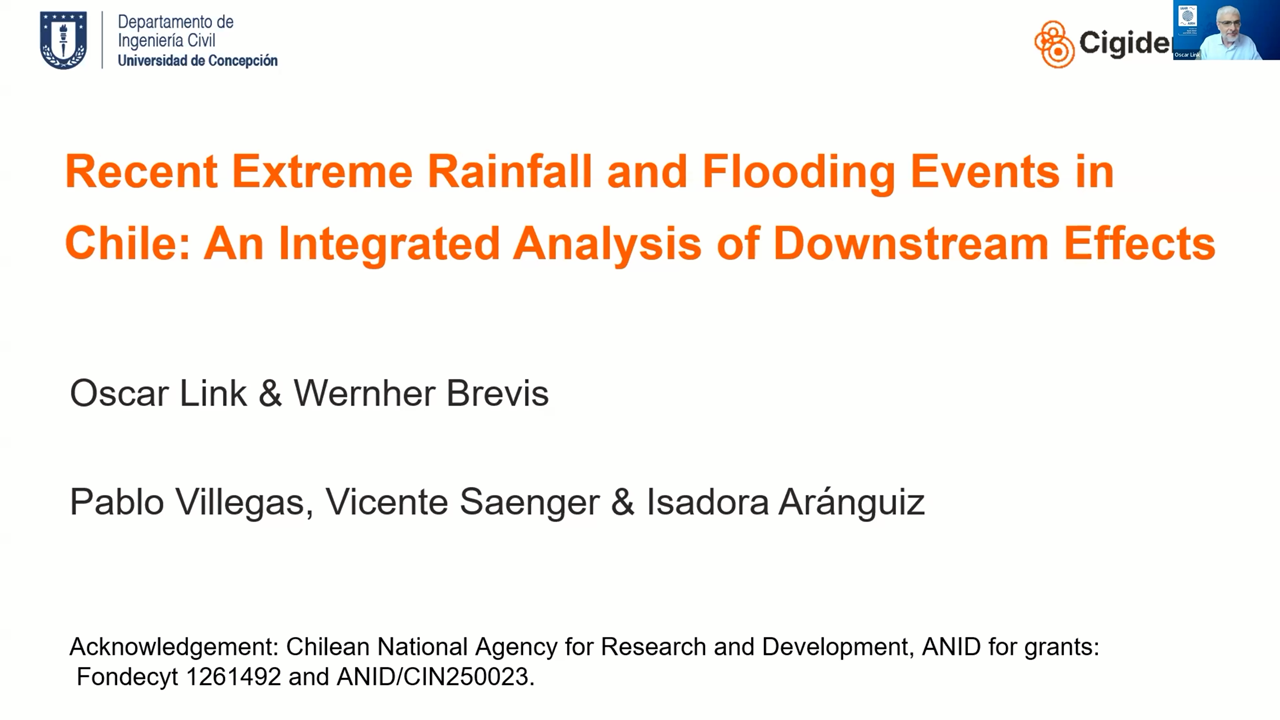
The final presentation, “Recent Extreme Rainfall and Flooding Events in Chile: An Integrated Analysis of Downstream Effects,” was jointly presented by Oscar Link of the Universidad de Concepción and the Center for Interdisciplinary Research on Disaster Risk, Resilience and Recovery (CIGIDEN R+), and Wernher Brevis of the Pontificia Universidad Católica de Chile. Their presentation explored recent extreme rainfall events through integrated hydrological, hydraulic, geomorphological and social analyses. Drawing on case studies from central and northern Chile, they examined how atmospheric rivers, El Niño, prolonged drought, floodplain occupation and sediment transport interact to amplify flood impacts. A detailed investigation of the El Islón flash flood combined field observations, remote sensing, GPU-based two-dimensional modelling and surrogate hydrological modelling to reproduce debris flows and sediment dynamics. The speakers concluded that antecedent soil moisture plays a critical role in determining flood severity and highlighted the importance of combining advanced modelling with field evidence and community-focused risk management to improve resilience to future extreme events.
The webinar was accompanied by engaging discussions among participants, highlighting common challenges faced by flood-prone regions worldwide despite their diverse geographical settings. Across all four presentations, speakers demonstrated that integrating computational modelling, field observations, local knowledge and stakeholder participation is essential for improving flood risk assessment and supporting more resilient decision-making in data-scarce environments.
» IAHR Technical Committee on Flood Risk Management
» Details of this webinar
» Playback videos of this webinar
Webinar Series
2026-11-11
2025-10-28

2025-03-20