Summary Report and Recordings of the Training Course on River Confluences and Shallow Mixing Interfaces

Training Course Website Recordings Presentations
Key themes and topics explored in the course
The IAHR Training Course, held from 27 October to 3 November, offered a comprehensive exploration of shallow mixing interfaces (MIs) and their critical role in controlling hydrodynamics, mixing, and sediment transport at river confluences. The course integrated perspectives from field investigations, numerical modelling, and fundamental fluid mechanics, presented respectively by Carlo Gualtieri, George Constantinescu, and Sébastien Proust.
Carlo Gualtieri’s lectures focused on field studies of river confluences, introducing the concept of the Confluence Hydrodynamic Zone (CHZ) and describing its key regions, including stagnation, flow deflection, shear layers, and downstream mixing zones. He presented an extensive array of field instrumentation, such as ADCPs, multibeam echosounders, and LSPIV, used to characterize turbulence, sediment transport, and water quality in rivers varying from small tributaries to major systems like the Amazon and Yangtze. His case studies highlighted how momentum ratio, bed morphology, and density differences shape mixing dynamics across scales.
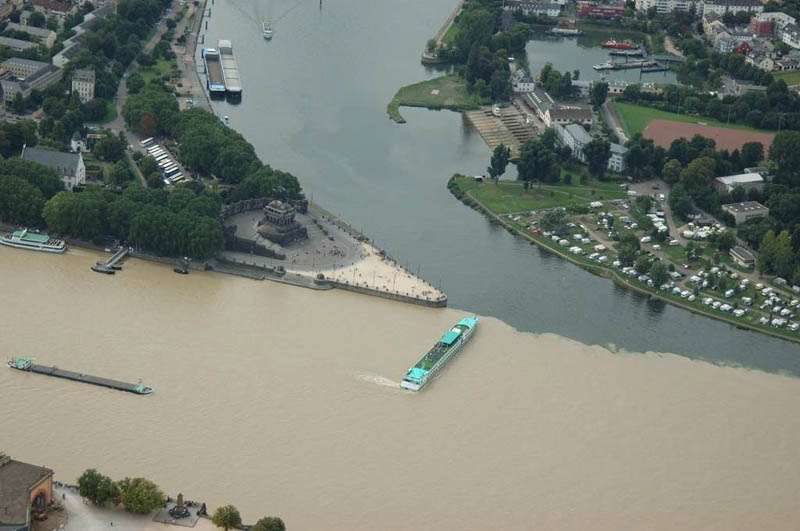
Sébastien Proust contributed foundational insights on shallow turbulent mixing layers (MLs) in open-channel flows. He explained how bed friction and flow shallowness constrain instability development, yielding quasi-2D Kelvin–Helmholtz structures distinct from deep, free-shear mixing layers. His classification of MIs—based on velocity ratio, density contrast, confluence angle, and bed concordance—provided a unifying framework for interpreting the diverse natural configurations examined throughout the course.
The numerical perspective was delivered by George Constantinescu, who used Large-Eddy Simulation (LES) to analyze MI evolution under varying hydrodynamic and geomorphic conditions. His work illuminated the role of coherent structures, especially KH vortices and secondary-vortex (SOV) cells, in enhancing mixing and sediment entrainment, often governing the size of confluence scour holes. He also demonstrated how curvature, density stratification, and bed discordance modify MI coherence and transport efficiency.

Together, the three contributions provided an integrated understanding of shallow mixing processes, bridging theory, field evidence, and advanced modelling. The course emphasized the interplay of turbulence, morphology, and stratification, offering participants a robust framework for analyzing and managing river confluences and related environmental systems.
Recordings are available to watch on demand for IAHR Members!
Participation at a glance
The IAHR Training Course held from 27 October to 3 November attracted almost 200 registered people, representing a diverse and global audience. Participants came primarily from Asia and Pacific, followed by Europe, Latin America, North America, and Africa, reflecting the wide geographical reach of the event.
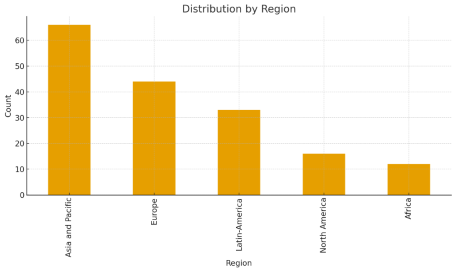
The participant group also showed a strong representation of Young Professionals, highlighting the growing interest of early-career engineers and researchers in the course topics.

Hearing from our participants
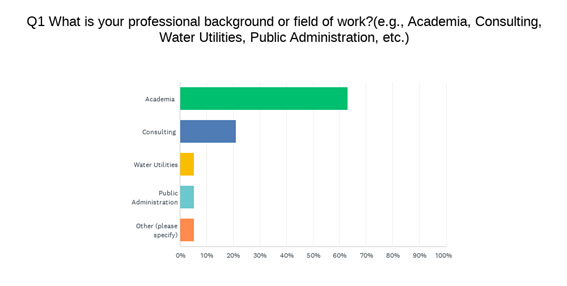
A post-course evaluation survey was sent out to assess the effectiveness and impact of the IAHR Training Course on River Confluences and Shallow Mixing Interfaces. The respondents represented predominantly Academia (63%), with additional participation from consulting, water utilities, and public administration.
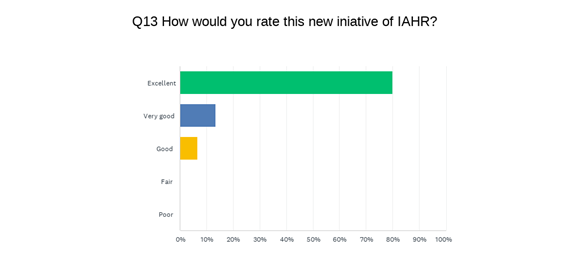
The overall reception of the course was highly positive. 82% rated it as excellent or very good, and the round table session was considered useful by 88% of respondents. Course materials were also well received, with over 85% describing them as extremely or very useful.
Regarding professional development, most respondents indicated clear plans to apply course insights in research, teaching, river modelling, or engineering applications.
Finally, this new initiative of the IAHR Training Courses has been highly welcomed.
Related content