Detailed Programme 6th IAHR Young Professionals Congress now available!
6th IAHR Young Professionals Online Congress
FREE AND OPEN TO ALL!
3-5 December 2025 | Online
Congress Website Proceedings Keep Updated Recordings Report
The IAHR Young Professionals Congresses give young professionals, researchers and students the opportunity to present their work and access mentoring from leading global experts. The event is an ongoing annual series organised by young professionals and for young professionals. Free and open to all. Register to attend!
Programme
Times in CET
Day 1 | Wednesday, December 3, 2025
10:00 - 10:30 CET | Opening of the 6th IAHR Young Professionals Congress
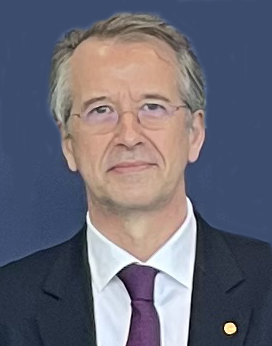
Philippe Gourbesville, IAHR President
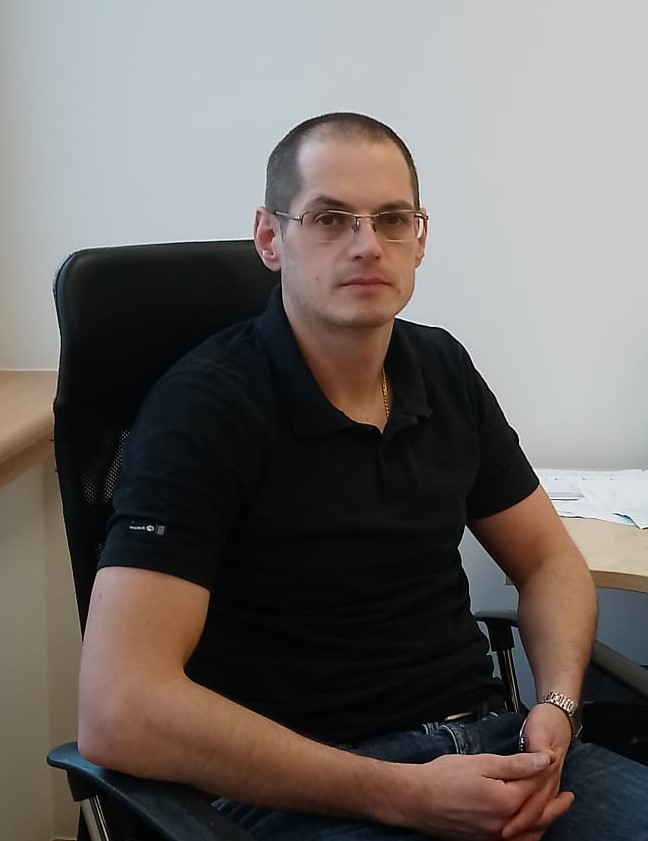
Michael Nones, Chair of the Organising Committee of the 6th IAHR Young Professionals Congress and Chair of IAHR Committee on Education and Professional Development
Yifan Yang, Co-Chair of the Organising Committee of the 6th IAHR Young Professionals Congress and Member of IAHR Committee on Education and Professional Development
Universite Cote D'Azur (UCA),
France
Institute of Geophysics,
Poland
Wuhan University
China

10:30 - 12:00 CET | Climate Change Adaptation and Coffee Break with mentors
Chairs: Ramesh Teegavarapu from the IAHR Technical Committee on Climate Change Adaptation and Paolo Colosio
Hosts: Qian Yu and José Carrillo
Rethinking water vulnerability indicators for adaptive and sustainable water resources management. Attafuah Eunice Efua from University of Auckland, New Zealand.
Strengthening Disaster Preparedness through Similarity Matching of Typhoons Using Deep Learning and the Large Ensemble Dataset for Policy Decision-making for Future Climate Change: A Case Study of the Chikugo River Basin, Japan. Nguyen Phuoc Sinh from Kyoto University, Japan.
Comprehensive drought assessment based on the SPEI and its impact on crop production and streamflow in Afghanistan. Ahmad Tamim Samim from Hiroshima University, Japan.
A GRACE–SMAP Hydrological Drought Index for the Luni River Basin (2015–2025). Pal Surender from India.
A WebGIS Platform for Simulating and Visualizing Extreme Rainfall, Fire Spread and Soil Erosion. Ojer-García Ignacio from University of Zaragoza, Spain.
Adapting to the Escalating Climate Crisis in the Mediterranean Region: Updated Evidence from Greece. Serafeim Athanasios V from University of Peloponnese, Patras, Greece.
Assessment of the hydroecological state of Chukhlomskoye Lake by diatom analysis methods. Khalilova Nika from Lomonosov Moscow State University, Russia.
Capacity planning for hybrid wind-solar-pumped hydro energy systems considering climate change. Cui Yuting from Wrocław University of Science and Technology, Poland.
Climate Change Impacts on Coastal Zones. Dutta Subhasri from Siksha Anusandhan University, India.
Flood Modeling of Lower Ogun River Basin using HECRAS. Shodipo Fawaz from Federal University of Agriculture, Nigeria.
Developing climate aridity and water body extent in the UAE using earth observation data and machine learning approaches. Asif Anam, Youngwook Kim from United Arab Emirates University, UAE.
12:00 - 13:30 CET | Climate Change Adaptation II & Groundwater and Coffee Break with mentors
Chair: Ramesh Teegavarapu from the IAHR Technical Committee on Climate Change Adaptation and Lucija Plantak from UNESCO Groudwater Youth Network
Hosts: Arianna Varrani and Isabella Schalko
Influence of hydrometeorological conditions on methane content and emission in the Ivankovo Reservoir during the summer period. Lada Peshkicheva from Moscow State University, Russia.
Nature-based solution services promoting local biodiversity, well-being and scalable solutions. Ghannem Syrine from Universitat Politècnica de València, Spain.
Response of severe thunderstorm environments in Belgium to Climate Change. Uddin Chowdhury Raihan from Climate Tech and Green Solutions, Bangladesh.
The features of channel processes on Yamal. Kensovskiy Ivan from Lomonosov Moscow State University, Moscow, Russia.
Pioneering Wet Scrubber Technology for Climate-Resilient Emission Control in Bangladesh's Garment Industry. Uddin Chowdhury Raihan from Climate Tech and Green Solutions, Bangladesh.
Vegetation-Specific Precipitation Deficit Indicator for Improved Drought Monitoring under a Changing Climate. Ali Muhammad Haris from Wageningen University and Research, The Netherlands.
Beyond Empirical Models: AI-Driven Approaches for Accurate Infiltration Estimation. Mazighi Amina from École nationale supérieure d'hydraulique de Blida, Algeria.
Methodology for Life Cycle Analysis in Mexican Ports. Ocaña Karina from Mexican Transport Institute, Mexico.
Evaluating the impacts of climate warming and sea level rise on typhoon-induced storm surges by 2100. Chai Yujie from University of Ottawa, Canada.
Flood Impact Analysis on Iowa Bridge Infrastructure through Combined AHP and Fuzzy AHP Approaches. Duran Ege from University of Iowa, USA.
13:30 - 15:00 CET | Hydraulic Structures + Industrial Flow and Coffee Break with mentors
Chairs: Sean Mulligan, Valentin Heller and Jose Carrillo from IAHR Technical Committee of Hydraulic Structures
Hosts: Manish Pandey and Arianna Varrani
Experimental study on the performance of riprap as scour protection around a vibrating monopile. Zihao Tang from National University of Singapore.
3D numerical modeling of the hydraulic jump downstream of a vertical drop structure. Casa Edwin from Universidad Politécnica de Cartagena.
Analysis of Radial Distribution of Hydrodynamic Pressure Fluctuations at the Plunge Pool Bottom. Fatahi-Alkouhi Reza from University of Isfahan, Iran.
Effects of roughness geometries on sediment deposition and self-lining processes between strip roughness elements. Wu Xujian from Kyoto University, Japan.
Experimental study on stepped dropshafts in deep tunnel drainage systems. Ren Weichen from China Institute of Water Resources and Hydropower Research, China.
Extended ADM1-Driven Machine Learning Approach for Predicting Methane production in Anaerobic Digestion with In-Situ Hydrogen Bio-Methanation Upgrade. Paydarnik Pouria from University of Ottawa, Canada.
Machine Learning Prediction of Methane Production and CO2 Emissions in Anaerobic Digestion Using ADM1-Generated Data. Ahmadvand Donya from University of Ottawa, Canada.
The investigation to site effect of a concave slope within an earthquake. Ren P from Beijing University of Technology, China.
Use of Square Collar in Reducing Scour around Circular Pier. Sultana Tania from Jadavpur University, India.
Variation of the ratio of bubble diameter to bubble chord length in a highly aerated flow. Mondal Abhishek from FH Aachen, University of Applied Sciences, Germany.
Vorticity fields around physical barriers at water intakes of hydropower plants. Ozbey Cumhur, Kucukali Serhat from Hacettepe University, Turkey.
15:00 - 16:30 CET | Coastal and Maritime Hydraulics I and Coffee Break with mentors
Chair: Gensheng Zhao from the IAHR Technical Committee on Coastal and Maritime Hydraulics
Hosts: David Ferras and Manish Pandey
Simulation of Storm Surge and Wave Dynamics under Synthetic Cyclones: A Return Period-Based Analysis. Palanimanickam Vengadesan from Indian Institute of Technology Madras, India.
Analysis of pathology and failure mode as determining factors in the rehabilitation of a breakwater. Ocaña Karina from Instituto Mexicano del Transporte, Mexico.
Bayesian Multi-Fidelity Gaussian Process Modeling for Predicting Desalination Brine Jet Dynamics. Goodarzi Danial from University of Ottawa, Canada.
Coastal Decision Support for Optimizing Seawater Intake Selection in Morocco with GIS, AHP, and VBA Tools. El Masmodi Rim from Ibn Tofail University, Morocco.
Failure Probability Reduction in Vertical Seawalls Using Retrofit Measures: A Probabilistic Approach. Jamali Rovesht Ali from Tarbiat Modares University, Iran.
Hydrodynamic analysis of a spar buoy floating turbine for preliminary design: A CFD-based approach. Imbò Alessandro from Polytechnic University of Bari, Italy.
Effects of Oyster Castle Porosities on Sediment Dynamics. Czaplinski Kamil from University of Illinois at Urbana-Champaign, USA.
Idealized modelling of water motion in a tidal inlet basin: comparison of classical and Defina variant formulations of Shallow Water Equations. Qi Tian from Ghent University, Belgium.
Monitoring Coastal Water Quality in Abu Dhabi Using satellite remote sensing and Machine Learning. Meqdad Huda from United Arab Emirates University, UAE.
Influence of a Sloped Bottom on a 60-Degree Inclined Dense Jet Discharged into a Stationary Environment: A Numerical Simulation Study. Wang Xinyun from University of Ottawa, Canada.
Experimental and numerical study on Flow-Vegetation interaction towards coastal protection. Hari Ram N. from Indian Institute of Technology Madras, India.
16:30 - 18:00 CET | Coastal and Maritime Hydraulics II + Marine Outfalls
Chair: Majid Mohammadian from IAHR/IWA Joint Committee on Outfall Systems and Samuel Okon
Hosts: Gonzalo García-Alén Lores and David Ferras
Numerical Analysis of Propeller Jet Velocity and Bed Shear Stress: A Comparison of SST and Realizable k-ε Models. Mahir Abdelrahman A. from Aydın Adnan Menderes University, Turkey.
Numerical Investigation of Velocity-Controlled Dispersion and Settling in OAE Particle Jets. Sohail Muhammad from Dalhousie University, Canada.
Numerical modelling of cross-shore beach hydro-morphodynamics. Subbiah Elavazhagan Buckle from Instituto de Hidráulica Ambiental de Cantabria, Spain.
Reuse of dredged materials as filters or core in a breakwater. Yolane Yolane from LOMC laboratory, France.
Safety of Walk-to-Work Systems in the Offshore Industry. Idrees Saad, Gudmestad Ove Tobias from Western Norway University of Applied Sciences, Norway.
Turbulent horizontal dense jets in stagnant ambient. Tahmooresi Sina from University of Ottawa, Canada.
Water motion in intertidal area governed by 1D Shallow Water Equations and a coordinate transformation as wetting-drying approach. Liekens Jone from Ghent University, Belgium.
Wave-Induced Transport of Plastic Bags. Roman-Oliver Agata from Imperial College London, UK.
Propagation characteristics of intrusive sediment-laden flows via DNS simulation. Qiu Haowei from Dalhousie University, Canada.
Day 2 | Thursday, December 4, 2025
10:00 - 11:30 CET | Urban Drainage and Coffee Break with mentors
Chairs: Manfred Kleidorfer from IAHR/IWA Joint Committee on Urban Drainage and Rosario Arnau from IWA Young Professionals
Hosts: José Carrillo
Comparing three deep learning models for prediction of water levels in the urban drainage systems. Vinokic Luka from The Institute for Artificial Intelligence Research and Development of Serbia.
Enhancing Smart Sewer Monitoring through Optimal Structural Feature–Based Sensor Placement. Ninh Thi Hai Duong from University of Adelaide.
Evaluating nature-based solutions for phosphorus and nitrate removal in semi-arid river systems: a case study of the Tigris River, Iraq. Hathal Mustafa from University of Pannonia,Hungary.
Exploring the Potential of Biochar as a Thermal Insulation Material: Application to Blue-Green Roof Systems. Rodriguez Alba, Rey-Mahía Carlos from University of Oviedo, Spain.
First steps towards the development of a robust methodology for determining rating curves in sewers. Felpete Silvia from Universidade da Coruña, Spain.
Identifying the most contributing sources of microbiological contamination in Paris. Cartier Yoann from Laboratoire d'Hydraulique Saint-Venant, France.
Inflow/Infiltration Detection in Sewer Systems using IoT Acoustic Monitoring. Zhao Anran from University of Adelaide.
Methodological proposal for calculating the ratio between the pollutant load discharged in combined sewer overflows and the total annual pollutant load of wastewater recorded during dry weather. Nieto Rodríguez Cecilia from Canal de Isabel II S.A., Spain.
11:30 - 13:00 CET | Fluid Mechanics & Fluvial Hydraulics I and Coffee Break with mentors
Chairs: Claudia Adduce from IAHR Technical Committee on Fluid Mechanics and Donatella Termini from IAHR Technical Committee on Fluvial Hydraulics.
Host: José Adriasola
Case study for determining bridge scour. Lofthouse Emma from pitt&sherry, Australia.
Re-thinking levee strategies for aggradation-driven flood risk in the Waiho River, New Zealand. Wu Zhengmin from Wuhan University, China.
Turbulent flow structures in compound channels with set-back obstructions: eddy-resolved modelling and modal analysis. Xu Mengxin from Wuhan University, China.
Analysis of changes in extreme flows of the Warta River under the influence of the operation of the Jeziorsko reservoir. Jaskuła Zuzanna from Poznań University of Life Sciences, Poland.
Calculation of hydrodynamic characteristics by dual approach. Tran Thi Kim Lien from Ecole 42 Campus de Nice, France.
Estimation of hysteresis in static rating curve from symbolic regression for stage-discharge relationship: A case study. Dasgupta Rijurekha from Jadavpur University, India.
Visualization of interference and sheltering effects on scour depth around cross-parallel complex piers by algorithm. Sen Plaban from Jadavpur University, India.
Feedback Control on an Oscillating Foil Energy Harvester: A Numerical Study on Density Ratio Effects. Molina Ricardo from Universidad Michoacana de San Nicolás de Hidalgo, Mexico.
Effectiveness of Experimental Floods in Restoring River Dynamics: Insights from the Spöl River, Switzerland. Sheikh Maha from Université de Berne, Switzerland.
Examining Abrasion Coefficient Variability Relative to Damage Patterns in Sediment Bypass Tunnels. Emara Ahmed from Disaster Prevention Research Institute, Japan; Alexandria University, Egypt.
13:00 - 14:00 CET | Keynote lecture : "Horseshoe Vortex Characteristics Near Bed-Mounted Inclined Cylinders"
Bed-mounted inclined cylinders have important applications across different fields of engineering. They are commonly seen in structural supports and offshore platforms. This experimental study investigates the influence of the inclination of bed-mounted cylinders on the horseshoe vortex (HSV) generated around them. To this end, the flow past vertical (VC), backward-inclined (BIC), and forward-inclined (FIC) cylinders were studied using the same fully-developed approach flow. Velocity fields upstream of the cylinder-bed junction were measured using particle image velocimetry at a Reynolds number based on cylinder diameter of 26,000. Mean flow analysis revealed well-defined...Read more
University of Windsor
UK

Chairs: Yifan Yang
14:00 - 15:30 CET | Fluid Mechanics & Fluvial Hydraulics II and Coffee Break with mentors
Chair: Thorsten Stoesser and Zhihua Xie from IAHR Technical Committee on Fluid Mechanics
Hosts: Marco Córdova Puglianini and José Adriasola
3D Numerical Modelling of Scour and Flow around Abutment in Asymmetric Compound Open Channel. Mansouri Zahra from HDR, USA.
Towards Bridging Physics and Data: Emerging Paradigms in AI-driven Sediment Transport Modeling for River Systems. Mir Ajaz Ahmad from National Institute of Technology Jalandhar, India.
A data-driven approach to predict temporal front evolution of particle-laden gravity currents. Vidal Guilherme from Pontifícia Universidade Católica do Rio Grande do Sul, Brasil.
Experimental Investigation into the Effect of Particle-Particle Interactions on the Settling of Microplastic Particles in Quiescent Water. De Castro Camillo from York University, Canada.
Large Eddy Simulation of flow in a T-shaped open-channel bifurcation. Gao Shan from Ghent University, Belgium.
Modélisation de la capacité en transport solide de l'aval du bras Congolais dans le fleuve Congo en 2024. Matsouele Nzonzi Bonheur from Université Marien-Ngouabi, Congo - Brazzaville.
Modelling interfacial mechanisms governing microplastic–bubble contact. Zhang Yueyan from Imperial College London, UK.
Qualitative and quantitative comparison of equilibrium bed features in T-shaped, lab-scale open channel confluences. Hashemikia Saeed from Ghent University, Belgium.
Three-dimensional modelling of plastic particles in turbulent flows. Lei Hei from Imperial College London, UK.
Numerical investigation on the efficiency of tuned liquid dampers as structural vibration control. Khanpour Mahdiyar from University of Ottawa, Canada
15:30 - 17:00 CET | Experimental Methods and Instrumentation & Ecohydraulics and Coffee Break with mentors
Chairs: Rui Aleixo and Slaven Conevski from IAHR Technical Committee on Experimental Methods and Instrumentation and Monica Basilio and Hannah Schwedhelm from Ecoenet
Hosts: Manish Pandey and Marco Córdova Puglianini
Influence of Inclined Roughness Spacing on Flow and Energy Dissipation. Hossein Sohrabzadeh Anzani from Kyoto University, Japan.
The importance of vertical velocity and bottom pressure calculations: Case study on dam-break flows through emergent vegetation. Ginting Bobby Minola from Hiroshima University, Japan.
A Lagrangian Model for Plastic Transport in Shallow Flows Scenarios within the SERGHEI Framework. Vallés Pablo from University of Zaragoza, Spain.
Analysis of tsunami-like wave velocities generated by a discharge gate. Dasi Paula from Universitat Politècnica de València, Spain.
Next-generation lab-on-a-chip solution for real-time assessment of emerging contaminants in water systems. Piazza Stefania from University of Enna "Kore", Italy.
Non-invasive Fish Guidance in Hydropower Systems: Bubble Curtains, Light and Noise-Based Deterrents. Jahangiri Nika from Hacettepe University, Turkey.
Quantifying drag on floating Sargassum patches in combined wind and water forcing. Wang Yihui from University of Illinois at Urbana-Champaign, USA.
The features of flood formation on the Mezyb River (Black Sea coast of Caucasus). Denis Pervykh from Lomonosov Moscow State University, Russia.
Ultrasonic Degassing of Total Dissolved Gas Supersaturated Water in a Laboratory Flume: Influence of Transducer Direction. Kuhn Wolf Ludwig from Norwegian Institute for Nature Research, Norway.
Optimizing water diversion strategies to mitigate cyanobacterial blooms in urban river-lake networks leveraging eDNA-informed parameterization and modeling, Cao Ying, Wuhan University, China
17:00 -18:30 CET | Flood Risk Management I
Chair: Stefan Haun and Dhruvesh Patel from IAHR Technical Committee on Flood Risk Management
Hosts: Eva Fenrich and Manish Pandey
A flood forecast tool based on rainfall predictions and hydrological modelling in the Francolí river basin. Carril-Rojas Daniel from Universidad Politécnica de Madrid, Spain.
A Multi-Method Approach to Bridge Resilience in the Páez River (Cauca, Colombia): Integrating Remote Sensing and Hydrodynamic Modeling of Historical Debris Flow Events. Agredo Campuzano Oscar Felipe, Jimenez Baron Dayanna Lizeth from Universidad del Cauca, Colombia.
A reservoir-based representation of buildings for urban flood modelling. Annis Stefano from Università di Cagliari, Italy.
Agent-based modelling of flood behaviour: study case in Carampangue River, Chile. Saenger Vicente, Coloma Rocío from Universidad de Concepción, Chile.
Application of incomplete topography information and public data for flood risk assessment: study case of Khlong Wat in Thailand. Kaiwong Supanon from Poznan University of Life Sciences,Poland.
Coastal Infrastructure Protection Against Tsunami Inundation – Numerical Modelling of a Novel Countermeasure. Arefiseresht Reza from University of Ottawa.
Development and testing of method for estimating probable maximum snowmelt and probable maximum river discharge during freshet periods. Kirillov Dmitry from Lomonosov Moscow State University, Russia.
Enhancing Probabilistic Flood Mapping with Sentinel-1 SAR and NDWI: Case Studies from Bolivia, Spain, and the USA. Hojatjalaly Mahsa from University of Tabriz, Tabriz, Iran.
Estimation of vegetation height from UAV. Guo Yiwei from Institute of Geophysics, Polish Academy of Sciences, Poland.
Fast prediction of heavy precipitation induced runoff in an urban area using deep learning methods. Haladkar Sangaj Raghunath from Technische Universität Berlin, Germany.
Day 3 | Friday, December 5, 2025
10:30 - 12:00 CET (instead of 10:00-11:30) | Water Resources Management I and Coffee Break with mentors
Chairs: Daisuke Nohara and Satoru Oishi from IAHR Technical Committee on Water Resources Management
Hosts: Isabella Schalko and José Carrillo
Embedding Crop Water Use in Climate Change Hydrology Assessments for Resilient Water Allocation in the Tukituki Catchment, New Zealand. Idowu Oluwaseyi Adenike from University of Auckland, New Zealand.
A comprehensive assessment of aquatic ecological status in the Buriganga, Shitalakshya, Dhaleshwari, and Turag rivers, Bangladesh. Mondal Tanmoy from China Three Gorges University, China.
A quantitative WRTDS assessment of nutrient load to the Mozhaysk reservoir. Teplyakova Anastasia from Lomonosov Moscow State University, Russia.
Analytical Characterisation of Wastewater from Small Settlements on a Quarterly Basis Based on BOD₅, COD, Suspended Solids, and Ammonium: Insights from the Olt River Case Study. Orban Andrea from Sistemul de Gospodarire a Apelor Covasna, Romania.
Comparing the efficiency and applicability of different conceptual rainfall-runoff models: a case study in Hungary. Négyesi Klaudia from Budapest University of Technology and Economics, Hungary.
Comparison of Parsimonious One-Layer Neural Networks with ARMA Models for Streamflow Forecasting in Spanish Catchments. Mena Alberto from Universitat Politècnica de València, Spain.
Evaluating the Feasibility and Scalability of Managed Aquifer Recharge in Bangladesh: Insights from Stakeholder Perspectives. Uddin Md Zamil from Wageningen University, Netherlands.
Evapotranspiration Estimation through Nonlinear Disaggregation Method (NL-DisTrad) of MODIS Land Surface Temperature. M A Noufia from Indian Institute of Technology Madras, India.
Increasing wastewater pressure on rivers in New Moscow area. Romanova Uliana from Lomonosov Moscow State University, Russia.
Implementing Ecohydrology at the Catchment Scale: A Framework for Integrating Nature-based Solutions with Hydroengineering. Jarosiewicz Paweł from European Regional Centre for Ecohydrology of the Polish Academy of Sciences, Poland.
Multi-temporal climate change impact assessment and forecasting of streamflow of a tropical river using statistical and hybrid VMD-LSTM approaches. Kanji Sribas from Jadavpur University, India.
12:00 - 13:30 CET (instead of 11:30-13:00) | Water Resources Management II and Coffee Break with mentors
Chairs: Daisuke Nohara and Satoru Oishi from IAHR Technical Committee on Water Resources Management
Host: Jose Adriasola and Arianna Varrani
Physicochemical parameters related to geosmin events in reservoirs, statistical approach. Caceres Jimenez Laura from Universidad Politécnica de Madrid, Spain.
Role of hydraulic parameters in the concentration of heavy metals in sediments in a two-stage reservoir. Jaskuła Joanna from Poznań University of Life Sciences, Poland.
Streamflow changes in 1981-2018 and their causality in the Upper Blue Nile Basin. Eshete Daniel Geletaw from Chinese Academy of Science, China.
The Capability of Al-Tharthar Canal to Accommodate the Design Discharge. Danan Ahmed from Alexandria University, Egypt.
Numerical and experimental study on the flow patterns in a water storage tank. Peón-García Rogelio Amado from University of Oviedo, Spain.
Wind-Driven Aeration for Sustainable Water Quality. Hazar Oğuz from Izmir Institute of Technology, Turkey.
Ensemble Deep Learning Approaches for Enhanced River Flow Prediction in the Transboundary Lower Semliki River Catchment. Angel Ivy Tumushabe, Mugume Seith from Makerere University, Uganda.
Integrated Water Resources Management in the Rímac-Lurín Basins under Climate Change: The Case of Villa El Salvador, Perú. Leon Lobaton Diana, Reyes Díaz Misael from Universidad Nacional Tecnológica de Lima Sur, Peru.
Nonlinear Fertilizer Effects on Stream Nitrogen Dynamics: Insights from Ensemble Machine Learning. Yan Hua from Auburn University, USA.
Climate change and water resources management in the Vilcanota-Urubamba basin. Barcelona Anne Julliene from Massachusetts Institute of Technology, USA.
An Integrated GIS-Machine Learning Approach for Wildfire Susceptibility Prediction. Rodriguez Alex from University of Ottawa, Canada.
13:30 - 14:00 CET (instead of 13:00-14:00) | Keynote lecture "A High-Resolution National Database of River Widths from Remote Sensing and Cloud-Based Image Processing"
A high-resolution database of river widths was developed for Canadian rivers through advanced remote sensing techniques and cloud-based image processing. By integrating Sentinel-2 multispectral satellite imagery, cloud processing, and automated GIS methods, river widths were systematically measured across 9,500,000 square-kilometers of diverse Canadian landscapes, providing unprecedented spatial and temporal detail. Using the presented methods, large-scale...Read more
University of Ottawa
Canada
Chair: Michael Nones
14:00 - 15:30 CET (on time) | Flood Risk Management II and Coffee Break with mentors
Chairs: Stefan Haun and Qian Yu from IAHR Technical Committee on Flood Risk Management
Hosts: Marco Córdova Puglianini and Mina Rouzegar
Nature-Based Solutions for Urban Flood Mitigation: A Systematic Bibliometric Review. Remmouche Samy from Hiroshima University, Japan.
Research of a Water-Surface Mobile Rescue Robot Equipped with a Tentacle-like Manipulator. Tang Shaoheng from Kyoto University Gokasho, Japan.
Propagation of uncertainty from a Bayesian rating curve into design flood estimates. Das Tanmoy, Das Subhasish from Jadavpur University, India.
Mapping flooded areas using a water index based on Sentinel-2 satellite data: The 2019 flood in Lower Mondego (Portugal). Gerardo Romeu, Pedroso De Lima Isabel from Universidade de Coimbra, Portugal.
Multiscale dynamics of Saint-Louis breach since its opening. Gueye Awa from Ecole polytechnique de Thiès, Senegal.
Quaile Creek Watershed Flood Hazard Mapping Study. Rajaie Marieh from ~~, Canada.
Unregulated urbanization and flood risk in Kosovo: evidence from the Lumbardhi i Pejes and Klina catchments. Agaj Tropikë from Poznań University of Life Sciences, Poland.
Urban Inundation Mapping with HEC-RAS Integration in a Web Application for Improved Planning and Community Engagement in Data Scarce Regions. Idowu Olamide from University of Lagos, Nigeria.
Fast and Fine: Deep Learning Super-Resolution for Hydrodynamic Flooding. Pérez García De Carellán Juan Manuel from Aragón Institute of Engineering Research; University of Zaragoza, Spain.
Flash Flood Dynamics in Ireland: A Study of Two Irish Catchments using Hydrological and Remote Sensing Signatures. Faisal Mahmood from Munster Technological University, Ireland.
15:30 - 17:00 CET (on time) | Hydroinformatics & Global Water Security and Coffee Break with mentors
Chair: Isa Ebtehaj and Duan Chen from IAHR/IWA Joint Committee on Hydroinformatics
Hosts: Eva Fenrich and Marco Córdova Puglianini
River Discharge Forecasting Based on Meteorological Data: Vääna River Case Study. Zhakanov Bauyrzhan from Tallinn University of Technology, Estonia.
A Modified Lax-TVD Minmod Scheme for Dam-Break Simulation under Wet Conditions. Gouffi Samira from Université de Bejaia, Algérie.
Advancing Extreme Rainfall Estimation through Bias Correction of Annual Maximum Precipitation in the Middle Piura Basin. Luis Velarde, Ramirez Jamil from Universidad Tecnológica del Perú; Universidad Nacional Mayor de San Marcos, Peru.
Comparative evaluation of Machine Learning and Physics-based models in simulating future river flows in a water scarce catchment in Southern Africa. Murungi James from University of Pretoria, South Africa.
Evaluation of the Extrapolation Capability of Deep Learning in Rainfall–Runoff Modelling. Junsei Shichida from ~~~, Japan.
Generating customized design storms for any Greek catchment based on official IDF parameters: The Catchment2Storm Python App. Alamanos Angelos from Independent researcher, Germany.
Intelligent Super-Resolution Reconstruction of Scour-Induced Deformation in Bridge Crossing Areas. Zheng Nangui from Wuhan University, China.
Machine Learning and Statistical Adjustment for Strengthening Precipitation Product Reliability in the Upper Rímac River Basin. Berrocal Becky, Ramirez Jamil from Universidad Tecnológica del Perú; Universidad Nacional Mayor de San Marcos, Peru.
Optimal Environmental Conditions for Different Vegetation Types to Reduce Hillslope Runoff and Soil Erosion on the Loess Plateau. Tuo Mengyao from Xi'an University of Technology, China.
Two-dimensional hydrodynamic modelling of flow in Lena River under various scenarios. Harutyunyan George from Lomonosov Moscow State University, Russia.
CFD modeling of a river boom for macroplastic removal. Schrott Márton from Budapest University of Technology and Economics, Hungary.
17:00 - 17:15 CET (on time) | Closing session
Chair: Michael Nones, Chair of the Organising Committee of the 6th IAHR Young Professionals Congress
Sponsored by:

Supported by: