Summary of the IAHR-Spain Water Conference | Celebrating 25 years of IAHR's presence in Spain
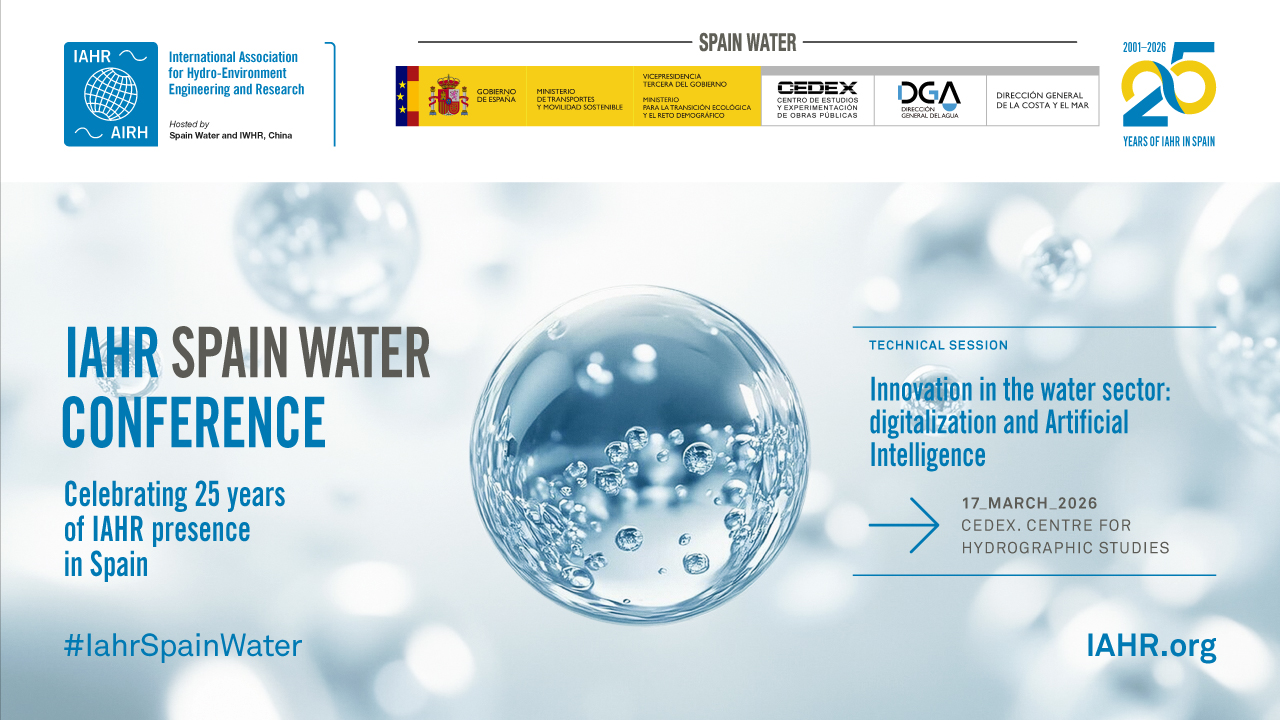
IAHR-Spain Water Conference | Celebrating 25 years of IAHR presence in Spain
Presentation of the new SPAIN Water-IAHR Agreement 2026-2030-2034
Technical Session. Innovation in the water sector: digitalization and Artificial Intelligence
Date: Tuesday 17 March 2026 (9:30-17:00 h)
Location: CEDEX Centre for Hydrographic Studies, Paseo Bajo de la Virgen del Puerto 3, 28005 Madrid. Map.
Registration is free until full capacity is reached
Keep updated Contact In Spanish Programme Pictures from the event
Introduction
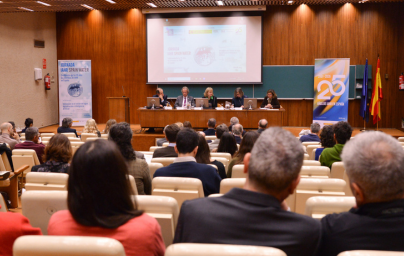
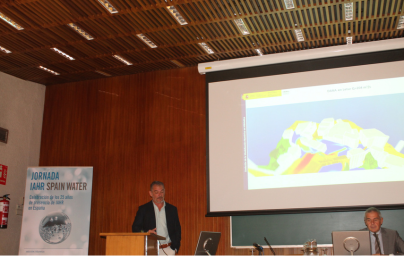
On 17 March 2026, the Centre for Hydrographic Studies hosted the event marking the 25th anniversary of the World Secretariat of the International Association for Hydro-Environmental Engineering and Research (IAHR) in Spain. This event not only celebrated a quarter of a century of institutional collaboration, but also served as a platform to present the most significant advances in digitalisation, artificial intelligence and digital twins applied to water management and coastal infrastructure.
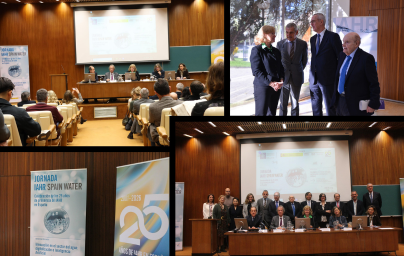
The first part of the conference was dedicated to the opening of the event, the presentation of the new IAHR-SPAIN WATER 2026-2030-2034 agreement and the celebration of the 25th anniversary of IAHR in Spain. In attendance were the Director of CEDEX, Áurea Perucho Martínez; the Director-General for Water, Mª Dolores Pascual Vallés; and the Director-General for the Coast and the Sea, Ana Oñoro Valenciano. Also present were the President of the IAHR, Philippe Gourbesville; the Secretary-General of the IAHR in Spain, Ramón Mª Gutiérrez Serret; and the Executive Director of the IAHR, Tom Soo. Led by former directors of CEDEX and the IAHR, the conference highlighted the progress made since the relocation of the IAHR World Secretariat. The new IAHR-SPAIN WATER Agreement, covering the years 2026 to 2030, with a possible extension until 2034, builds on those that have been in place since 2001, when the Association moved from the Delf Hydraulics Institute (now Deltares) in the Netherlands to CEDEX in Madrid, and represents the willingness of both parties to continue collaborating on the dissemination of science and technology in the field of water, both inland and marine, at national and international level. This new Agreement remains open to the incorporation of other Spanish entities – public or private – through the relevant addenda. Although the formal signing of the new 2026–2030–2034 collaboration agreement is currently undergoing administrative procedures, all parties expressed their firm commitment to continuing this strategic alliance.
With over 6,000 members worldwide and a second secretariat in Beijing since 2015, the IAHR has established itself as an essential global platform for the exchange of knowledge and best practices in hydraulic and environmental engineering.
Technical session: digitalization and Artificial Intelligence
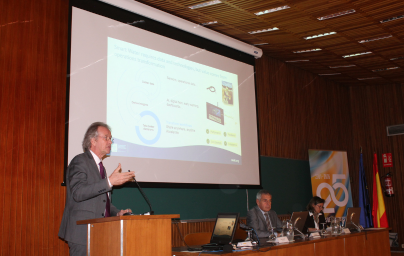
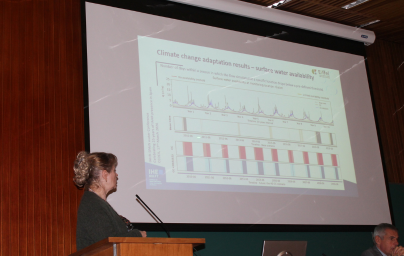 A recurring theme throughout the conference was the transformative role of digitalisation and artificial intelligence in water management. Ángel Bautista Yáñez presented the water digitalisation programme, which includes the creation of a water observatory, decision-support systems and pilot applications in the Segura Basin. The success stories presented demonstrated the tangible value of these technologies: a reduction in response times from 24 hours to 2 hours, a 40% decrease in energy costs and a reduction in system failures from 15 to 3 per year. The challenges were also acknowledged: a lack of trained staff, resistance to changing traditional paradigms, concerns about cybersecurity and dependence on technology providers. A key consensus was that artificial intelligence should act as a tool to support professional decision-making, not as a substitute for human judgement.
Digital twins in various sectors were also a recurring theme. Antonio Lastra, representing Canal de Isabel II, for example, presented his real-time management system for a 17,000 km distribution network with over 600,000 nodes, integrating data from smart meters and multiple sensors. In the field of urban drainage, Madrid manages 500,000 sensor time series and operates storm water tanks of up to 400,000 m³, using AI to detect sensor failures and fill in missing data.
In the coastal sector, Ana García Fletcher presented the ATALAYA project, a digital twin for the entire Spanish coastline that assesses erosion and flood risks across 180,000 10-metre coastal profiles, with sea-level projections anticipating rises of 20–23 cm by 2050 and 56–80 cm by 2100. Additionally, an AIS database containing over 55 million messages since 2011 for maritime traffic analysis and emissions estimation.
The IBER software, developed in Spain and presented by David López, has achieved international recognition with over 30,000 downloads in more than 20 countries and 70,000 registered users. Its application in the analysis of the DANA event and in studies of dam failures demonstrates its versatility and power. Furthermore, advances in SPH (Smoothed Particle Hydrodynamics) models were presented for the analysis of pressurised flows, cavitation and complex confluences.
The Segura Basin was presented as an innovation hub, with the Hydrotwin and Siages platforms having reached TRL 7 (Technology Readiness Level), just two levels away from commercialisation. From an international perspective, Ioana Popescu, from IHE Delft, shared experiences in hydroinformatics applied to the Yellow River in China and to drought management in the Netherlands through nature-based solutions. A particularly illustrative case was that of Palermo, presented by Gabriele Freni, where floating sensors enabled the identification and resolution of saltwater infiltration problems in urban drainage systems.
Upcoming steps and conclusions
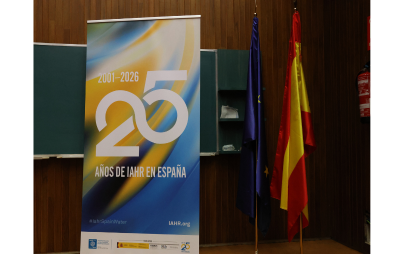
The IAHR will organise an event on 28 May in Madrid, bringing together cities from around the world to discuss urban water challenges. Furthermore, the next World Congress will be held in Bari (Italy) in June 2027, with the theme: ‘Driving change: management in the era of digital water and transitions’. In short, the commemorative conference demonstrated that Spain has established itself as an international leader in the application of digital twins, artificial intelligence and numerical modelling to water and coastal management. There was a clear consensus: in the face of the challenges of climate change and the increasing frequency of extreme events, technological innovation, always at the service of professional judgement, is indispensable. The 25 years of the IAHR in Spain are not merely an achievement of the past, but the solid foundation of a collaboration that will continue to drive scientific and technical excellence in the coming decades.
Organization
IAHR and Spain Water (CEDEX, the General Directorate for Water and the General Directorate for the Coast and the Sea).
Contact
IAHR Global Secretariat. Paseo Bajo Virgen del Puerto, 3.
28005 Madrid. Spain.
Tel: +34 91 335 79 08
Email: iahr@iahr.org