Key Takeaways from the 9th IAHR Europe Congress
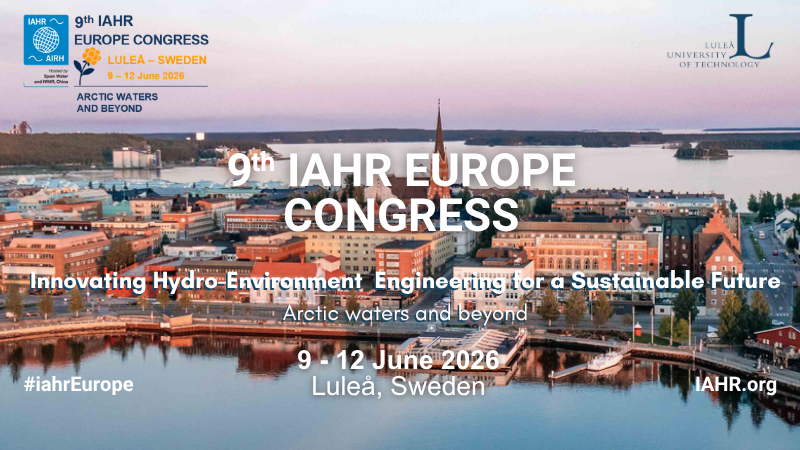
Nearly 300 participants from 34 countries took part in the 9th IAHR Europe Congress that took place in Luleå, Sweden from 9 to 12 June, 2026.
The Congress provided a platform for researchers, engineers, practitioners and decision-makers to exchange knowledge and explore innovative solutions for a sustainable water future. Organised by Luleå University of Technology and IAHR’s Europe Division, the event brought together the international hydro-environment community under the theme: “Innovating Hydro-Environment Engineering for a Sustainable Future: Arctic Waters and Beyond.”
The opening ceremony featured welcoming remarks and contributions from Margareta Groth (Luleå University of Technology), IAHR President Philippe Gourbesville, IAHR Europe President Pawel Rowinski, and Elfithri Rahmah (UNESCO), highlighting the importance of strengthening collaboration between science, engineering and policy to address global water challenges.
The Congress also welcomed a High-Level Panel with the theme “Science for Policy and EU Water-related Directives: Research & Innovation”. Joachim D'Eugenio, Policy advisor for the European Commission and Dr. Emanuele Quaranta, Scientific Officer for the European Commission Joint Research Centre introduced the topic of water-related EU policies and presented their views on the interactions between science and policymaking.
The session also included a Panel Discussion under the theme “Science - Policy Interfaces in EU Water Management: Lessons and Needs from north to south in Europe” with Carina Christiansen as the moderator and IAHR President, Philippe Gourbesville, Ole Gunnar Dahlhaug (NTNU), Alessandro Rinaldi (Acquaenna), Petra Viklund (Lumire AB), Eva Sundin (Unit Hydro Nordic) and Emanuele Quaranta (European Commission Joint Research Centre) as the panelists.
The panel discussion focused on translating cutting-edge research into policy-relevant evidence, identifying priority research and innovation needs, and strengthening the interface between scientists, regulators, and practitioners.
Presentation of the New UNESCO-IAHR Policy Brief on Ecohydrology and Ecohydraulics
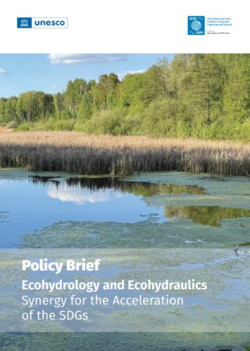
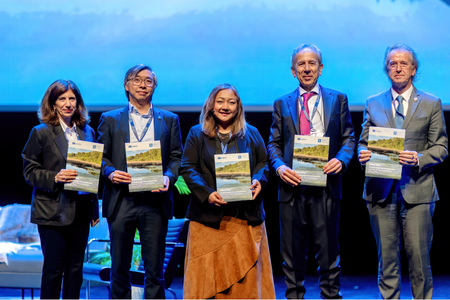 The international Policy Brief “Ecohydrology and Ecohydraulics: Synergy for the Acceleration of the Sustainable Development Goals (SDGs)” was officially presented on 1 June 2026 at UNESCO Headquarters in Paris. The document is the result of a collaborative effort between the UNESCO Ecohydrology Programme and the International Association for Hydro-Environment Engineering and Research (IAHR).
The presentation took place during the Global Celebration of the 30th Anniversary of Ecohydrology at UNESCO and 20 Years of UNESCO Ecohydrology Demonstration Sites, organized within the framework of the 27th Session of the Intergovernmental Council of UNESCO’s Intergovernmental Hydrological Programme (IHP).
The Policy Brief was subsequently presented on 10 June 2026 at the 9th IAHR Europe Congress (Luleå, Sweden), within a dedicated session chaired by Tom Soo. The session included remote presentations by Maciej Zalewski and Peter Goodwin, as well as in-person contributions from Elfithri Rahmah and Michele Mossa.
Published in 2026 by UNESCO and IAHR, the Policy Brief addresses the urgent need to tackle environmental degradation, biodiversity loss, and climate change through a unified approach that integrates Ecohydrology and Ecohydraulics. The Policy Brief reflects IAHR’s commitment to accelerating science-based solutions across the water cycle and strengthening the interface between research, engineering practice and policy-making.
The document was developed by an international team of authors—Giuseppe Arduino (UNESCO Chair at the University of Algarve, Portugal), Rahmah Elfithri (UNESCO-IHP, Paris, France), Angelos Findikakis (Bechtel Corporation, USA), Peter Goodwin (University of Maryland Center for Environmental Science, USA), Michele Mossa (Polytechnic University of Bari, DICATECh, Italy), and Maciej Zalewski (European Regional Centre for Ecohydrology of the Polish Academy of Sciences under the auspices of UNESCO, Poland).
Policy Brief Highlights
 According to the Policy Brief, Ecohydrology and Ecohydraulics provide nature-based and technology-driven solutions that contribute to sustainable water management and enhance the resilience of aquatic ecosystems. Their integration supports innovative approaches to Integrated Water Resources Management (IWRM) and helps strengthen the link between science, policy, and practice.
The document highlights that society is currently facing two major challenges: rapid changes in the water cycle associated with climate change, and the global loss of biodiversity. It emphasizes that stronger integration across scientific disciplines is essential to effectively address these issues.
The Policy Brief also identifies key pressures on aquatic systems, including pollution, nutrient loading, habitat alteration, and increasing anthropogenic impacts. It therefore calls for restoration strategies based on systemic and nature-based approaches rather than isolated interventions.
In this context, the document underscores the importance of Nature-based Solutions (NbS), hybrid green–gray approaches, and Advanced Nature-based Solutions (ANbS) for improving water quality, restoring ecosystem functions, enhancing resilience, and addressing environmental risks.
Ecohydrology is described as focusing on the interactions between ecological and hydrological processes, while Ecohydraulics examines the interactions between hydrodynamic processes and aquatic organisms in rivers, coastal areas, and other water bodies. The integration of these disciplines supports applications such as ecosystem restoration, pollutant transport analysis, biological corridor design, and the management of aquatic environments.
The Policy Brief also highlights the role of innovative technologies—including environmental DNA (eDNA), artificial intelligence, Big Data, drones, and advanced monitoring systems—in improving environmental management and ecosystem monitoring.
The integration of Ecohydrology and Ecohydraulics contributes to sustainable water management and supports the achievement of the Sustainable Development Goals, particularly SDG 6 (Clean Water and Sanitation), SDG 13 (Climate Action), SDG 14 (Life Below Water), and SDG 15 (Life on Land).
The document outlines key recommendations, including the promotion of transdisciplinary approaches, the implementation of Advanced Nature-based Solutions, the transition towards ecosystem-based water governance, the use of innovative technologies, and the engagement of stakeholders and decision-makers through education and policy support.
In this context, Professor Michele Mossa also contributed through his in-person presentation at the 9th IAHR Europe Congress. He underlined the importance of further developing the Policy Brief in the future, including the preparation of dedicated White Papers, and expressed the hope that additional IAHR colleagues will actively contribute to these initiatives.
The Policy Brief is expected to serve as a foundation for future IAHR and UNESCO initiatives aimed at translating scientific knowledge into practical guidance for decision-makers and water professionals worldwide.
The Keynote Speakers
The Keynote Speakers
The 9th IAHR Europe Congress hosted three keynote lectures:
Tuesday, June 9
Pernille Erland Jenssen (Technical University of Denmark) on Water and Sanitation in Greenland
Patrick Huber (Hamburg University of Technology, Germany) on Nature’s Blueprint: Water-Enabled Functionality in Hierarchically Porous Materials
Thursday, June 11
Dag Avango (Lulea University of Technology) on Northern hydropower in Swedish Industrializations – Future Visions and Legacies
A wide-ranging technical programme
A wide-ranging technical programme
Over the following days, the Congress continued with technical sessions, panel discussions, master classes, technical visits, Young Professionals activities and opportunities to strengthen the dialogue between science, policy and practice around the following themes:
Climate change adaptation and mitigation
Dam safety
Urban water systems including blue-green systems and spounge city concepts
Advanced modelling approaches
Green transition in hydro-environment engineering
Urban snow management and cold region hydraulics
Hydroenvironment
Snow hydrology and impacts on reservoirs
Ice research and engineering
Water for the energy transition, food security and nature
Efficient water use and water reuse
Nature-based solutions for stormwater, greywater and wastewater
Emerging pollutants
Wastewater transport and treatment systems
Enabling transition to the future urban water system
Legislation
Social acceptance
Financial and economic sustainability
Interdisciplinary approaches
Food-water-energy nexus
Ecological flows
Biodiversity and fish migration
Restoration
Surface and groundwater hydraulics and hydrology
River morphodynamics and sediment transport
Reservoir sedimentation and sustainable sediment management
Aquifer recharge and groundwater abstraction
Dams hydraulic design and case studies
Improving resilience against water hazards and disasters
Decentralization for increased resilience
Maintenance and asset management
Preparedness of water and power systems
Estuarine and coastal dynamics
Coastal monitoring
Protection, management and restoration of coastal systems
Climate-resilient estuaries and coasts
Ports and waterways design, Marine renewable energy
Hydraulic design of bridges and protection measures
Bridge scour and local scour assessment under extreme flows
Sediment transport and river morphodynamics affecting bridge stability
Flood risk management and multi-hazard interactions
Digital transformation
Computational methods in fluid dynamics hydroenvironmental problems, sediment dynamics & fluid-structure interactions
Digital twins and cyber-physical systems – Simulation and hybrid forecasting
Hydroinformatics
Data science, machine learning and data analytics
Big data instrumentation, experimental facilities and field experiments
Emerging hydraulic measurement technologies and analysis methods
Modelling and measurements in urban water systems
Turbomachinery, turbines and pumps
Design optimization
Computational and experimental techniques
Cavitation and multiphase flow
Real-time monitoring and early-warning systems for bridge scour
Book of Abstracts
Book of Abstracts
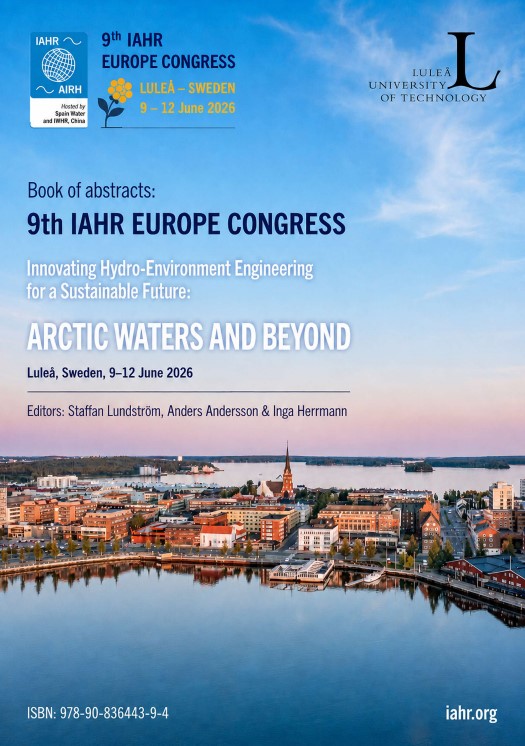
During the Congress, a broad range of topics were addressed, including new research findings, innovative technologies, and sustainable engineering practices aimed at protecting and developing water environments. The programme included keynote lectures, panel discussions, technical sessions, and interactive exchanges intended to encourage collaboration and stimulate new ideas. More specifically, it featured more than 190 scientific presentations, three keynote lectures, two high-level panel discussions, and two technical visits.
The Book of Abstracts of the 9th IAHR Europe Congress can be found in the IAHR library
IAHR Jirka Award 2026
IAHR Jirka Award 2026
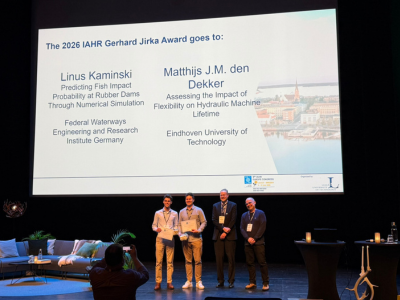
During the closing ceremony of the 9th IAHR Europe Congress the Chair of the congress, Staffan Lundström and the Chair of the Europe Division, Pawel Rowinski announced the winners of the 2026 Gerhard Jirka Award for Young Researchers which awards the best presentation given by a Young Professional during the biennial IAHR Europe Division Congress. The award was introduced at the 5th IAHR Europe Congress in Trento in 2018 and was created in memory of Prof. Gerhard Jirka.
This edition winners were:
Matthijs den Dekker (Eindhoven University of Technology) for his presentation on Assessing the Impact of Flexibility on Hydraulic Machine Lifetime
Linus Kaminski (Federal Waterways Engineering and Research Institute Germany) for his presentation on Predicting Fish Impact Probability at Rubber Dams Through Numerical Simulation
More information can be found in the official announcement.
Celebrating Young Professionals during the 9th IAHR Europe Congress
Celebrating Young Professionals during the 9th IAHR Europe Congress
The 9th edition of the European Congress in Luleå, Sweden, organised a series of activities to foster relationships between young professionals, as well as to help them explore their long-term career paths and gain honest, practical insights from experienced leaders.
Academia, Industry and Policy: Navigating Career Paths as a Young Professionals
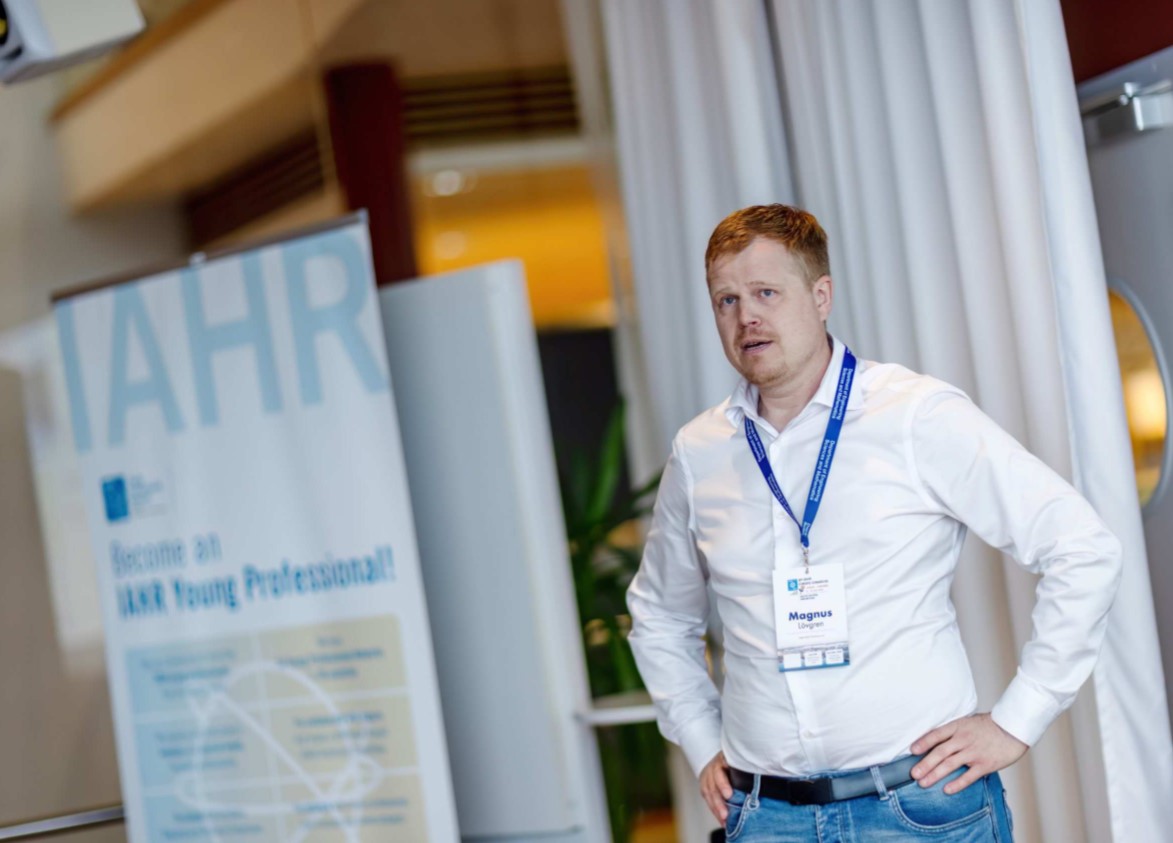
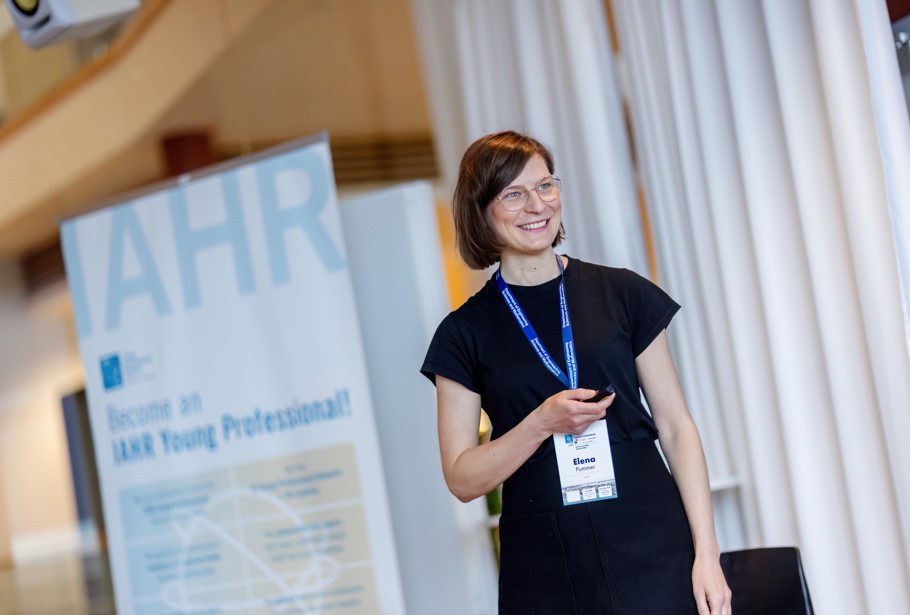
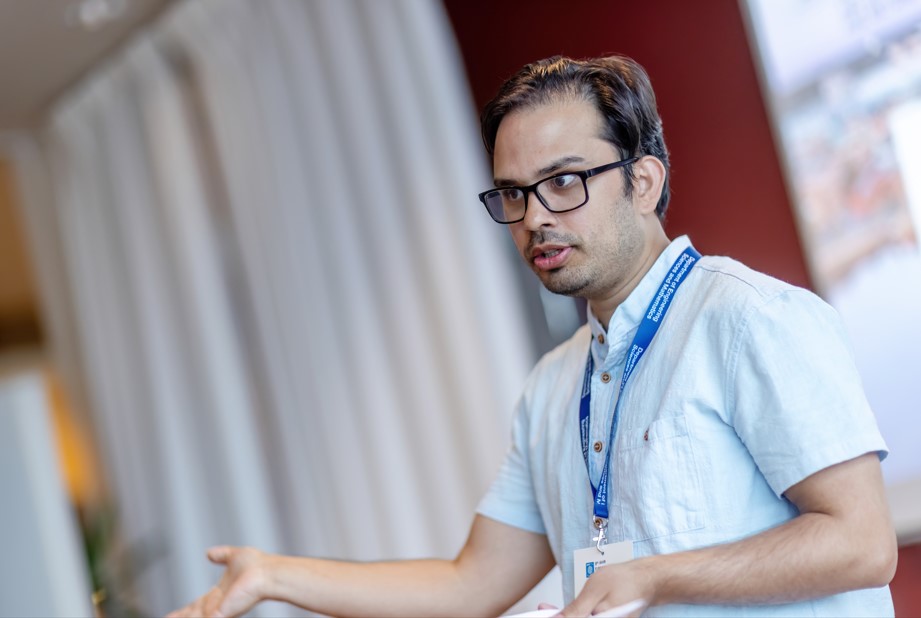
A panel discussion titled “Academia, Industry & Policy: Navigating Career Paths as a Young Professional” was organised for early-career professionals who are exploring their long-term career direction and seeking honest, practical insights from experienced leaders.
Moderated by Utsav Adhikari, the session brought together perspectives from academia, industry, and policy through a panel consisting of Prof. Elena Pummer (NTNU), Dr. Emanuele Quaranta (European Commission Joint Research Centre), and Magnus Lövgren (Vattenfall Vattenkraft AB). The discussion focused on career paths, daily work, impact, progression, and the skills needed to succeed in each sector.
Some key insights from the discussion included:
Policy and public-sector work often provide opportunities to influence decisions with broad societal impact. However, the work is strongly guided by established procedures, regulations, and institutional protocols. Scientific outputs are often valued based on how effectively they support policy development and decision-making.
Academia offers significant intellectual freedom and opportunities to explore new ideas, but career progression is closely linked to securing research funding, publishing, and building collaborations. Advancement pathways can vary considerably between universities and countries.
Industry was highlighted as being more focused on practical implementation, measurable outcomes, and shorter feedback cycles. Success is often tied to project delivery, operational performance, and creating tangible value for organizations and society.
One of the audience questions focused on how artificial intelligence (AI) is shaping career opportunities and daily work across academia, industry, and policy. The panelists noted that AI is increasingly becoming a powerful tool rather than a replacement for professionals. In academia, AI can support literature reviews, data analysis, and research productivity; in industry, it is being integrated into decision-making, optimization, and operational processes; while in policy, AI can assist with evidence synthesis and scenario analysis, although human judgment, transparency, and regulatory oversight remain essential. The panel emphasized that young professionals should develop AI literacy and learn how to use these tools effectively, while continuing to strengthen critical thinking, communication, and domain expertise.
Overall, the session provided a candid and practical discussion that encouraged participants to reflect on their own career aspirations while appreciating the complementary roles of academia, industry, and policy in addressing societal challenges.

Other Activities
Young Professionals’ Night: the young attendees also had the opportunity to join a boat ride under the midnight sun for an informal and relaxed evening to meet their fellow young researchers and the YP network Scandinavia (now Nordic YPN).
Young Professional's Lunch - Collaboration in Hydro-Environmental research: During the last conference day, young professionals were also able to join a lunch with other young professionals for an interactive session focusing on strengthening collaboration within the field of hydro-environmental research.
Acknowledgements
Acknowledgements
IAHR extends its sincere thanks to Luleå University of Technology and the National Organization Committee for their outstanding work in hosting the Congress and for creating an inspiring platform for collaboration and knowledge exchange across the international hydro-environment community. As well as the International Scientific Committee and the IAHR Europe Division Leadership Team.
The 10th Edition of the IAHR Europe Division Congress will take place in Sheffield, UK from the 20 June to 23 June 2028.
Related
Related
Celebrating Young Professionals During the 9th IAHR Europe Congress
Europe Division
IAHR Gerhard Jirka Award for Young Researchers 2026 | 9th IAHR Europe Congress
Book of Abstracts of the 9th IAHR Europe Congress
IAHR Reports
IAHR Technical Committee on Ecohydraulics
42nd IAHR World Congress, Bari 2027
Water for the Energy Transition, Food Security and Nature